Use Care In Handling and Servicing Batteries

MXAL42967-UN-15MAR13
Prevent Battery Explosions
Batteries contain sulfuric acid and produce explosive mixtures of hydrogen. Because hydrogen gas is present even when the utility vehicle is not in operation, make sure batteries are stored and serviced in a well ventilated area.
- Always wear proper eye, face and hand protection.
- Keep sparks, lighted matches, and open flame away from the top of battery.
- Remove all jewelry (watches, rings, bracelets, etc.) before servicing the electrical system or batteries.
- Make sure work area is well ventilated.
- Never lean over battery while testing or charging.
- Keep removable vents tight and level except when servicing electrolyte.
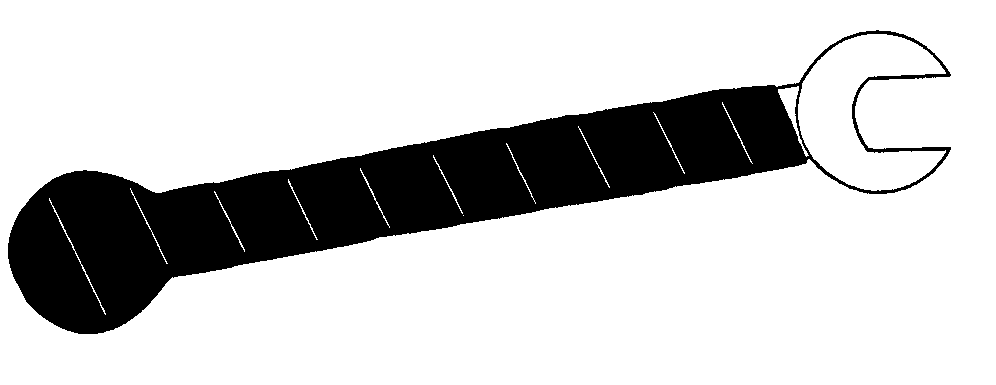
 Use extreme caution when using tools, wires or metal
objects near batteries. A short circuit and/or spark could cause an
explosion. Wrap tools with vinyl tape to prevent shorting out of batteries.
Use extreme caution when using tools, wires or metal
objects near batteries. A short circuit and/or spark could cause an
explosion. Wrap tools with vinyl tape to prevent shorting out of batteries.
MXAL47795-UN-12APR13
- Exercise caution while working with tools or conductors to prevent short circuits and sparks.
- Never check battery charge by placing a metal object across the posts. Use a battery tester, voltmeter or hydrometer.
- Do not charge a frozen battery; it may explode. Warm battery to 16°C (60°F).
Charging Safety
- Never attempt to charge a battery set without first reviewing the instructions provided with the charger.
- Use only the battery charger provided with the utility vehicle. Do not use substitutes.
- Always wear proper eye, face and hand protection.
- Keep sparks, lighted matches, and open flame away from the top of battery.
- Make sure work area is well ventilated.
- Never lean over battery while testing or charging.
- Keep removable vents tight and level except when servicing electrolyte.
- To avoid dangerous sparks, make sure the charger AC plug is disconnected from electrical outlet before disconnecting the plug to the battery charger extension plug.
- Never try to charge a visibly damaged or frozen battery.
- Be sure that the key switch and all electrical accessories are turned off.
- Make sure the charger leads are not broken, frayed or loose.
- If the battery becomes hot, or if violent gassing or spewing of electrolyte occurs, unplug the charger AC electrical outlet end first before removing the battery charger extension plug.
- If battery set is on charge, unplug the charger AC electrical outlet end before disconnecting the battery charger extension plug to avoid dangerous sparks.
|
OUMX068,0000471-19-20131210 |