Battery Electrolyte Guidelines
Help prevent damage to vehicle batteries:
- Do not use water with a high mineral content.
- Do not use metallic containers when storing acid or water. Metal impurities in the water will lower the performance of the battery.
- Liquids such as salt water, vinegar, antifreeze and alcohol, or harmful acids such as nitric, hydrochloric or acetic will cause severe grid corrosion.
Overfilling or under filling the batteries will void vehicle and battery warranties.
- It is recommended that distilled water be used for filling battery cells. If distilled water is unavailable, any water safe for drinking (except mineral water) can be used. Water that is not distilled should be analyzed. Make sure that the mineral contents of the water used are below those listed in the following table.
|
Water Purity Table |
|
|---|---|
|
Impurity |
Maximum Content |
|
Suspended Matter |
Trace |
|
Total Solids |
100.00 |
|
Calcium and Magnesium Oxides |
40.0 |
|
Iron |
5.0 |
|
Ammonia |
8.0 |
|
Organic Matter |
50.0 |
|
Nitrates |
10.0 |
|
Nitrites |
5.0 |
|
Chloride |
5.0 |
MXAL47823-UN-12APR13
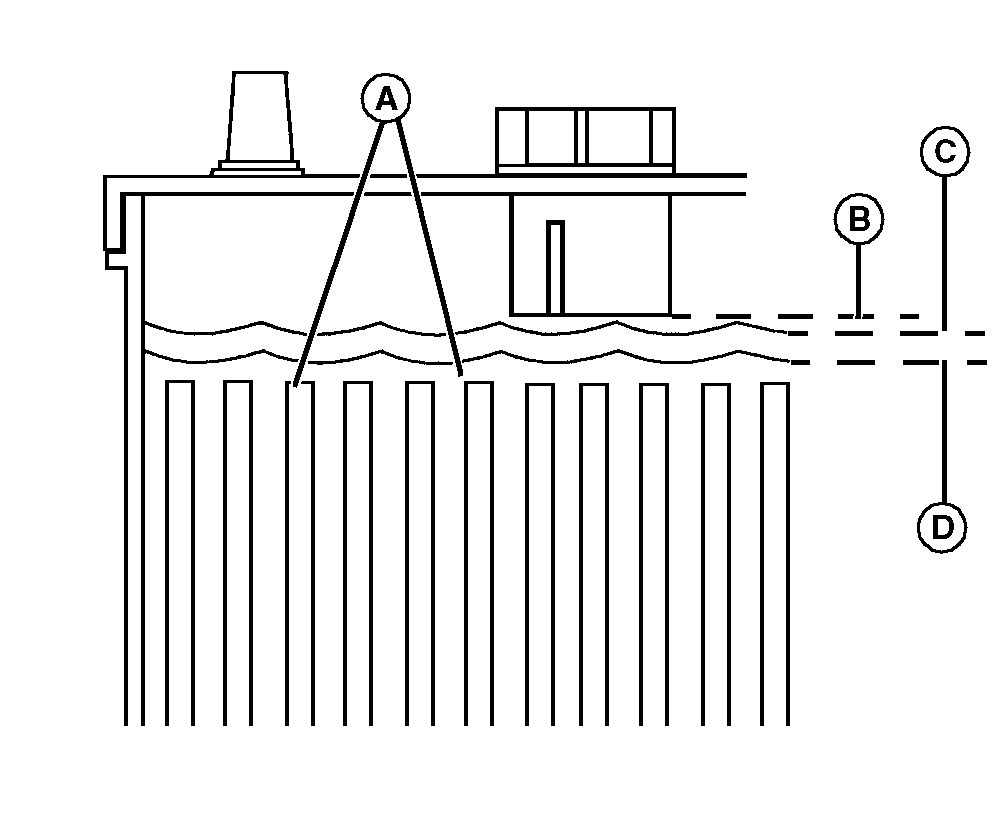
- If the electrolyte level is low, add water near the end of the charge cycle or after taking the battery off charge. Never allow the electrolyte level to drop below the tops of the plates (A) because the exposed portion of the plates will become permanently inactive due to sulfation.
-
Never overfill a battery cell above the battery cap level indicator
(B).
- MAXIMUM electrolyte fill level (C) is 3 mm (0.125 in.) below the level indicator.
- MINIMUM electrolyte fill level (D) is 3 mm (0.125 in.) above plates.
Overfilling the batteries will result in electrolyte loss through the vent caps. This provides a path for self discharge of the battery and also causes corrosion problems.
-
Batteries will need to be watered more often.
- In hot weather.
- As they get older.
- Note any large differences in the amount of water needed from cell to cell. All battery cells should gas approximately the same amount, large differences may indicate a defective cell.
Automatic Watering Devices
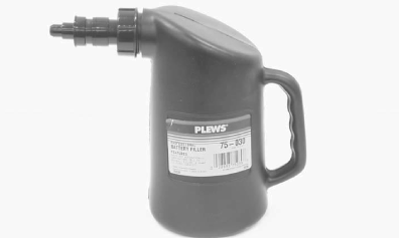
The automatic battery filler must be ordered separately from your John Deere Dealer.
MXAL47824-UN-12APR13
Checking Electrolyte Level–Before Charging
-
Park the vehicle safely. (See Parking Safely in the SAFETY section.)
-
Turn key switch to the OFF “0” position.
-
Press directional control switch into the neutral “N” position.
-
Lock park brake.
-
Lift and secure cargo box in the raised position.
-
 Explosive mixtures of hydrogen gas are present within
battery cells. If necessary, use a flashlight when checking battery
electrolyte levels.
Explosive mixtures of hydrogen gas are present within
battery cells. If necessary, use a flashlight when checking battery
electrolyte levels.Check battery electrolyte level.
-
Overfilling a discharged battery with water can easily result in an overflow of electrolyte from the battery cells.
Carefully remove the battery cap. Look into each cell to see if the electrolyte level is above the top of the plates. -
If the electrolyte level is below the top of the plates (A), add only enough water to cover the plates before charging.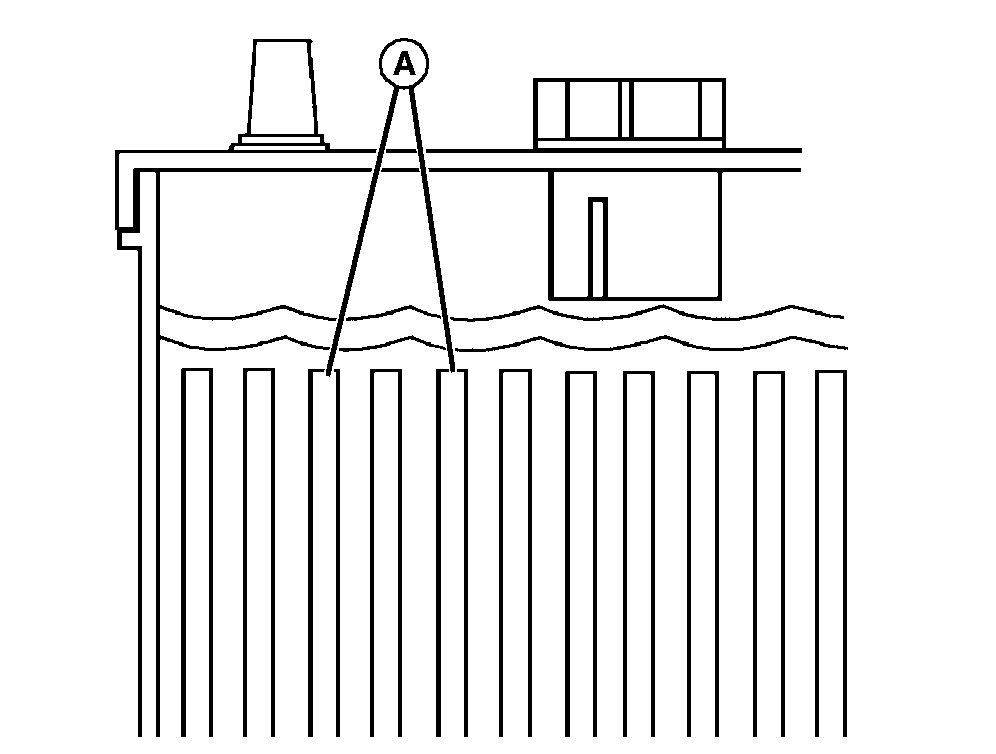
MXAL47825-UN-12APR13
-
-
Replace battery cap.
-
Repeat battery electrolyte level check for each vehicle battery.
-
Place the vehicle on charge using the charger provided with the vehicle.
Check Electrolyte Level–After Charging
-
Disconnect battery charger. (See Using the Battery Charger in the OPERATING section.)
-
Turn key switch to the OFF “0” position.
-
Press directional control switch into the neutral “N” position.
-
Lock park brake.
-
Lift and secure cargo box in the raised position.
-
Check battery electrolyte level.
- Carefully remove individual battery caps. Look into each cell to check the electrolyte level.
-
Electrolyte level should be 3 mm (0.125 in.) below the battery cap level indicator (B).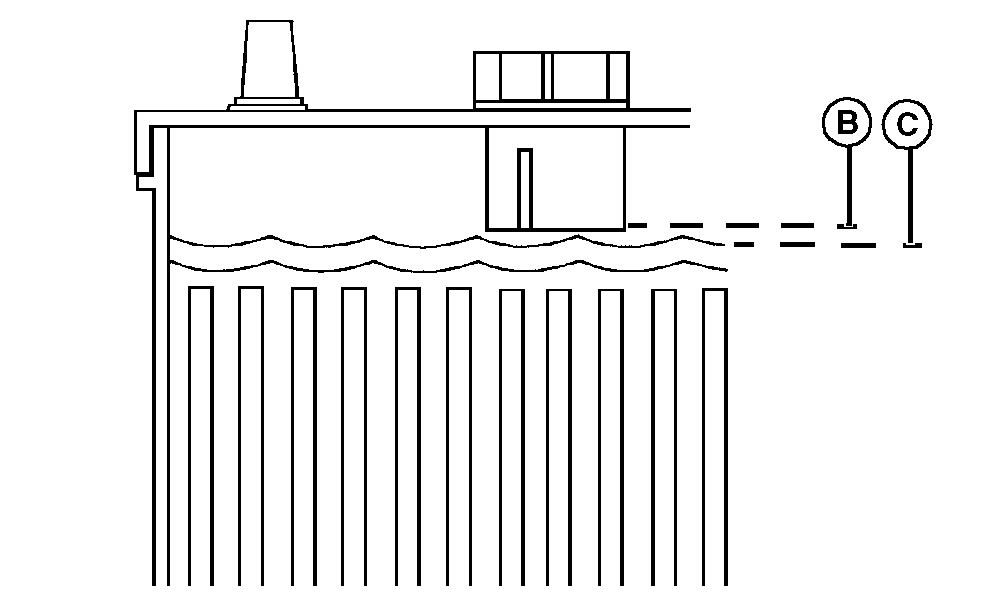
MXAL47826-UN-12APR13 -
Overfilling a discharged battery with water can easily result in an overflow of electrolyte from the battery cells.
If the electrolyte level is low, add only enough water to bring the electrolyte to the MAXIMUM level (C). - If the electrolyte level is at the MAXIMUM level, DO NOT add any water.
-
Replace battery caps.
-
Repeat battery electrolyte level check for each vehicle battery.
|
OUO1023,0000995-19-20130418 |