Using a Hydrometer
-
Park the vehicle safely. (See Parking Safely in the SAFETY section.)
-
Turn key switch to the OFF “0” position.
-
Press directional control switch into the neutral “N” position.
-
Lock park brake.
-
Move service/drive switch to the SERVICE position. (See Using the Service/Drive Switch in the OPERATING Section.)
-
Raise vehicle cargo box.
-
Inspect battery terminals, boots and case for breakage, cracks, hot spots or discoloration. Repair as needed.
-
Refer to the battery test log and prepare to record pertinent hydrometer test information.
-
Help prevent contaminants from entering individual battery cells. Clean all dirt and moisture from battery tops before removing battery caps.
Carefully remove the battery cap from the battery to be tested.
-
DO NOT perform a hydrometer test on a battery that has been watered. The battery will be required to go through at least one charge and discharge cycle to mix electrolyte and ensure a reliable measurement.
The barrel must be held vertically so that the float is not rubbing the side of the barrel.
Squeeze the bulb (A) of the hydrometer. Insert the tip into the battery cell and allow the bulb to expand drawing electrolyte into the barrel (B).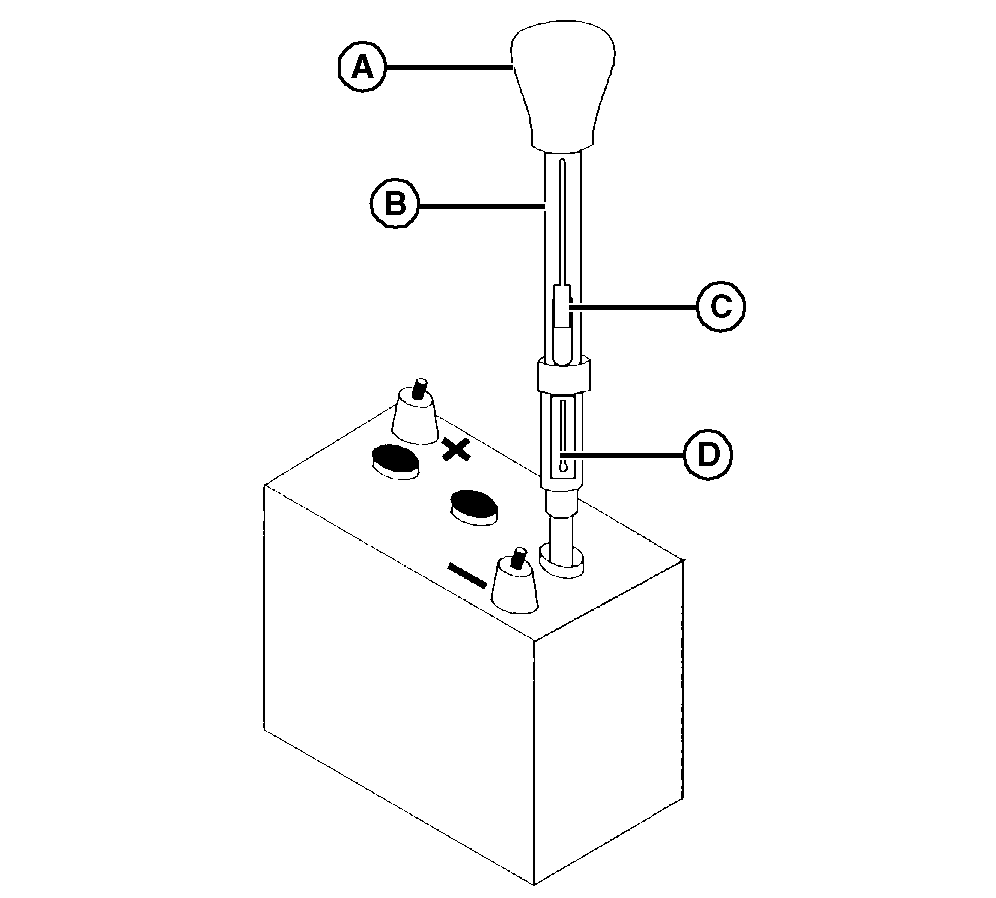
MXAL47828-UN-12APR13- The float (C) must lift freely, touching neither the side, top or bottom stopper of the barrel.
-
The thermometer used should be of the mercury-in-glass
type with a scale reading as high as 52°C (125°F).
Do not insert a metal thermometer into a battery. Use a hydrometer with a built in thermometer that is designed for testing batteries.
The electrolyte should be drawn in and out of the hydrometer barrel several times to permit the thermometer (D) to adjust to the temperature of the electrolyte in the cell. -
Disregard the curvature of the liquid where the surface
rises against the float stem and the barrel due to surface tension.
Hold the hydrometer in a vertical position at eye level. Read and note the specific gravity level of each cell by looking across the surface of the electrolyte to the float. The float is calibrated with a scale that ranges from 1.140 to 1.325. - The following chart illustrates the approximate state of charge based on specific gravity reading for the battery pack.
Specific Gravity
Percent Change
1.250 or higher
100%
1.220 - 1.240
75%
1.190 - 1.210
50%
1.160 - 1.180
25%
1.110 - 1.120
Discharged
-
Correct the reading for temperature.
- Four “points of gravity” (0.004) are added to the indicated reading each 5.5°C (10°F) increment above 26.7°C (80°F) and four points are subtracted for each 5.5°C (10°F) below 26.7° (80°F). Adjust the reading to conform with the electrolyte temperature.
-
Repeat this procedure for each cell of each battery.
- If the variation between the highest and lowest cell readings in any one battery is 0.030 (30 gravity points) or more, it probably has a failing cell.
-
Identify the battery(s) and the cell(s) that vary by more then 0.030 points and perform a battery discharge test. (Refer to vehicle technical manual for Battery Discharge Test procedure.)
|
OUO1023,0000997-19-20130521 |