Tire Pressures
|
|
1.
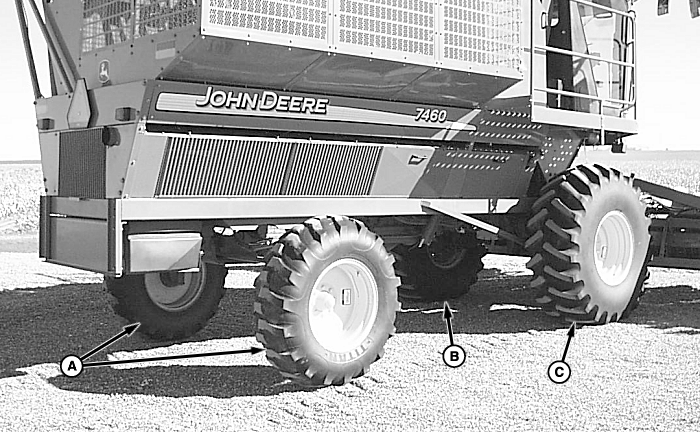
Check guide wheel tires (A) for correct pressure.
Specification
Specification
IMPORTANT: Drive wheel tire pressure in normal field operation is 193 kPa (1.9 bar) (28 psi). If transporting on the road for more than a 1/2 hour with a 6 or 8 row head attached, tire pressure must be increased to 248 kPa (2.5 bar) (36 psi) in both drive wheels. 2. Check tire pressure for left-hand drive wheel (B). Tire pressure should be 193 kPa (1.9 bar) (28 psi). |
3. Check tire pressure for right-hand drive wheel. Right-hand drive wheel tire (C) is filled with approximately 302 L (80 gal) of chromated calcium chloride solution, in a concentration of 2.3 kg (5 lb) chromated calcium chloride in enough water to form 4.7 L (5 qt) of solution. Drive tire holds approximately 473 L (125 gal). |
 CAUTION:
Escaping calcium chloride solution can cause serious injury or death to you or others. If contact is made with solution, promptly rinse off with plenty of water. Do not allow calcium chloride to dry on skin or clothing in contact with skin. Dispose of solution in a manner where it will not find its way into potable water used by humans or livestock. Refilling a liquid ballast tire requires special equipment and training. Have job done by your John Deere dealer or a tire service dealer.
CAUTION:
Escaping calcium chloride solution can cause serious injury or death to you or others. If contact is made with solution, promptly rinse off with plenty of water. Do not allow calcium chloride to dry on skin or clothing in contact with skin. Dispose of solution in a manner where it will not find its way into potable water used by humans or livestock. Refilling a liquid ballast tire requires special equipment and training. Have job done by your John Deere dealer or a tire service dealer.
NX,7455,I35A -19-17NOV99-1/2 |
|
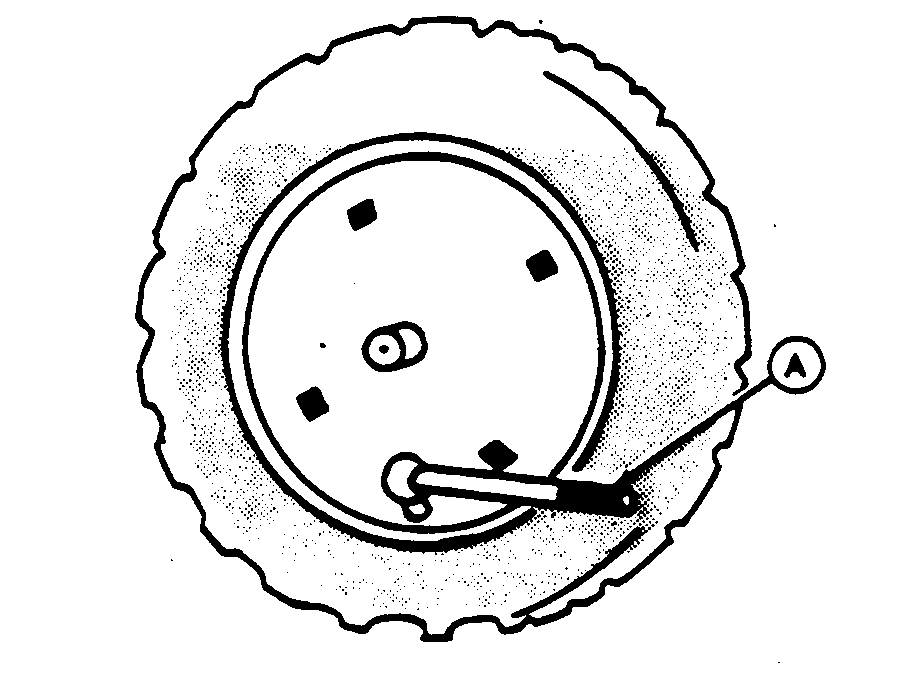
IMPORTANT: Inflation pressure in liquid filled tires should be checked frequently using an air-liquid gauge. Checking liquid filled tires with a standard air gauge will ruin gauge. Any air leak in a liquid weighted tire results in a much greater decrease in pressure, because air volume is relatively small. Replace valve caps and rinse air-liquid gauge out after use. Liquid ballast drive tires uses a special air-liquid gauge (A). Check with valve stem at BOTTOM for most accurate reading. Right-hand drive wheel pressure should be 193 kPa (1.9 bar) (28 psi). |
|
NX,7455,I35A -19-17NOV99-2/2 |