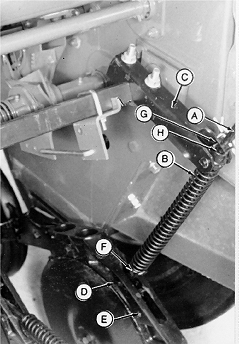
Adjusting Individual Opener Down-Pressure1. Assemble pressure rod (A), spring (B) and pressure arm (C) in rear adjusting hole (D) or front hole (E). (See INDIVIDUAL OPENER DOWN-PRESSURE CHART in this section.)NOTE: Do not use more spring down-pressure than necessary for opener penetration. Maximum down-pressure can raise drive wheel from ground surface causing drive wheel slippage resulting in low population. If maximum down-pressure is needed in extreme soil conditions, additional weight should be added to machine using calcium chloride in tires or wheel weights on hub. 2. Down-pressure can be increased by rotating special adjusting washer (F) and moving it (while compressing the spring) to a higher notch on pressure rod (A). Generally, more pressure is required behind tractor tires. 3. The lowest, or next lowest, notch provides satisfactory down-pressure for most conditions. Rocky, cloddy, or poorly prepared ground may require more pressure. Use no more pressure than necessary. 4. Pressure is correct when the opener penetrates to desired depth WITHOUT collar (G) striking swivel (H). 5. Top of pressure rod has two holes for adjusting opener depth in relation to each other. Moving collar to top hole will allow a more uniform planting depth under uneven soil conditions when openers are running in a tractor wheel tread. 6. Transport clearance is reduced when collar is moved to top hole. Once down-pressure is set, further adjustments can be made by operating hydraulic cylinder. NOTE: For machines with gang press attachment, see Attachment section for adjustments. |
|
AG,OUO6074,913 -19-09MAY00-1/1 |