Setting Tread Width-Without Hydraulic Tread Adjust OptionIMPORTANT: Manual setting of tread width requires use of special tools and/or handling equipment. (See your John Deere dealer if your operation does not have the proper equipment to perform this procedure safely, as described here.) Required tools are:
|
OUO6092,00006F4 -19-15JUL05-1/9 |
|
NOTE: If sticking occurs, remove debris from axle knees and spray with TY25733 teflon based lubricant.
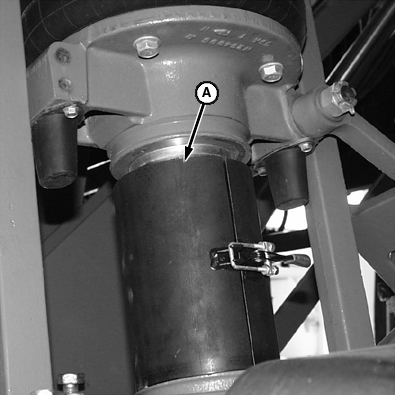
2. Install spindle spacer (A) on the suspension rod of the wheel to be reset. Spindle spacer prevents suspension from extending. If spindle spacer is not used, machine will have to be raised higher (approximately 230 mm [8 in.]) to get wheel off the ground. Higher lift makes machine more difficult to support.
|
|
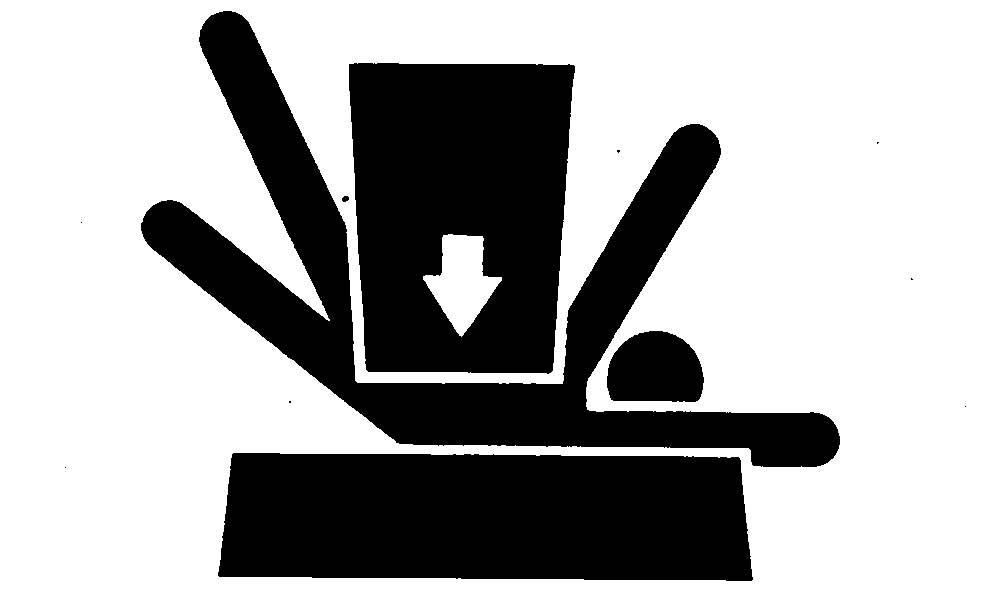
 CAUTION:
To avoid injury or machine damage, manual tread setting is done one wheel at a time. By resetting one wheel at a time, while having the other three (3) wheels on the ground and blocked, the machine is kept stationary.
CAUTION:
To avoid injury or machine damage, manual tread setting is done one wheel at a time. By resetting one wheel at a time, while having the other three (3) wheels on the ground and blocked, the machine is kept stationary.
OUO6092,00006F4 -19-15JUL05-2/9 |
|
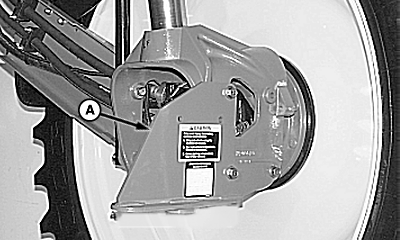
NOTE: If an overhead hoist is not available to raise machine, use lift bracket (A), attached with M16 x 80 cap screws, and a floor jack. 3. Using an overhead hoist (or lift bracket and floor jack) raise one corner of the machine until wheel clears the ground by approximately 152 mm (6 in.). 4. Position shop stand (B) under frame and lower machine onto support with bottom of tire 76-127 mm (3-5 in.) off the ground. 5. Remove floor jack (if used).
|
|

OUO6092,00006F4 -19-15JUL05-3/9 |
|
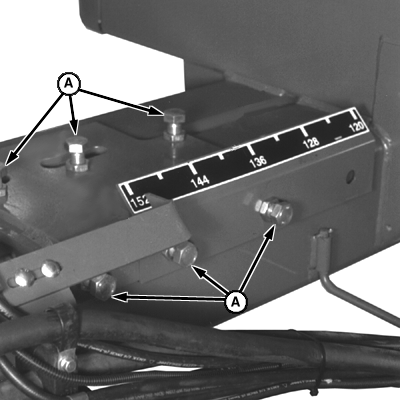
6. Loosen six (6) pieces of axle shim hardware (A), one or two turns. Shim hardware should only be loosened. not removed. Shims need to stay in contact with axle during reset.
|
|
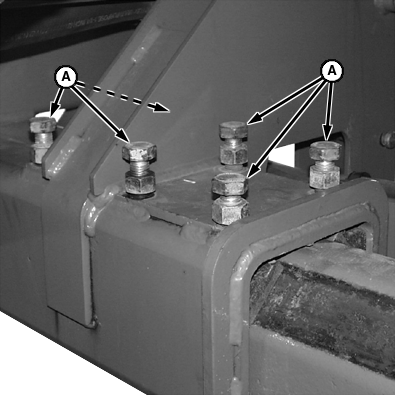
OUO6092,00006F4 -19-15JUL05-4/9 |
|
IMPORTANT: Completely removing both quick-lock pins releases both wheels and can cause machine to shift. Pull pins out far enough to release the wheel being moved only. 7. Pull quick-lock pins (A) out approximately half-way to disengage tread link (B) from mounting pins. NOTE: Top photo shows tread link when axle is set to "full out" position. Bottom photo shows link when axle is set at an inner position other than "full out".
|
|
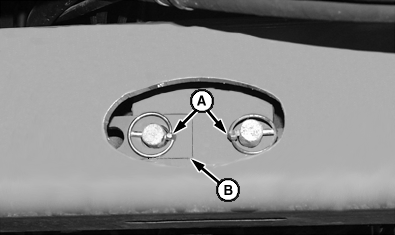
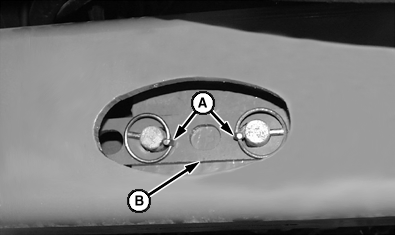
OUO6092,00006F4 -19-15JUL05-5/9 |
|
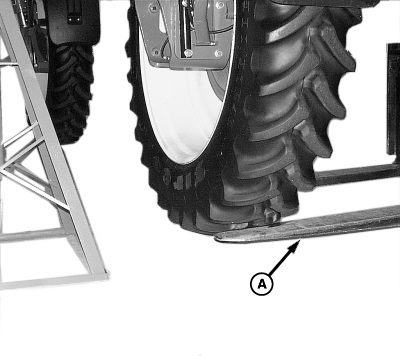
IMPORTANT: Be careful not to raise machine off shop stand. Forklift forks only need to be in contact with the bottom of the tire, not lifting it. 8. EXTENDING AXLE: Position forklift forks (A) against bottom of tire, making sure fork ends do not contact shop stand. Place a pull chain (B) around the top of the tire and attach to forklift mast. IMPORTANT: Forklift forks can contact shop stand, pushing it out from under the frame causing machine damage. Do not allow fork to extend past tire when retracting axle. RETRACTING AXLE: Position forklift forks against bottom of tire, making sure fork ends do not extend past the inside sidewall. 9. Lift the wheel slightly, only until the axle is free to move inside the frame tube; but not so high as to raise the frame from the shop stand.
|
|
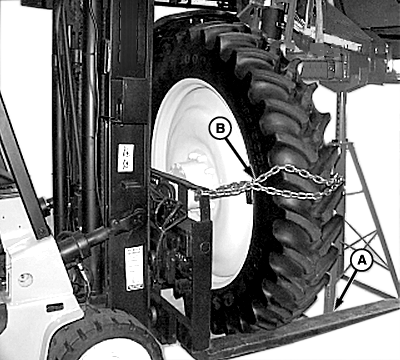
OUO6092,00006F4 -19-15JUL05-6/9 |
|
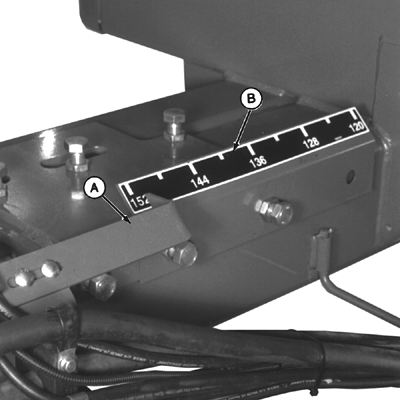
10. Move the forklift in or out until the wheel nears the desired position. Wheel may have to be raised and lowered slightly to "walk" axle inside of frame tube. Observe factory installed pointer (A) and decal (B) for width setting dimension.
|
|
OUO6092,00006F4 -19-15JUL05-7/9 |
|
11. When getting close to desired tread position, have an assistant observe the tread link for hole-to-pin alignment. 12. Place tread link (B) over mounting pins and install quick-lock pin(s) (A).
|
|
OUO6092,00006F4 -19-15JUL05-8/9 |
|
13.
Remove forklift.
14. Apply anti-seize compound to axle shim hardware. 15. Tighten axle shim hardware (A). 16. Lift machine, remove shop stand, and lower machine to the ground. If jacking plate and spindle spacer was used, remove and relocate to next wheel to be reset. Move wheel chocks from next wheel to be reset-to-last wheel reset. 17. Repeat entire procedure at other wheels.
|
|
OUO6092,00006F4 -19-15JUL05-9/9 |