Solution Pump Maintenance and Operation Recommendations
Solution Pump Safety Recommendations
Decontaminate Spray Equipment
 CAUTION: Decontaminate work area before servicing. Flush, decontaminate,
and drain pump before servicing. Decontamination should be done in
a safe area with water or neutralizing agent, or by means recommended
by manufacturer of chemical last used.
CAUTION: Decontaminate work area before servicing. Flush, decontaminate,
and drain pump before servicing. Decontamination should be done in
a safe area with water or neutralizing agent, or by means recommended
by manufacturer of chemical last used.
Spray materials may be extremely dangerous. Treat all spray chemicals, solutions, solution residues, or vapors with great caution. DO NOT take chances. When in doubt, proceed as though contamination is present.
Keep spray material from contacting skin. If spray material contacts skin, wash off immediately with clean water and detergent or follow manufacturer's instructions for chemical last used.
Avoid High-Pressure Fluids
CAUTION: Escaping fluid under pressure can penetrate skin causing
serious injury.
Avoid hazard by relieving pressure before disconnecting hydraulic or other lines. Tighten all connections before applying pressure.
Search for leaks with a piece of cardboard. Protect hands and body from high-pressure fluids.
If an accident occurs, see a doctor immediately. Any fluid injected into skin must be surgically removed within a few hours or gangrene may result. Doctors unfamiliar with this type of injury should reference a knowledgeable medical source. Such information is available from Deere & Company Medical Department in Moline, Illinois, U.S.A.
Avoid Flammable or Explosive Fluids
CAUTION: DO NOT pump flammable or explosive fluids such as gasoline,
fuel oil, and kerosene. ONLY pump solutions compatible with pump components.
Prepare Machine
CAUTION: Remove ignition key before servicing pump.
Maintenance and Operation
Inspect Vent Line
N87475-UN-05MAY10
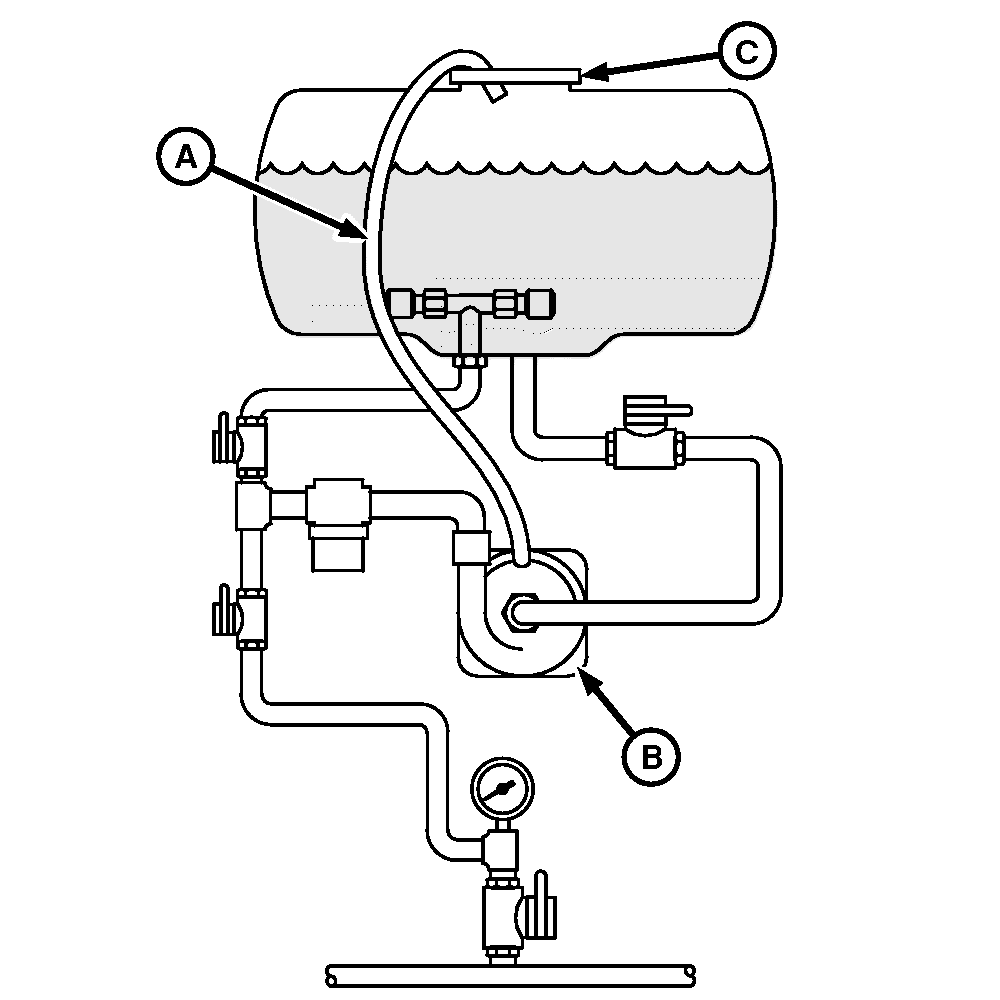
A - Vent Line
B - Solution Pump
C - Tank Top
IMPORTANT: To prevent pump damage from dry run, vent line MUST be routed correctly and be free of obstructions so trapped air is bled from pump chamber.
Periodically verify following:
- Verify vent line (A) runs on a continuous, upward slope (without horizontal sections or dips) from pump (B) to tank top (C)
- Verify continuous stream of solution discharges from vent line into tank during pump operation. Best time to view discharge stream is with tank half full. Clean or replace hose as needed
- Verify hoses and fittings are tight and in good condition
Operate Machine Correctly
IMPORTANT: Chemicals and chemical residue left in the solution pump for an extended period can be damaging to pump components. Rinse pump interior with clean rinse water daily and do not let chemical solution remain in the pump overnight.
To prevent pump damage from dry run, DO NOT operate machine in a way that starves pump of solution and fills pump chamber with air.
As tank empties, operate machine as follows:
- Travel slowly over rough terrain to limit sloshing of solution, which causes pump inlet line to gulp air
- Shut off pump before tank is empty
Prepare Pump for Storage
Short Term Storage—Flush pump with water or neutralizing agent (Spray Tank Cleaner, Part No. N305631), or by means recommended by manufacturer of chemical last used. Drain pump.
Long Term Storage—Follow same procedure as is outlined for short term storage, then refill pump with 50—50 mix of Spraymaster Winterizer Fluid, Part No. N305634. DO NOT store pump with chamber dry.
Solution Pump Operation
IMPORTANT: To avoid high flow solution pump seal damage when loading:
- Nurse tank solution level must be above that of the sprayers pump, or solution pump will not prime leading to seal damage.
- 3 in. hose and fittings must be used (if possible) on the nurse equipment. The pump cannot pull enough product through smaller hose to keep itself fully primed at that loading speed and will cause seal damage.
- Verify valve on the nurse tank hose is at end of the hose to prevent pump from cavitating.
Troubleshooting
| Symptom | Problem | Solution |
|
Low discharge | Pump not primed. |
Inspect vent line. |
|
Air leaks in inlet line. |
Check and reseal inlet fittings. |
|
|
Blocked or clogged line filter. |
Inspect strainer and clear debris from screen. |
|
|
Impeller clogged or blocked. |
Inspect impeller and clear obstruction. |
|
|
Impeller eye rubbing on volute (front casing) due to chemical induced swelling. |
Inspect impeller. Refer to machine repair technical manual. |
|
|
Impeller eye rubbing on volute (front casing) due to pump running dry. |
Inspect impeller for black or melted appearance. Reuse or replace impeller, depending on severity. |
|
Mechanical seal leak. | Pump ran dry. |
Replace seal. |
|
Mechanical interruption of seal faces due to chemical solids getting in between seal faces. Leak is usually temporary |
Replace seal if leak persists. |
|
|
Seal bellows torn due to chemical causing seal faces to stick together |
Replace seal. Flush pump correctly in future |
|
Hydraulic motor leak. | Motor housing socket head screws loose. |
Tighten screws to 20 Nm (15 lb-ft). |
|
Oil seal failure. |
Replace oil seal. Inspect shaft, bearings and oil “slinger” for damage and replace as needed. |
|
CS12167,000040A-19-20130910 |