Operating Base Cutter
1.
To engage the base cutter system in forward or reverse direction, the engine should be 1500 rpm or less:
-
If the base cutter is engaged or reversed with the engine at full throttle, the base cutter will turn off and stay off until the engine is brought down to 1500 rpm and the base cutter switch turned off and back on.
-
If the base cutter is reversed first and the throttle brought down to 1500 rpm in less than 5 seconds, then the function will reverse with no further action. If the operator waits longer than 5 seconds to bring the engine down, then the base cutter switch will have to be turned off and back on to engage the function.
2.
The base cutter diagnostics are set up as follows using the
System Voltage
on the
Engine Diagnostic Gauge:
-
0V = Both switches are active, output not active
1
-
1V = Rev switch active, output not active
-
2V = Fwd switch active, output not active
-
3V = No switches active, output not active
-
4V = Both switches are active, output active
1
-
5V = Rev switch active, output active
-
6V = Fwd switch active, output active
-
7V = No switches active, output active
1
3.
When operating, keep the harvester directly on the center of the row being cut. This should prevent the base cutter from missing any cane and causing torn or broken stalks.
4.
Always
consider the base cutter blade life and the ground conditions when determining the speed and height to harvest your crop.
5.
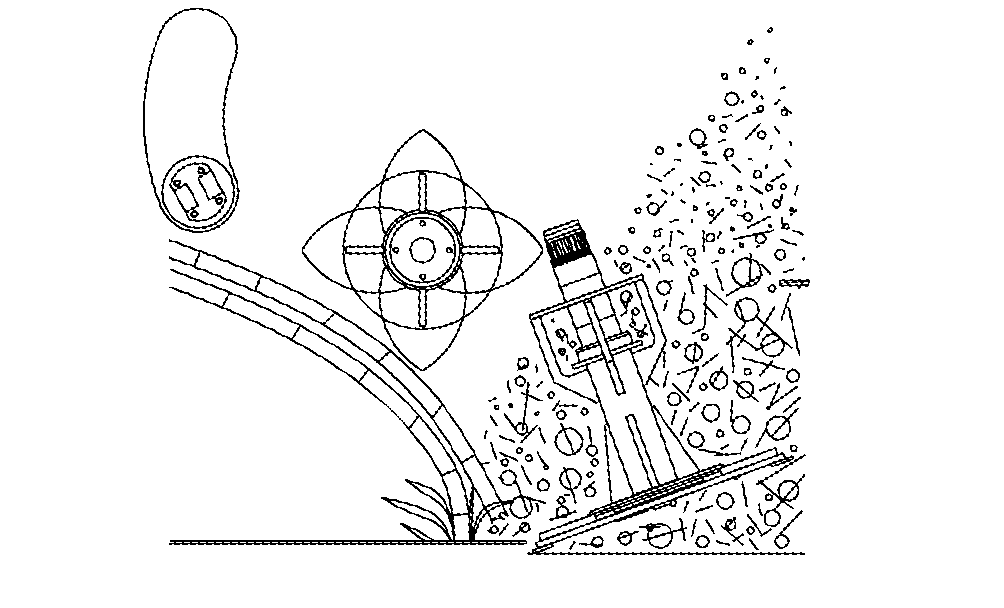
Adjust the base cutter height so it just trims the top of the row, allowing the least amount of dirt into the harvester. Cutting too high causes the splitting of cane and less tonnage. Cutting too low causes dirt and stubble to enter harvester.
6.
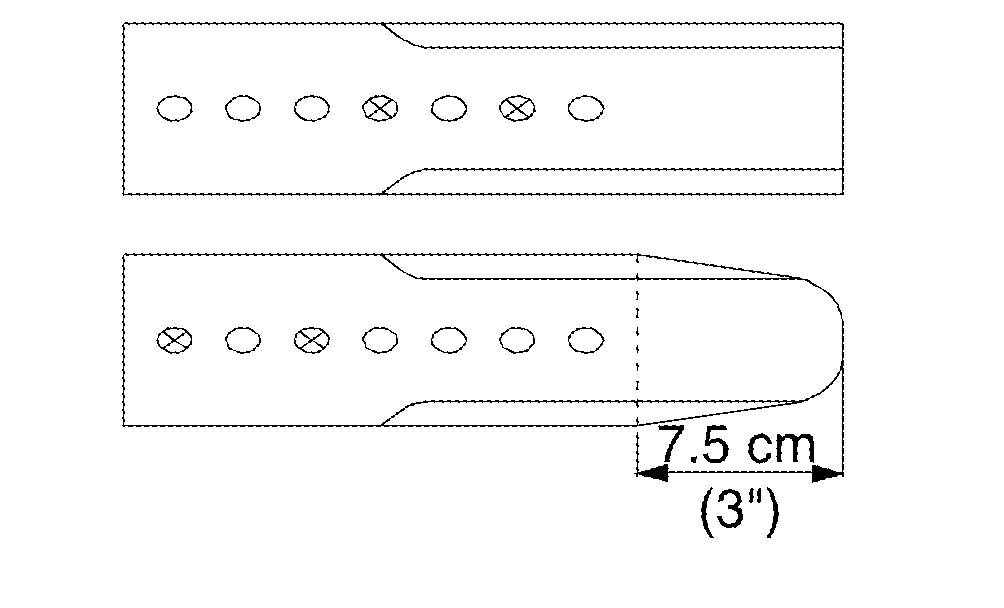
Straight sided blades without rounded corners, are best to use, since rounded blades tend to push the cane instead of producing a clean cut.
|
|