Ammonia Facts
NOTE:
The following information is from the joint publication of the American National Standard Institute and Compressed Gas Association. ANSI K-61.1/CGA G-2.1
NOTE:
Review all safety material provided by fertilizer dealership and Material Safety and Data Sheet.
-
Ammonia is extremely hard to ignite and is a relatively stable compound. However, the release of ammonia gas into a tightly enclosed or inadequately ventilated space may result in the accumulation of a flammable mixture that can cause a combustion explosion if a high temperature ignition source is present.
-
Under some circumstances ammonia and ammonium compounds can react with other chemicals to form explosive products. Ammonia should never be combined with other chemicals unless the possible reactions have been adequately investigated and appropriate precautions taken.
-
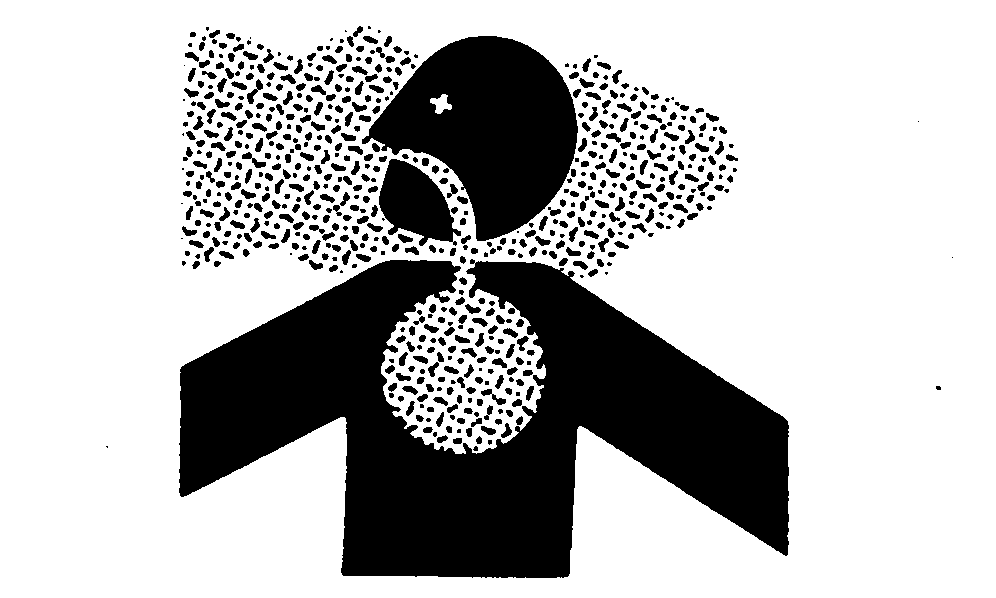
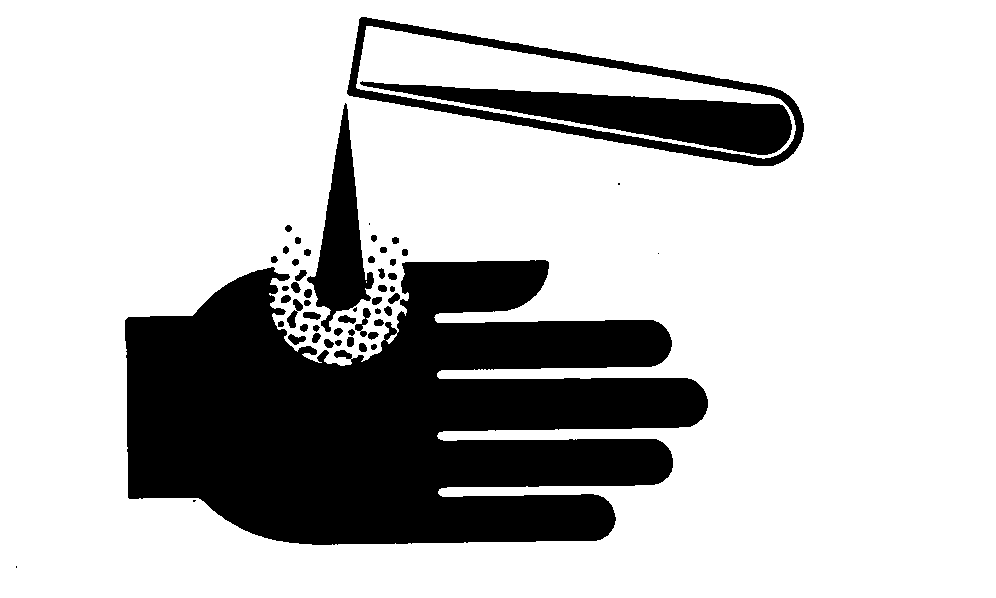
Ammonia Exposure-At low concentrations, ammonia gas is irritating to the eyes, skin and mucous membranes of the nose, throat, and lungs. At higher concentrations, ammonia is corrosive to human tissue and possible life threatening.
-
The U.S. Occupational Safety and Health Administration (OSHA) has adopted a short term exposure limit of 27 mg/m
3
(35 parts per million). This is for an employee's 15 minute time-weighted average exposure which may not be exceeded at ay time during a work day.
|
|