Multipathing
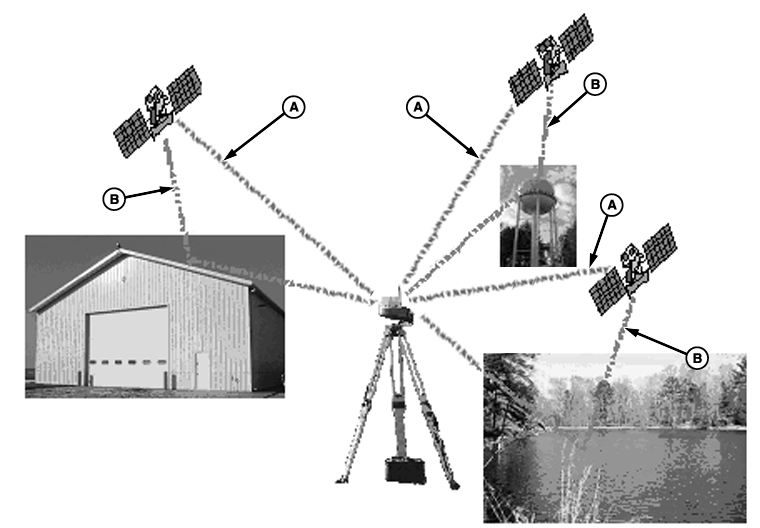
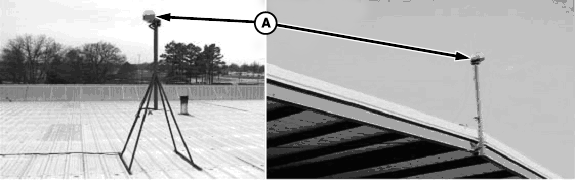
| | A-Good Sources
| B-Multipath Sources
|
|
|
Before explaining how to protect against Multipathing, let's discuss exactly what Multipathing is: Each satellite sends down time coded messages for any receiver to pick up. If a receiver sees multiple time coded messages from the same satellite, it determines there is a problem with the satellite and discontinues using that satellite until it determines the problem is corrected. This could take up to minutes before the situation corrects itself. The following are some examples of what causes multipath.
-
Metal roofs
-
Center pivots
|
-
Water towers
-
Pickup trucks
-
Grain bins
-
Bodies of water
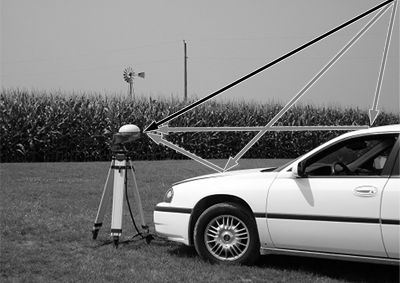
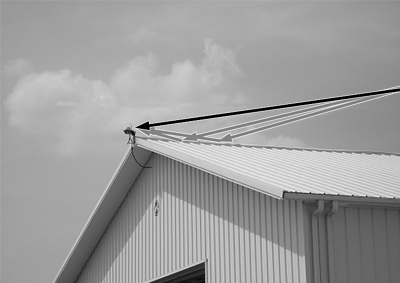
In the following pictures, we have provided illustrations to help show how Multipathing occurs. The time coded signal from the GPS satellite is being beamed down in all directions, so if the same time coded signal is reflected off of an object back towards a receiver, the receiver will see the same message many times. If this occurs, you could see A/B line jumps while operating in the field
|
|
|
JS56696,00005DA -19-13MAY09-1/6
|
|
Even though the multipath signal may be reflected in below the 7 degree elevation mask, the receiver may still use this message because the time coded message tell the receiver that the satellite position is above 7 degrees (i.e. Sat 1; Elev. 35 degrees, Azimuth 255 degrees).
|
Both the roof of the car and the building are causing multipath to occur at the base station receiver. The signals is bounce along the car or building and enter the receiver at a slight delay from when the direct satellite message is received.
|
|
|
JS56696,00005DA -19-13MAY09-2/6
|
|
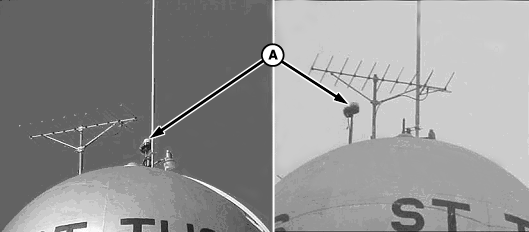
Picture on the Left: The base station, with receiver attached 1 foot off the top of the tower, was being affected by multipath from the dome of the water tower. The vehicle receiver running off this base station experienced different symptoms:
-
Two vehicles would be operating at the same time. One vehicle would go from RTK into RTK-X and see a line jump of up to 6 inches for a couple of minutes, while the other vehicle would be operating without incident.
-
At a later time, the situation would reverse, and the vehicle without incident earlier would go into RTK-X
|
and experience a line jump, while the other vehicle wouldn't.
The reason the vehicles behaved differently was because each vehicle may have been using a different set of satellites at a given time due to shading and vehicle location.
Picture on the Right: Base station was elevated 5 feet off the top of the tower. Raising the receiver greatly reduced the multipath effects observed on this RTK system.
|
|
|
JS56696,00005DA -19-13MAY09-3/6
|
|
To reduce both multipathing and shading, elevate the base station receiver above any structure to which it is attached. For best results, two meters or more from the highest point of the structure is recommended. The higher the better, but you must also ensure that the base station receiver is attached solidly so there is no movement of the receiver. Movement of the base
|
station receiver will result in the same movement in your vehicle. The two base stations shown above are examples of good base station locations, because the trees are below the 7 degrees elevation mask and the roof is not made of metal which helps to reduce multipathing.
|
|
|
JS56696,00005DA -19-13MAY09-4/6
|
|
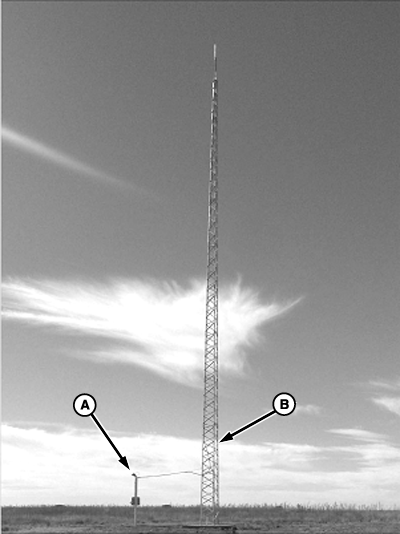
When setting up a tower network, ensure that the receiver (A) is 9.1 m (30 ft) away from the base of the tower (B) to protect your system from multipath.
A-Receiver
B-Tower
|
|
|
|
JS56696,00005DA -19-13MAY09-5/6
|
|
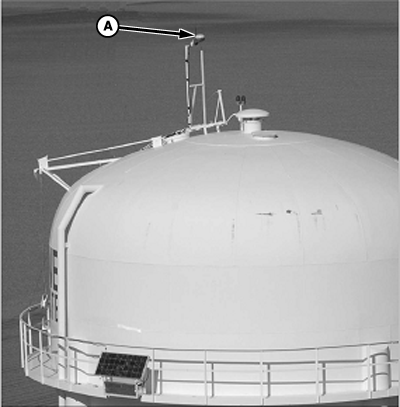
When installing a receiver (A) on a shed, grain leg, water tower, or other tall structure, ensure the receiver is 2 m (6 ft) above the peak of the structure. This placement will help prevent multipathing of the receiver.
A-Receiver
|
|
|
|
JS56696,00005DA -19-13MAY09-6/6
|
|