Using Front Hitch Upper And Lower Locking Plates
Upper Locking Plate
Upper locking plate is used in applications that do not require front PTO, but greater front hitch rigidity is needed.
-
Remove and retain four locking plate cap screws (A) and upper locking plate (B).
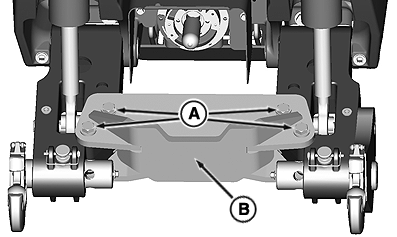
RXA0113229-UN-24JAN11Front Hitch With Front PTO, And Locking Plates in Factory Configuration
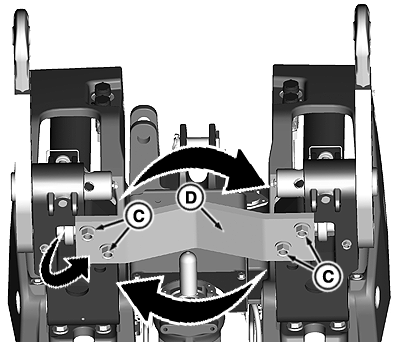
RXA0113292-UN-24JAN11Remove And Rotate Lower Locking Plate End For End, Then Flip Plate Over
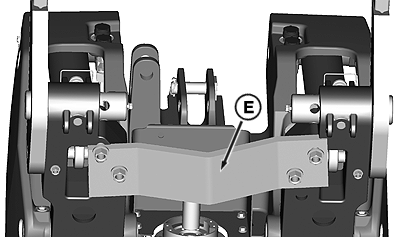
RXA0113293-UN-26JAN11Install Lower Locking Plate With “V” Pointed Down
A - Cap Screws
B - Upper Locking Plate
C - Locking Plate Holes
D - Lower Locking Plate (V Up)
E - Lower Locking Plate (V Down)
-
Install locking plate cap screws and torque to specification.
Item Measurement Specification Locking Plate Cap Screws Torque 245 N·m (180 lb.-ft.) -
Reverse procedure to install upper locking plate.
Lower Locking Plate
Lower locking plate provides torsional support to keep lift arms timed, but also allows front hitch to roll or float as lower plates flexes. This allows implements to follow contours. Although lower locking plate is factory installed with V pointed up for greater ground clearance, it must be inverted to provide PTO drive line clearance during front PTO operations.
-
Remove locking plate cap screws.
-
Remove lower locking plate (D) and rotate end for end, then flip locking plate over so that lower locking plate holes (C) are aligned with holes in front hitch casting. Locking plate V is now pointed down which provides drive line clearance for front PTO operations.
-
While holding lower locking plate with V pointed down (E) against bottom of front hitch, install previously removed cap screws.
-
Torque locking plate cap screws to specification.
Item Measurement Specification Locking Plate Cap Screws Torque 245 N·m (180 lb.-ft.)
|
OURX935,00001B6-19-20110127 |