Using Liquid Ballast
RW25003-UN-07JUL93
 CAUTION: Installing liquid ballast requires special equipment
and training. See your John Deere™ dealer or a tire service store.
CAUTION: Installing liquid ballast requires special equipment
and training. See your John Deere™ dealer or a tire service store.
IMPORTANT: NEVER fill any tire to more than 90 percent. More solution could damage tires.
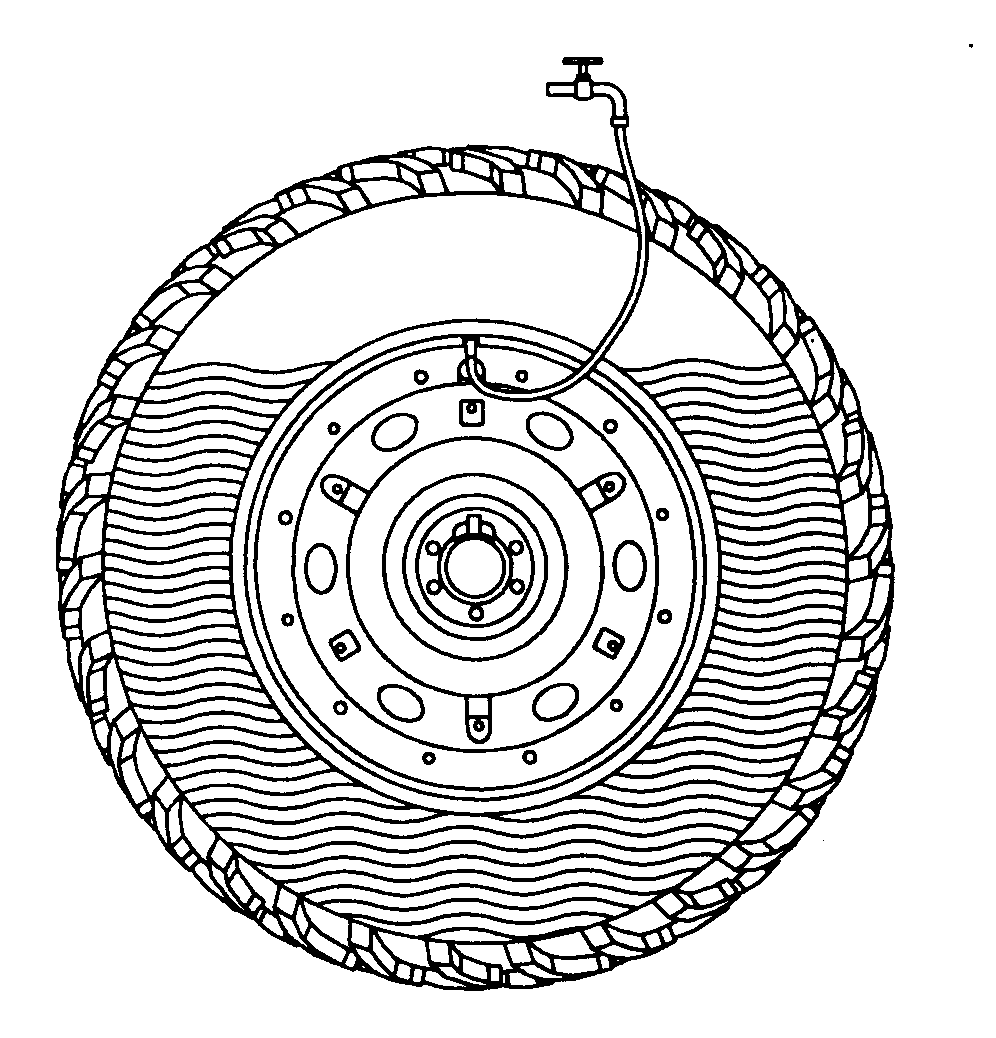
Water or calcium chloride solution can be used to provide economical ballast. Used properly, it will not damage tires, tubes, or rims. However, liquid ballast is not recommended because it results in harsh ride, difficulty in handling, spills if flats occur, and when used in rear tires can result in greater susceptibility to power hop.
Liquid ballast should be avoided in rear tires since it has a stiffening effect that causes the tractor to give a rough ride and generally reduces ability to control power hop. If liquid is used in the rear tires, all tires on the axle must be filled to the same level which should not exceed 40 percent.
A calcium chloride mixture of 420 grams per liter (3.5 lb per gal) of water will not freeze solid above -45°C (-50°F) or a mixture of 600 grams per liter (5.0 lb per gal) will not freeze solid above -50°C (-60°F).
NOTE: Use of alcohol as liquid ballast is not recommended.
Up to 75 percent may be used in MFWD front tires for weight or to provide stiffness to assist in power hop control. Do this as a last alternative.
Fill FRONT tires to 40 or 75 percent for needed ballast. Fill REAR tires to maximum of 40 percent. More solution could result in harsh ride. Chart shows how much each size holds if filled to 40 or 75 percent.
Liquid Ballast Chart
|
Liquid Ballast PER Front Tire |
Liquid Ballast PER Rear Tire |
||||||||
|---|---|---|---|---|---|---|---|---|---|
|
Tire Size |
40% Fill |
75% Fill |
Tire Size |
40% Fill |
|||||
|
420 g/L (3.5 lb/gal) |
600 g/L (5.0 lb/gal) |
420 g/L (3.5 lb/gal) |
600 g/L (5.0 lb/gal) |
420 g/L (3.5 lb/gal) |
600 g/L (5.0 lb/gal) |
||||
|
Group 42 |
Group 47 |
||||||||
|
16.9 R30 |
178 kg (393 lb) |
191 kg (420 lb) |
335 kg (738 lb) |
357 kg (787 lb) |
620/70 R42 |
411 kg (905 lb) |
439 kg (967 lb) |
||
|
600/65 R28 |
231 kg (509 lb) |
246 kg (543 lb) |
433 kg (954 lb) |
462 kg (1019 lb) |
650/70 R42 |
400 kg (882 lb) |
428 kg (944 lb) |
||
|
Group 43 |
480/80 R46 |
292 kg (644 lb) |
313 kg (690 lb) |
||||||
|
480/70 R34 |
203 kg (448 lb) |
216 kg (476 lb) |
381 kg (840 lb) |
405 kg (893 lb) |
710/70 R38 |
493 kg (1086 lb) |
526 kg (1159 lb) |
||
|
540/65 R34 |
226 kg (498 lb) |
239 kg (527 lb) |
423 kg (933 lb) |
448 kg (988 lb) |
Group 48 |
||||
|
600/70 R30 |
307 kg (677 lb) |
326 kg (719 lb) |
575 kg (1268 lb) |
611 kg (1347 lb) |
380/90 R54 |
193 kg (426 lb) |
205 kg (453 lb) |
||
|
Group 44 |
520/85 R46 |
375 kg (827 lb) |
400 kg (882 lb) |
||||||
|
540/75 R34 |
226 kg (498 lb) |
239 kg (527 lb) |
424 kg (935 lb) |
448 kg (988 lb) |
710/70 R42 |
523 kg (1154 lb) |
558 kg (1230 lb) |
||
|
620/75 R30 |
355 kg (783 lb) |
378 kg (833 lb) |
666 kg (1469 lb) |
708 kg (1561 lb) |
620/70 R46 |
421 kg (929 lb) |
451 kg (995 kg) |
||
|
800/70 R38 |
663 kg (1462 lb) |
707 kg (1559 lb) |
|||||||
|
John Deere is a trademark of Deere & Company |
OURX935,000117D-19-20100610 |