Cold Weather Starting And Operation—Internal Starting Aid
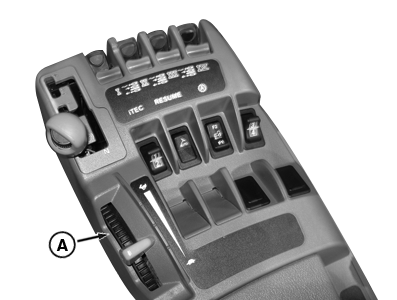
RXA0109135-UN-29JUL10
A - Throttle
The internal starting aid alters fuel injection timing to enhance starting. Operating time of the starting aid is dependent upon coolant temperature and throttle position.
Use the following procedure:
Put throttle (A) in SLOW IDLE (900 rpm) position.
Avoid unnecessary engine idling. Operate at minimum of 1200 rpm if idling longer than three minutes.
Start engine. Leave throttle in slow idle position.
Operating Characteristics:
- Operating cycle time varies from 3—30 seconds depending on temperature after engine is started.
- Moving throttle from the slow idle position will cancel starting aid cycle.
- Engine may run rougher and have increased diesel knock after the end of starting aid cycle. This is normal. Engine will run smoother as engine temperature increases.
18-Speed Powershift Transmission Cold Weather Operating Characteristics
- When temperature is -10 °C (14°F) or lower it may take one minute to get the park brake released with operator in the seat and transmission into gear. Several shifts between PARK and NEUTRAL may be required.
- When temperature is -10 °C (14°F) or above it may take 3 seconds to get the park brake released with operator in the seat.
- When shift lever is moved to NEUTRAL the corner post display will show “N” for three seconds. If park brake does not release “N” will change back to “P”. Move shift lever back to PARK then back to NEUTRAL until “N” displays more than three seconds.
- During cold weather starting, transmission will not shift into 14F through 18F speeds until normal operating temperature has been reached. Delayed shifting, slow hydraulic operation, hard steering, and limited engine rpm may also be noticeable until operating temperature is obtained.
|
RW29387,00004B6-19-20100726 |