Check Transmission-Hydraulic Oil Level
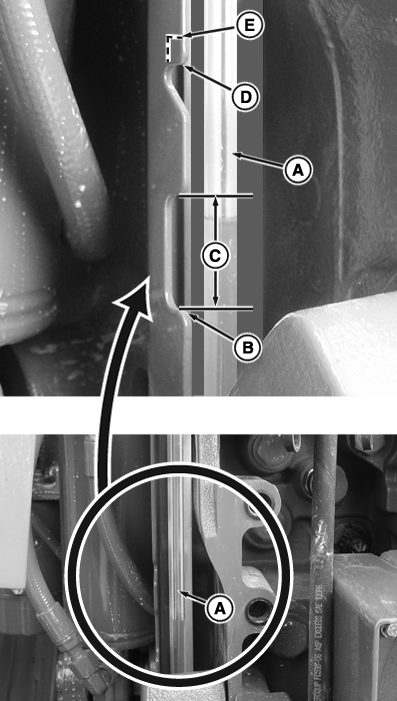
RXA0133301-UN-21APR14
A - Transmission-Hydraulic Oil Sight Glass
B - Add Oil
C - Normal Operating Range
D - Maximum Operating Level (Without Optional Auxiliary Oil Reservoir)
E - Maximum Operating Level (With Optional Auxiliary Oil Reservoir)
IMPORTANT: During operation, with engine running, oil level will vary and may be much above maximum operating level or below normal operating range. Check transmission-hydraulic oil level only after tractor has not been running for at least 1/2 hour or until level stabilizes in sight tube.
-
Park tractor on level ground, if equipped with rear hitch make sure it is fully lowered and if tractor has been running, shut off engine.
-
Wait at least 1/2 hour or until oil level stabilizes in sight tube before checking oil level.
-
Check oil level in sight glass (A) at rear of tractor.
-
IMPORTANT: Overfilling transmission-hydraulic oil can result in decreased operating efficiency. Except when operating in side-hill or high volume applications, keep oil level at or slightly below top of normal operating range. Never fill system above maximum operating level.
NOTE: Oil level may need to be adjusted based on expected operating conditions. See special operating condition instructions below.
Hydraulic oil sensor detects a low oil level or hydraulic oil loss. DTC appears on display. Check hydraulic oil level and fill to normal operating range.
If transmission-hydraulic oil level is at or below add oil indication (B), slowly add oil to reach top of normal operating range indicator (C). Use oil as specified in Transmission-Hydraulic Oil in Fuel, Lubricants and Coolant section of this Operator’s Manual. From add oil level, adding approximately these amounts of oil will bring oil level to top of normal operating range.
|
Transmission |
Without Optional Auxiliary Oil Reservoir |
With Optional Auxiliary Oil Reservoir |
|
CommandQuad™ |
20 L (21 qt.) |
22 L (23 qt.) |
|
IVT™/AutoPowr™ |
16 L (17 qt.) |
18 L (19 qt.) |
|
e23™ |
16 L (17 qt.) |
18 L (19 qt.) |
IMPORTANT: Examine oil level indicator. If tractor is not equipped with optional auxiliary oil reservoir, maximum operating level indication will be as shown (D). If tractor has optional oil reservoir installed, maximum operating level indicator will be higher (E).
For Side-Hill Applications or High Oil Volume Requirements: To prevent low oil levels, additional oil may be required when operating on side hills or when using implements which require large volumes of oil to function. Oil level should be at or slightly below maximum operating level (D or E).
|
TO84419,00001CE-19-20140624 |