Drive, Mid-Rollers, and Idler Wheels
 Trash build-up can cause fire from increased friction.
Remove trash from trash build-up points between track and tractor
frame. See Service Check - Remove Trash Buildup.
Trash build-up can cause fire from increased friction.
Remove trash from trash build-up points between track and tractor
frame. See Service Check - Remove Trash Buildup.
Avoid operating tractor in grease, oil, or other petroleum chemicals. Avoid spilling these materials on track and wheels during service.
Replace mid-rollers in sets if significant difference in coating thickness is seen on an opposite side of axle wheel.
Do not pair worn idler and mid-roller wheels with new wheels on the same axle. Unevenly worn mid-rollers may overload and damage opposite mid-rollers. Unevenly worn drive or idler wheels may negatively impact track alignment.
Avoid damage to hydraulic components. Use care around tension cylinder connections and hydraulic lines.
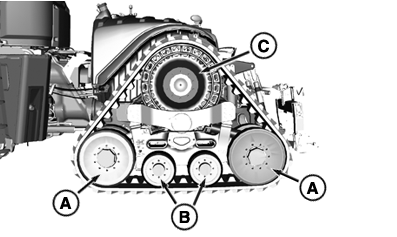
RXA0147242-UN-11FEB15
Wide Track
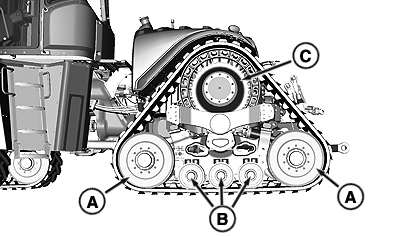
RXA0148370-UN-12JUN15
Narrow Track
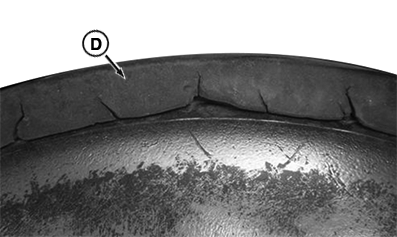
RXA0158389-UN-17MAR17
Typical wear patterns in the rubber are numerous small nicks and chunks, some small sections with rubber loss, and slight amount of rubber separation at edges.
Check rubberized wheels for embedded rocks, nails, or other sharp objects. Remove if found. Embedded objects can cause internal damage to track if left in place.
Check wheel bolts for signs of being loose. Wheels are subjected to very high track tension loads and bolts can become loose if not correctly tightened. See Mid-Roller and Drive and Idler Wheel Fasteners in Service - Tighten section of this Operator’s manual.
Inspect and remove any material build up on face of drive wheel (C). remove any material in pockets and between drive bars. Remove excessive material within undercarriage frame.
Inspect idlers and mid-rollers for operational problems. It is normal to see some edge wear on idlers or mid-rollers during service. Replace wheels when:
- More than 1/3 of the coating is missing all the way around wheel.
- Any area where coating loss extends across entire wheel width.
- Lack of coating thickness causes dirt build-up on wheel outer surface to begin.
- Any flat spots are visible which may indicate wheel has stopped turning.
|
KT81203,0000969-19-20171027 |