Replacing Thermostat1. Raise hood and remove side screens.
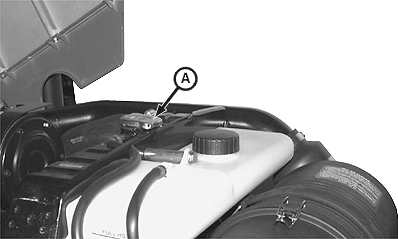
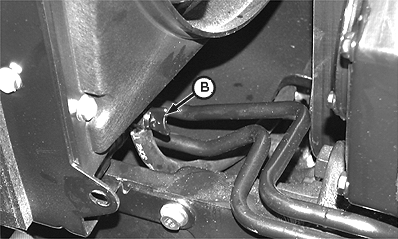
NOTE: 5420N and 5520N Shown. 5320N similar. 2. Remove radiator cap (A). 3. Remove fan guard. 4. Open drain valve (B) and drain coolant.
|
|
 CAUTION:
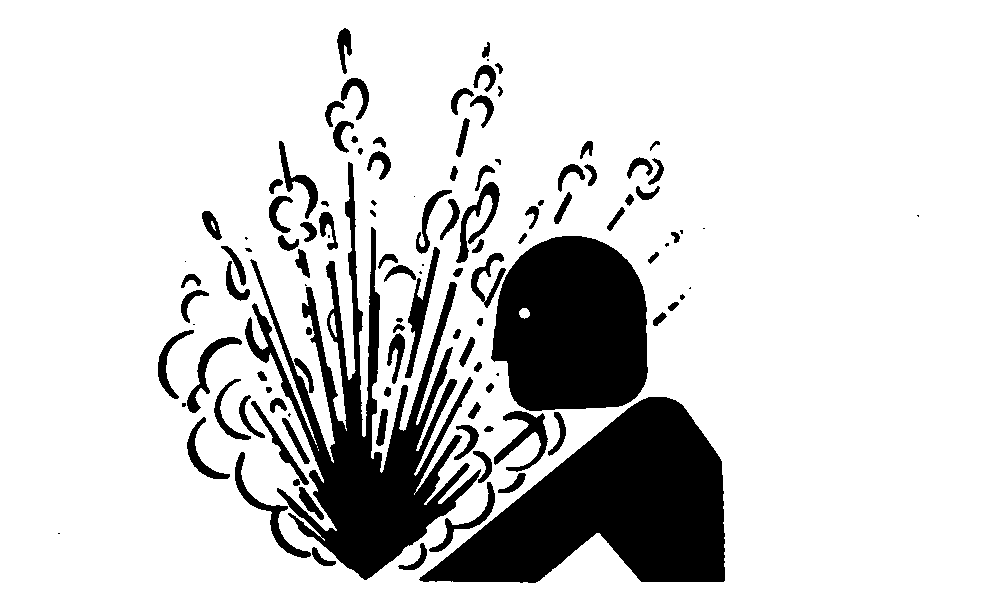
DO NOT remove radiator cap or drain coolant until coolant is cold (temperature gauge should be below the green striped zone). Always loosen radiator cap or radiator drain valve slowly to relieve any excess pressure.
CAUTION:
DO NOT remove radiator cap or drain coolant until coolant is cold (temperature gauge should be below the green striped zone). Always loosen radiator cap or radiator drain valve slowly to relieve any excess pressure.
AG,OUO1043,274 -19-19NOV03-1/3 |
|
5.
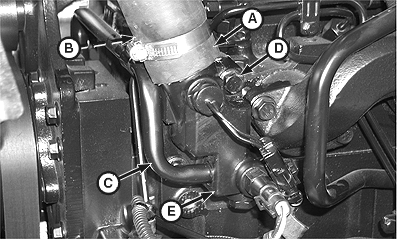
Disconnect radiator hose (A).
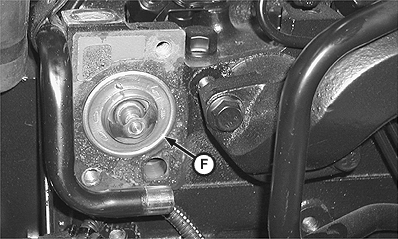
6. Remove clamp cap screw (B) and clamp. 7. Disconnect coolant line (C). 8. Remove thermostat housing cap screws (D) and thermostat housing (E). 9. Remove thermostat (F). 10. Remove old gasket material from sealing surfaces. Apply General Purpose Gasket Dressing or equivalent to new gasket. 11. Install new thermostat. 12. Install new gasket, thermostat housing and cap screws. Tighten cap screws to specification. Specification
13. Install new O-ring on coolant pipe. 14. Install coolant line and clamp. 15. Install radiator hose. 16. Ensure radiator drain valve is closed and fill radiator with coolant. (See Fuels, Lubricants, and Coolant section.) 17. Install fan guard. 18. Fill radiator to the top of the filler neck and fill the recovery tank to the LOW mark. Run the engine until operating temperature is reached. Let the engine cool (preferably overnight) and recheck the coolant level. Coolant level with a cold engine should be at the LOW mark. An engine at operating temperature should have a coolant level at the FULL mark. Refilling the cooling system may require several operating/cooling periods to stabilize the coolant level in the system. Add make-up coolant to the recovery tank as needed to bring the coolant level to the correct mark. |
|
AG,OUO1043,274 -19-19NOV03-2/3 |
| 19. Install side screens. |
AG,OUO1043,274 -19-19NOV03-3/3 |