Engine Coolant Specifications
Contact your engine servicing dealer to determine what the cooling system of this engine is filled with and the winter freeze protection level.
Coolant solutions of quality water, ethylene glycol concentrate (antifreeze), and supplemental coolant additives (SCAs) MUST be used year-round to protect against freezing, boil-over, liner erosion or pitting, and to provide a stable, noncorrosive environment for seals, hoses, and metal engine parts.
Water Quality
Water quality is important to the performance of the cooling system. Distilled, deionized, or demineralized water is recommended for mixing with ethylene glycol base engine coolant concentrate. Mineral (hard/tap) water should NEVER be put in a cooling system unless first tested. All water used in the cooling system should meet the following minimum specifications for quality:
|
Water Quality Specifications |
||
|---|---|---|
|
Parts Per Millon |
Grains Per U.S. Gallon |
|
|
Chlorides (maximum) |
40 |
2.5 |
|
Sulfates (maximum) |
100 |
5.9 |
|
Total Dissolved Solids (maximum) |
340 |
20 |
|
Total Hardness (maximum) |
170 |
10 |
|
pH Level..............5.5—9.0 |
||
Ethylene Glycol Concentrate (Antifreeze)
IMPORTANT: DO NOT use ethylene glycol concentrate containing sealer or stop-leak additives.
The use of John Deere coolant products, as outlined previously, is strongly recommended.
If John Deere coolant products are not used, other low silicate ethylene glycol base coolants for heavy-duty engines may be used when mixed with quality water and supplemental coolant additives (SCAs), if they meet one of the following specifications:
- ASTM D5345 (prediluted coolant)
- ASTM D4985 (coolant concentrate) in a 40% to 60% mixture of concentrate with quality water.
Coolants meeting these specifications require addition of supplemental coolant additives (SCAs), formulated for heavy-duty engines, for protection against corrosion and cylinder liner erosion and pitting.
IMPORTANT: Never use automotive-type coolants (such as those meeting ASTM D3306 or ASTM D4656). These coolants do not contain the correct additives to protect heavy-duty engines. They often contain a high concentration of silicates and may damage the engine or cooling system.
Supplemental Coolant Additives (SCAs)
IMPORTANT: DO NOT over-inhibit antifreeze solutions, as this can cause silicate-dropout. When this happens, a gel-type deposit is created which retards heat transfer and coolant flow, causing engine to overheat.
NOTE: John Deere Prediluted Antifreeze/Summer Coolant and John Deere Antifreeze/Summer Coolant Concentrate contain supplemental coolant additives (SCAs). However, as the coolant solution loses its effectiveness, additional additives will be needed.
Operating without proper coolant additive will result in increased corrosion, cylinder liner erosion and pitting, and other damage to the engine and cooling system. A simple mixture of ethylene glycol and water WILL NOT give adequate protection. However, the use of supplemental coolant additives will reduce the number of vapor bubbles in the coolant and help form a protective film on cylinder liner surfaces. This film acts as a barrier against the harmful effects of collapsing vapor bubbles.
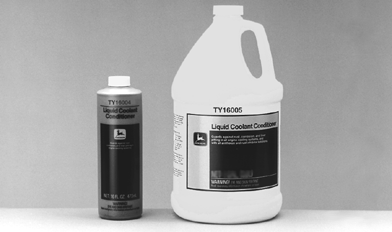
RG7276-UN-05DEC97
John Deere Liquid Coolant Conditioner
Inhibit the antifreeze-coolant mix with a non-chromate inhibitor. John Deere Liquid Coolant Conditioner is recommended as a supplemental coolant additive in John Deere engines.IMPORTANT: Check inhibitors between drain intervals every 12 months or 25,000 miles. Replenish inhibitors by the addition of a supplemental coolant additive as necessary.
DO NOT use soluble oil.
Additives eventually lose their effectiveness and must be recharged with additional supplemental coolant additives available in the form of liquid coolant conditioner. See TESTING ENGINE COOLANT in this Section and REPLENISHING SUPPLEMENTAL COOLANT ADDITIVES (SCAs) BETWEEN COOLANT CHANGES in Lubrication & Maint./12 Months/25,000 Miles Section.
|
DPSG,OUOE003,3528-19-20000228 |