Checking Belt Tensioner
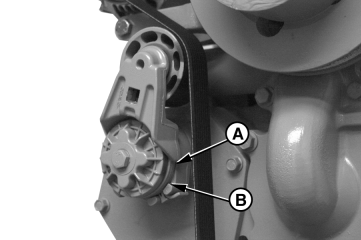
RG7380-UN-28NOV97
Cast Stops
A - Tensioner Cast Stop
B - Fixed Cast Stop
Belt drive systems equipped with automatic (spring) belt tensioners cannot be adjusted or repaired. The automatic belt tensioner is designed to maintain proper belt tension over the life of the belt. If tensioner spring tension is not within specification, replace tensioner assembly.
Checking Belt Wear
The belt tensioner is designed to operate within the limit of arm movement provided by the cast stops (A and B) when correct belt length and geometry are used.
-
Visually inspect cast stops (A and B) on belt tensioner assembly.
-
If the tensioner cast stop (A) on swing arm is hitting the fixed cast stop (B), check mounting brackets (alternator, belt tensioner, idler pulley, etc.) and the belt length. Replace belt as needed (See REPLACING BELTS in Service as Required Section).
Checking Tensioner Spring Tension
RG7977-UN-14NOV97
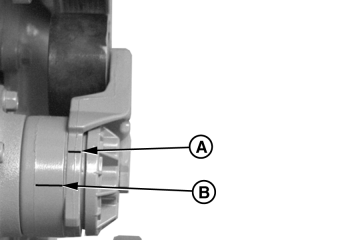
Marks on Swing Arm and Mounting Base
A - Mark on Swing Arm
B - Mark on Mounting Base
A belt tension gauge will not give an accurate measure of the belt tension when automatic spring tensioner is used. Measure tensioner spring tension using a torque wrench and following procedure:
-
Release tension on belt using a 12.7 mm (1/2 in.) long-handle breaker bar in tension arm. Remove belt from pulleys.
-
Release tension on tension arm and remove breaker bar.
-
Put a mark on swing arm (A) of tensioner as shown.
-
Measure 21 mm (0.83 in.) from mark (A) and put a mark on tensioner mounting base (B).
-
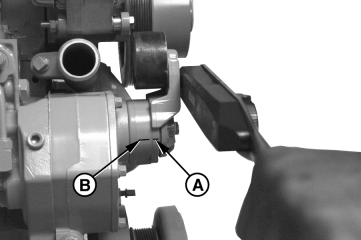
RG7381-UN-28NOV97Align Marks
A - Mark on Swing Arm
B - Mark on Mounting Base
Rotate the swing arm using a torque wrench until marks (A and B) are aligned. -
Record torque wrench measurement and compare with specification below. Replace tensioner assembly as required.
Item Measurement Specification Belt Tensioner Spring Tension Torque 24—28 N˙m (18—21 lb-ft)
|
DPSG,OUOE003,3546-19-20000228 |