Testing Thermostats Opening Temperature
NOTE: There are multiple options for thermostat cover and housing. Refer to engine technical manual for removal and installation of thermostat cover and housing however, the testing procedure for thermostat remains same.
Testing Thermostats Opening Temperature
RG5971-UN-23NOV97
Testing Thermostat Opening Temperature
-
Remove thermostat(s).
-
Visually inspect thermostat(s) for corrosion or damage. If dual thermostats, replace as a matched set as necessary.
 CAUTION: DO NOT allow thermostat or thermometer to rest against
the side or bottom of container when heating water. Either may rupture
if overheated.
CAUTION: DO NOT allow thermostat or thermometer to rest against
the side or bottom of container when heating water. Either may rupture
if overheated. -
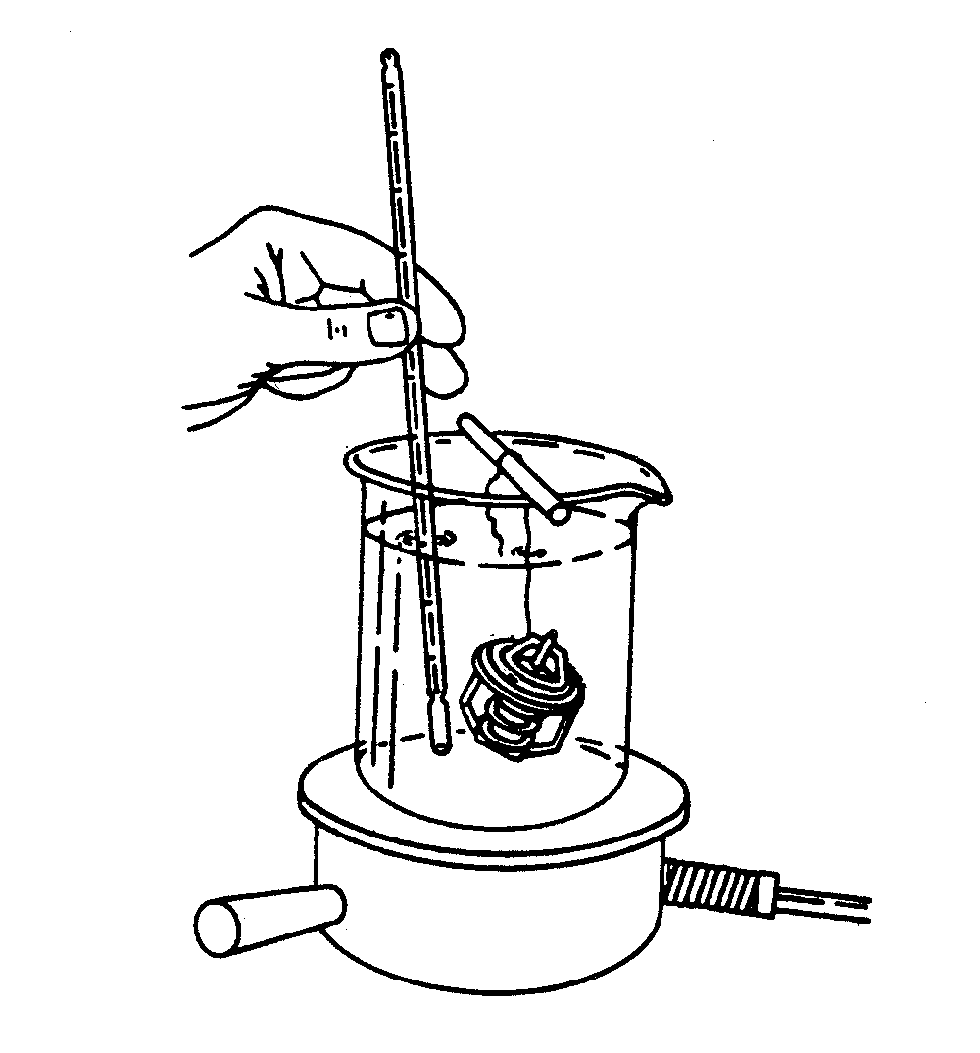
Suspend thermostat and a thermometer in a container of water.
-
Stir the water as it heats. Observe opening action of thermostat and compare temperatures with the specification given in chart below.
NOTE: Due to varying tolerances of different suppliers, initial opening and full open temperatures may vary slightly from specified temperatures.
THERMOSTAT TEST SPECIFICATIONS
Rating
Initial Opening (Range)
Full Open (Nominal)
71°C (160°F)
69—72°C (156—162°F)
84°C (182°F)
77°C (170°F)
74—78°C (166—172°F)
89°C (192°F)
82°C (180°F)
80—84°C (175—182°F)
94°C (202°F)
89°C (192°F)
86—90°C (187—194°F)
101°C (214°F)
90°C (195°F)
89—93°C (192—199°F)
103°C (218°F)
92°C (197°F)
89—93°C (193—200°F)
105°C (221°F)
96°C (205°F)
94—97°C (201—207°F)
100°C (213°F)
99°C (210°F)
96—100°C (205—212°F)
111°C (232°F)
-
Remove thermostat and observe its closing action as it cools. In ambient air the thermostat should close completely. Closing action should be smooth and slow.
-
Replace any defective thermostat. On a dual thermostat engine, replace both thermostats.
|
DPSG,RG34710,112-19-20220720 |