Checking and Adjusting Valve Clearance
Too little valve clearance throws valves out of time. Valves open too early and close too late. This causes the valves to overheat due to hot combustion gases rushing past valves when out of time. Overheating lengthens valve stems which prevents proper seating of valves. The valves seat so briefly or poorly that normal heat transfer into the cooling system does not have time to take place, causing burned valves and low power. In extreme cases, valves could contact the piston.
Too much valve clearance causes a lag in valve timing, causing engine valve train imbalance. The fuel-air mixture enters the cylinders late during intake stroke. The exhaust valve closes early and prevents waste gases from being completely removed from cylinders. Also, the valves open and close with a great deal of impact, which may crack or break the valves, scuff the camshaft and followers, and weaken or break the valve springs.
 CAUTION: To prevent accidental starting of engine while performing
valve adjustments, always disconnect NEGATIVE (—) battery terminal.
CAUTION: To prevent accidental starting of engine while performing
valve adjustments, always disconnect NEGATIVE (—) battery terminal.
IMPORTANT: Valve clearance MUST BE checked and adjusted with engine COLD.
-
Remove rocker arm cover with vent tube (A).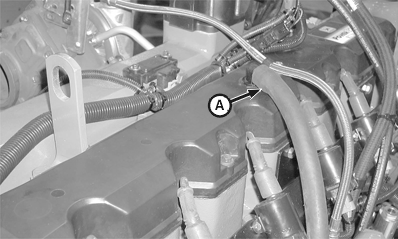
RG12096-UN-11MAR02IMPORTANT: Visually inspect contact surfaces of valve tips and rocker arm wear pads. Check all parts for excessive wear, breakage, or cracks. Replace parts that show visible damage.
Rocker arms that exhibit excessive valve clearance should be inspected more thoroughly to identify damaged parts.
NOTE: If desired, have your authorized servicing dealer adjust the engine valve clearance.
-
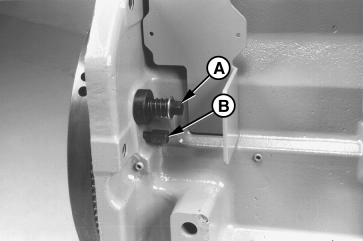
RG7013-UN-26NOV97Flywheel Turning Tool and Timing Pin
A - Flywheel Turning Tool
B - Timing Pin
Remove plastic plugs from cylinder block bores and install JDE81-1 or JDG820 Flywheel Turning Tool (A) and JDE81-4 Timing Pin (B). -
Rotate engine with the flywheel turning tool until timing pin engages timing hole in flywheel.
If the rocker arms for No. 1 (front) cylinder are loose, the engine is at No. 1 TDC-compression.
If the rocker arms for No. 6 (rear) cylinder are loose, the engine is at No. 6 TDC-compression. Rotate the engine one full revolution (360°) to No. 1 TDC-compression.
-
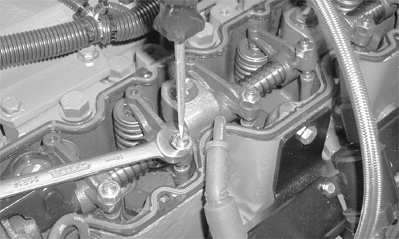
RG12097-UN-26FEB02Adjusting Valve Clearance
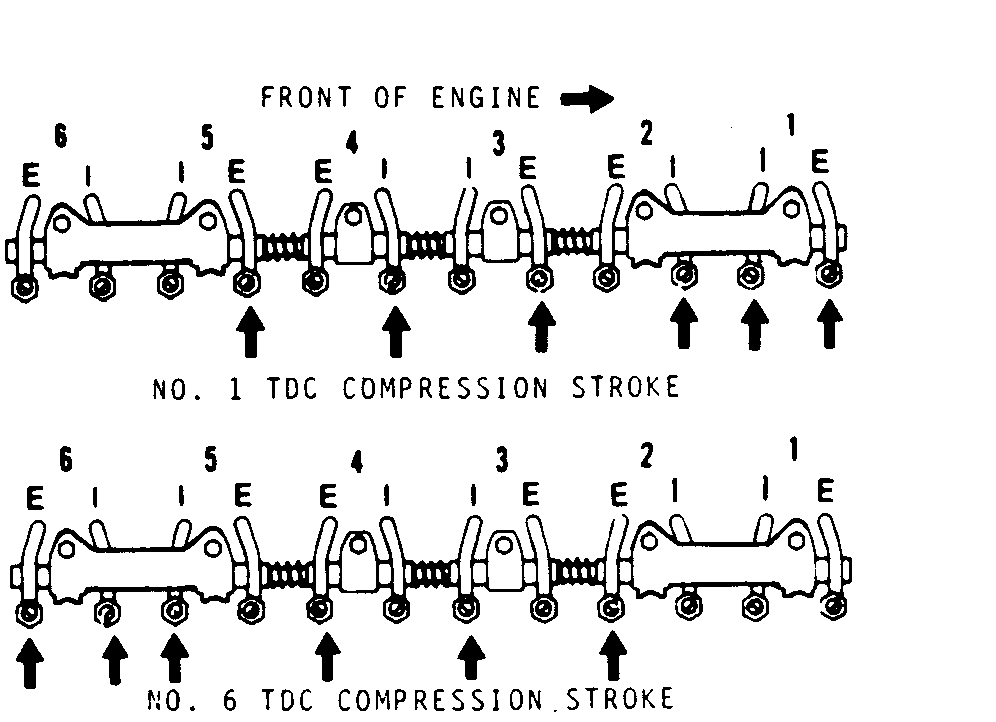
RG4295-19-21AUG91Valve Adjusting Sequence
With engine lock-pinned at TDC of No. 1 piston's compression stroke, adjust valve clearance on No's. 1, 3, and 5 exhaust valves and No's. 1, 2, and 4 intake valves. Adjust valves by loosening the lock nut on rocker arm adjusting screw. Turn adjusting screw until feeler gauge slips with a slight drag. Hold the adjusting screw from turning with screwdriver and tighten lock nut.Item Measurement Specification Intake Valve Clearance Adjustment (Rocker Arm-to-Valve Tip with Engine Cold) Clearance 0.38 mm (0.015 in.) Exhaust Valve Clearance Adjustment (Rocker Arm-to-Valve Tip with Engine Cold) Clearance 0.51 mm (0.020 in.) -
Recheck clearance again after tightening lock nut and compare to the following specification. Readjust clearance as necessary and tighten lock nut to specification.
Item Measurement Specification Valve Adjusting Screw Lock Nut Torque 27 N˙m (20 lb-ft) -
Rotate flywheel 360° until No. 6 piston is at TDC of its compression stroke. Rocker arms for No. 6 piston should be loose.
-
Adjust valve clearance to the same specifications on No's. 2, 4, and 6 exhaust and No's. 3, 5, and 6 intake valves.
-
NOTE: Examine rocker arm cover gasket and replace if damaged. If gasket is made of cork material, always replace after valve adjustment.
Install rocker arm cover and tighten cap screws to specification.
Item Measurement Specification Rocker Arm Cover-to-Cylinder Head Cap Screws Torque 8 N˙m (6 lb-ft) (72 lb-in.)
|
OURGP11,0000030-19-20041223 |