Testing Thermostats Opening Temperature- Earlier Engines
TS281-UN-15APR13
High Pressure Fluids
RG12789-UN-21JAN03
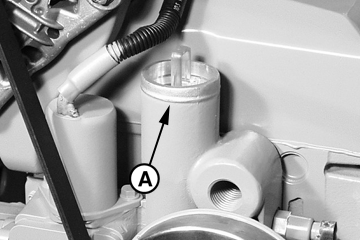
Coolant Hose to Thermostat Housing (Earlier Engine Shown)
A - Thermostat Hose Connection
To Remove Thermostat (Earlier Engines)
-
 CAUTION: Explosive release of fluids from pressurized cooling
system can cause serious burns. DO NOT drain coolant until it has
cooled below operating temperature. Always loosen radiator pressure
cap or drain valve slowly to relieve pressure.
CAUTION: Explosive release of fluids from pressurized cooling
system can cause serious burns. DO NOT drain coolant until it has
cooled below operating temperature. Always loosen radiator pressure
cap or drain valve slowly to relieve pressure.Visually inspect area around thermostat housing on top of engine timing gear cover for leaks.
-
Remove radiator pressure cap and partially drain cooling system.
-
Remove coolant hose (shown removed) from thermostat housing.
-
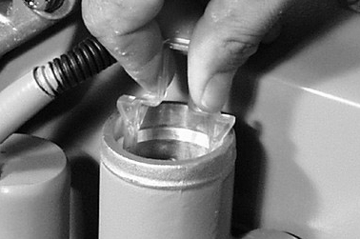
RG12790-UN-21JAN03Removing Thermostat from Housing (Earlier Engine Shown)
Remove thermostat from thermostat housing by squeezing handle to release from grooves inside bore and pull out. -
Clean and check thermostat housing for cracks or damage.
Testing Thermostats Opening Temperature (Earlier Engines)
RG5971-UN-23NOV97
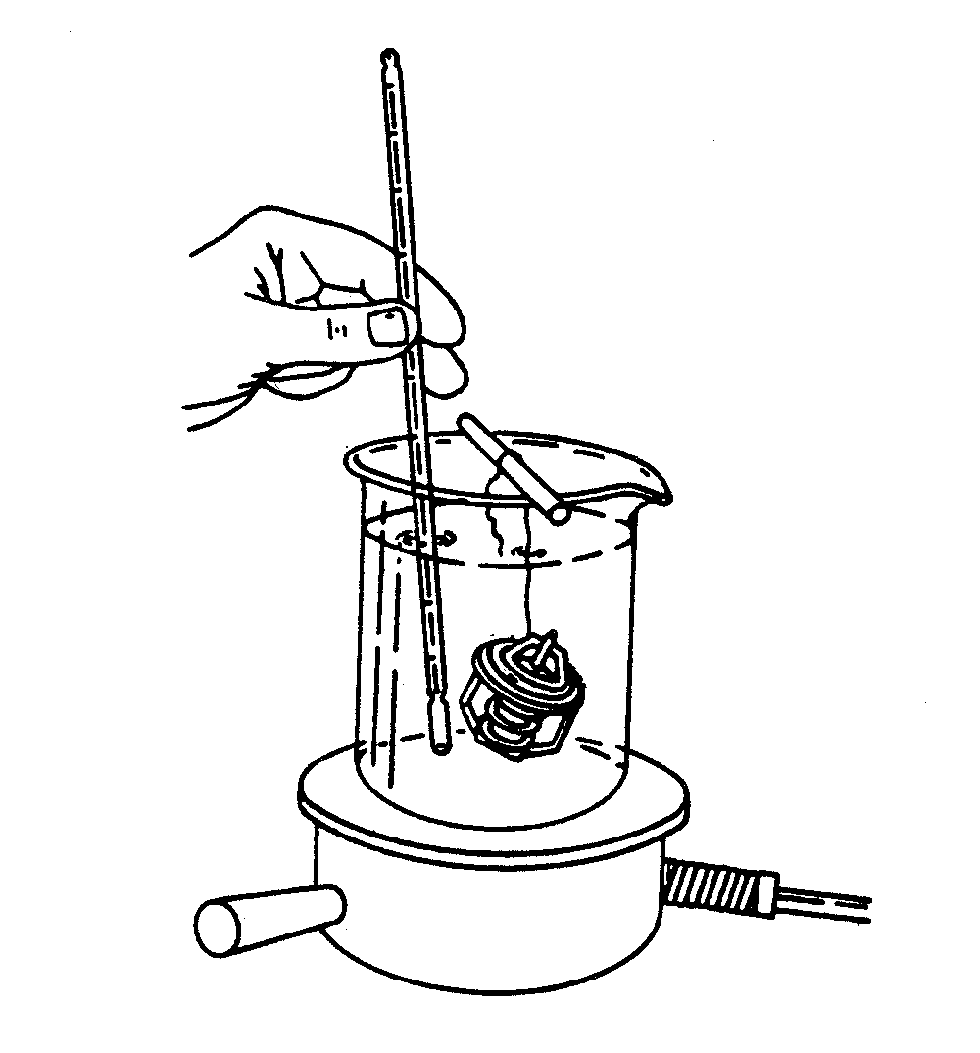
Testing Thermostat Opening Temperature
-
Remove thermostat(s).
-
Visually inspect thermostat(s) for corrosion or damage. If dual thermostats, replace as a matched set as necessary.
CAUTION: DO NOT allow thermostat or thermometer to rest against
the side or bottom of container when heating water. Either may rupture
if overheated. -
Suspend thermostat and a thermometer in a container of water.
-
Stir the water as it heats. Observe opening action of thermostat and compare temperatures with the specification below.
NOTE: Due to varying tolerances of different suppliers, initial opening and full open temperatures may vary slightly from specified temperatures.
THERMOSTAT TEST SPECIFICATIONS
Rating
Initial Opening (Range)
Full Open (Nominal)
71°C (160°F)
69—72°C (156—162°F)
84°C (182°F)
77°C (170°F)
74—78°C (166—172°F)
89°C (192°F)
82°C (180°F)
80—84°C (175—182°F)
94°C (202°F)
89°C (192°F)
86—90°C (187—194°F)
101°C (214°F)
90°C (195°F)
89—93°C (192—199°F)
103°C (218°F)
92°C (197°F)
89—93°C (193—200°F)
105°C (221°F)
96°C (205°F)
94—97°C (201—207°F)
100°C (213°F)
99°C (210°F)
96—100°C (205—212°F)
111°C (232°F)
-
Remove thermostat and observe its closing action as it cools. In ambient air the thermostat should close completely. Closing action should be smooth and slow.
-
Replace any defective thermostat.
To Install Thermostats (Earlier Engines)
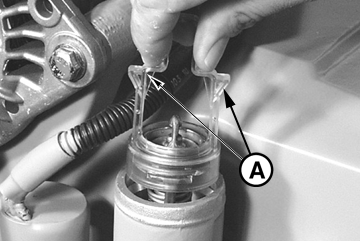
RG12791-UN-21JAN03
Installing Thermostat (Earlier Engine Shown)
-
Insert thermostat in housing as shown until both tabs (A) are fully engaged in the groove in the housing bore.
-
Install coolant hose to thermostat cover. Tighten clamp.
-
If not already done, fill cooling system and check for leaks.
IMPORTANT: Air must be expelled from cooling system when filling. Loosen temperature sending unit fitting at rear of cylinder head or plug in thermostat housing to allow air to escape when filling system. Tighten fitting or plug when all air has been expelled.
|
RG41183,0000050-19-20070102 |