Flushing And Refilling Cooling System
TS281-UN-15APR13
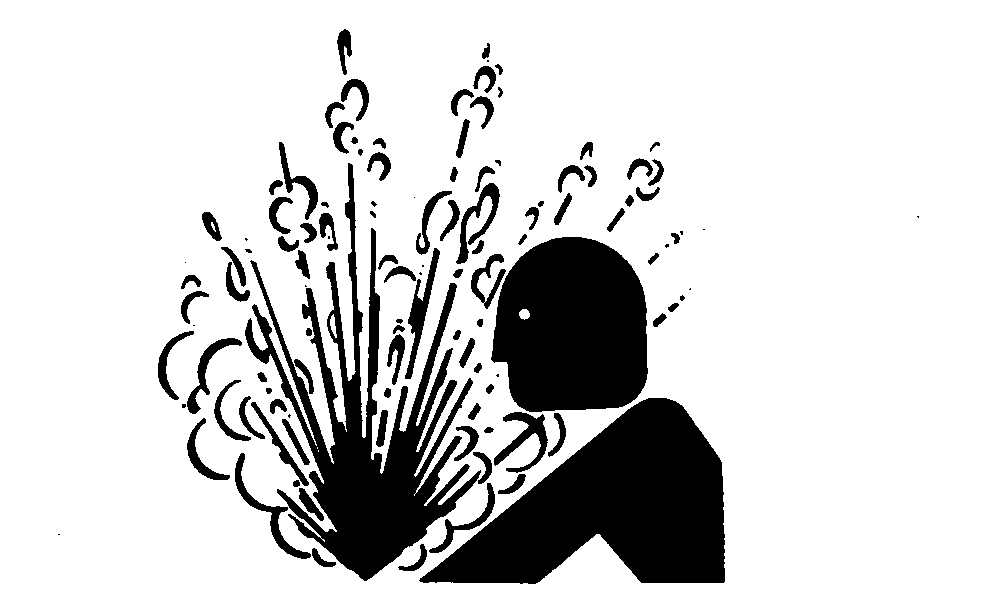
High-Pressure Fluids
RG9839-UN-05JAN99
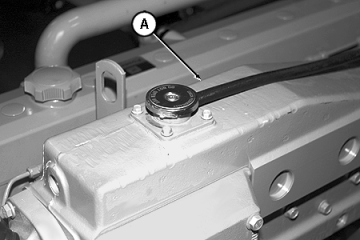
Engine Top Tank
 CAUTION: Explosive release of fluids from pressurized cooling
system can cause serious burns.
CAUTION: Explosive release of fluids from pressurized cooling
system can cause serious burns.
Shut off engine. Only remove filler cap when cool enough to touch with bare hands. Slowly loosen cap to first stop to relieve pressure before removing completely.
NOTE: When John Deere COOL-GARD is used, the drain interval is 3000 hours or 36 months. The drain interval may be extended to 5000 hours or 60 months of operation, provided that the coolant is tested annually AND additives are replenished, as needed, by adding a supplemental coolant additive (SCA).
If COOL-GARD is not used, the flushing interval is 2000 hours or 24 months of operation.
Drain old coolant, flush the entire cooling system, test thermostats, and fill with recommended clean coolant using the following procedure.
-
Pressure test entire cooling system and pressure cap if not previously done. (See PRESSURE TESTING COOLING SYSTEM, in the Lubrication and Maintenance/500 Hour/12 Month Section.)
-
Slowly open the cap on the top tank (A) or heat exchanger to relieve pressure and allow coolant to drain faster.
-
RG8019A-UN-19JUN00Engine Block Drain Valve
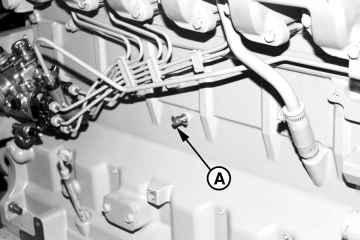
A - Engine Block Drain Valve
Open engine block drain valve (A) on left side of engine. Drain all coolant from engine block. -
Open heat exchanger or top tank drain valve. Drain all coolant from heat exchanger or top tank.
-
Remove thermostats at this time, if not previously done. Install cover (without thermostats) using old gasket and tighten cap screws to 47 N˙m (35 lb-ft).
-
Test thermostat opening temperature. (See Inspecting Thermostats And Testing Opening Temperature following in this section).
-
Close all drain valves after coolant has drained.
-
CAUTION: Do not run engine longer than 10 minutes. Doing so
may cause engine to overheat, causing burns when cooling system is
draining.
Fill the cooling system with clean water. Run the engine about 10 minutes to stir up possible rust or sediment.
-
Stop engine, pull off lower cooling system hose and remove heat exchanger or top tank cap. Immediately drain the water from system before rust and sediment settle.
-
After draining water, close drain valves. Reinstall cap, lower cooling system hose and clamp. Fill the cooling system with clean water and a heavy duty cooling system cleaner such as Fleetguard® RESTORE™ and RESTORE PLUS™.
-
After cleaning the cooling system, drain cleaner and fill with water to flush the system. Run the engine about 10 minutes, remove heat exchanger or top tank cap and pull off lower cooling system hose to drain out flushing water.
-
Close all drain valves. Reinstall hoses and tighten clamps securely. Install thermostats using a new gasket.
IMPORTANT: Air must be expelled from cooling system when system is refilled. Loosen temperature sending unit fitting at rear of cylinder head or plug in thermostat housing to allow air to escape when filling system. Retighten fitting or plug after filling cooling system.
-
Refill with fresh coolant until coolant touches bottom of filler neck. (See ADDING COOLANT in Service As Required Section.) Install heat exchanger or top tank cap.
-
Run engine until it reaches operating temperature. This mixes the solution uniformly and circulates it through the entire system. The normal engine coolant temperature range is 82°—94°C (180° — 202°F).
-
After running engine, check coolant level and entire cooling system for leaks.
|
Fleetguard is a trademark of Cummins Engine Company, Inc. RESTORE is a trademark of Fleetguard. RESTORE PLUS is a trademark of Fleetguard. |
OURGP11,000020B-19-20031008 |