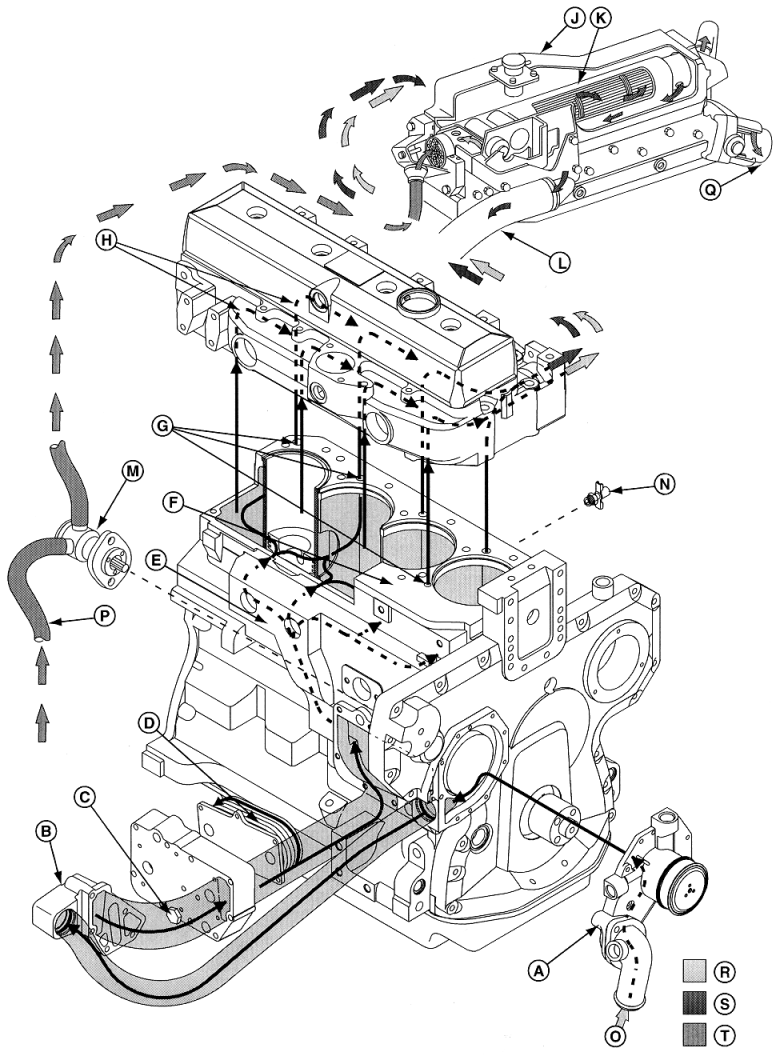
Engine Coolant and Sea Water Flow For Heat Exchanger Engines (Except 6068SFM50/75 and 6068AFM75)
RG9865-UN-20JAN99
A - Coolant Pump
B - Coolant Passage Adapter
C - Oil Cooler Drain Plug
D - Oil Cooler Plates
E - Main Coolant Gallery
F - Coolant Jacket
G - Block Deck Passages
H - Passages
I - Thermostat(s)
J - Heat Exchanger/Thermostat Housing
K - Heat Exchanger Core
L - Coolant Outlet Hose
M - Sea Water Pump
N - Drain Valve (Coolant)
O - Coolant Inlet to Water Pump
P - Sea Water Inlet
Q - Sea Water Outlet
R - High-Temperature Coolant
S - Low-Temperature Coolant
T - Sea Water
Coolant is circulated from the coolant pump (A) into the coolant passage adapter (B) and circulates around the oil cooler plates (D). From the oil cooler, coolant flows into the main coolant gallery (E). From the gallery, coolant flows into the coolant jacket (F), around the cylinder liners, up through the block deck passages (G), and into the cylinder head. In the cylinder head, the coolant flows through passages (H) around the intake and exhaust ports, valve seats, and injection nozzles. Coolant flows toward the front end of the cylinder head and exits into the heat exchanger/thermostat housing (J).
During the warm-up period, thermostats (I) are closed and coolant bypasses heat exchanger core (K), exiting through hose (L) into the coolant inlet side (O) of the coolant pump. The coolant continues circulating through the cylinder block, cylinder head, heat exchanger and coolant pump to provide a uniform and fast warm-up period.
Once the engine has reached operating temperature, the thermostats open and allow high-temperature coolant to flow around tubes in the heat exchanger core (K), dissipating heat. Low-temperature coolant flows out coolant outlet hose (L) and into coolant inlet side (O) of the coolant pump. Coolant continues flowing through the engine and heat exchanger circuit until the coolant temperature drops below the thermostat opening temperature.
Sea water flows into sea water pump (M) at inlet (P). Water then flows through tubing in the heat exchanger core (K). It absorbs heat from high-temperature coolant flowing around the tubing and exits through the sea water outlet (Q), or is discharged overboard.
|
OURGP12,00001FA-19-20100219 |