Flushing and Refilling Cooling System
TS281-UN-15APR13
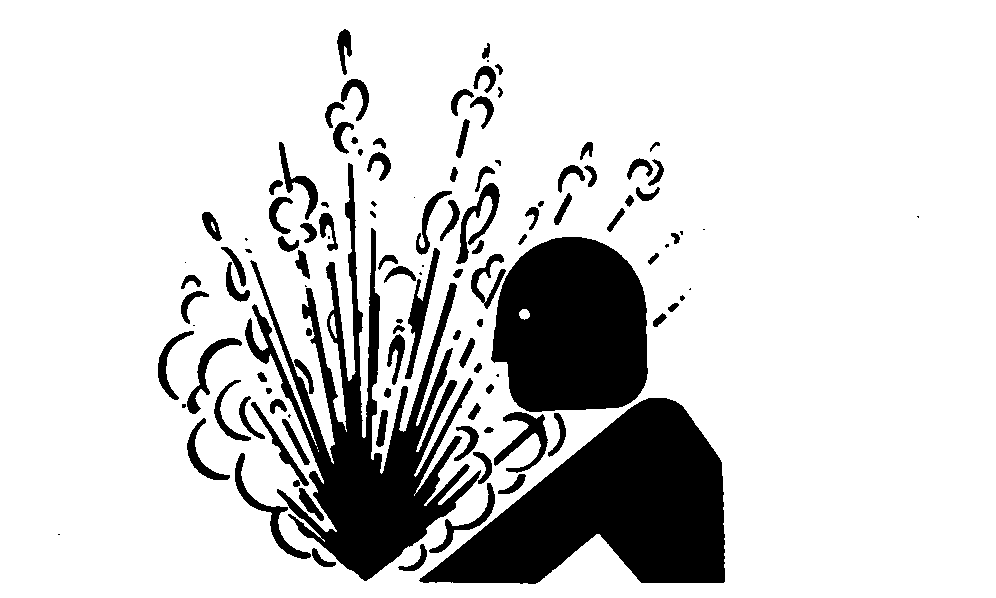
High-Pressure Fluids
RG12833-UN-13FEB03
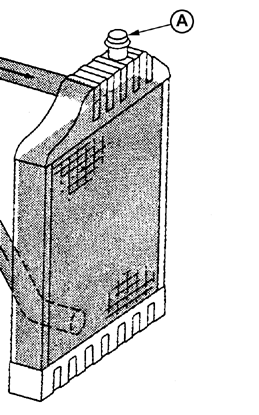
Radiator Cap
 CAUTION: Explosive release of fluids from pressurized cooling
system can cause serious burns.
CAUTION: Explosive release of fluids from pressurized cooling
system can cause serious burns.
Shut off engine. Only remove filler cap when cool enough to touch with bare hands. Slowly loosen cap to first stop to relieve pressure before removing completely.
NOTE: If COOL-GARD II is not used, the drain interval is reduced to 2000 hours or 24 months of operation.
Drain old coolant, flush the entire cooling system, test thermostats, and fill with recommended clean coolant per the following procedure.
-
Pressure test entire cooling system and pressure cap if not previously done. (See PRESSURE TESTING COOLING SYSTEM, in the Lubrication and Maintenance 500 Hour/12 Month Section.
-
Slowly open the engine cooling system filler cap or radiator cap (A) to relieve pressure and allow coolant to drain faster.
-
NOTE: Drain coolant from the lowest point in the cooling system. This location will vary by application.
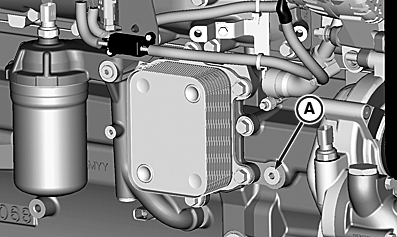
RG20741-UN-22AUG11Engine Block Coolant Drain Plug
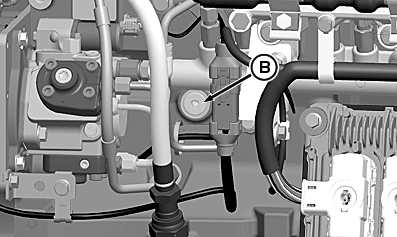
RG21689-UN-27JUN12Engine Block Coolant Drain Plug
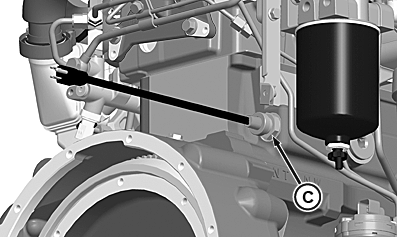
RG18612-UN-28MAY10Block Heater Port
A - Engine Block Coolant Drain Plug
B - Engine Block Coolant Drain Plug
C - Block Heater Port
Drain all coolant from engine block. -
Open radiator drain valve. Drain all coolant from radiator.
-
Remove thermostats at this time, if not previously done. Install cover (without thermostats and seals) and tighten cap screws to specifications.
Item Measurement Specification Thermostat Cover Cap Screw Torque 35 N·m (26 lb-ft) -
Test thermostat opening temperature. (See Inspecting Thermostats And Testing Opening Temperature in Service As Required Section.)
-
Close all drain valves after coolant has drained.
-
CAUTION: Do not run engine longer than 10 minutes. Doing so
may cause engine to overheat which may cause burns when radiator water
is draining.
Fill the cooling system with clean water. Run the engine about 7 minutes to stir up possible contaminates or foreign particles.
-
Stop engine, pull off lower radiator hose and remove radiator cap. Immediately drain the water from system before contaminates or foreign particles settle.
-
After draining water, close drain valves. Reinstall radiator cap and radiator hose and clamp. Fill the cooling system with clean water and a heavy duty cooling system cleaner such as Fleetguard, Restore, and Restore Plus. Follow manufacturer's directions on label.
-
After cleaning the cooling system, drain cleaner and fill with water to flush the system. Run the engine about 7 minutes. Stop engine, remove radiator cap and drain out flushing water.
-
Close all drain valves on engine and radiator. Install thermostats using a new gasket. (See TESTING THERMOSTATS OPENING TEMPERATURE later in this section.)
IMPORTANT: Air must be expelled from cooling system when system is refilled. Check that surge tank is filled to correct level and the automatic purge lines are clear from blockage. Cooling system must be free of air when operating engine or damage to EGR cooler may result.
-
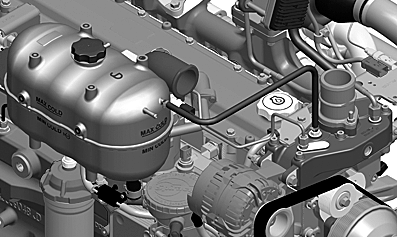
RG19795-UN-14DEC10Coolant Surge Tank
Add coolant to surge tank (See specification for capacity, which can vary with application). Coolant level should be at bottom of surge tank filler neck or radiator filler neck. If equipped with a translucent surge tank, coolant level should be at cool fill line indicator on surge tank. Install radiator cap.Item Measurement Specification 6.8 L Engine Coolant Capacity (Excluding Radiator) 11.9 L (13 qt) -
Run engine until it reaches operating temperature. This mixes the solution uniformly and circulates it through the entire system. The normal engine coolant temperature range is 85°—103°C (185°—217°F).
-
After running engine, check coolant level and entire cooling system for leaks.
-
Inspect the fan belt for wear and check belt tension. (See Checking Belt Tensioner Spring Tension and Belt Wear in Lubrication and Maintenance 500 Hour/12 Month section.
|
JR74534,0000260-19-20130612 |