Cold Weather Operation

TS1356-UN-18MAR92
Highly Flammable Material
RG24266-UN-30AUG13
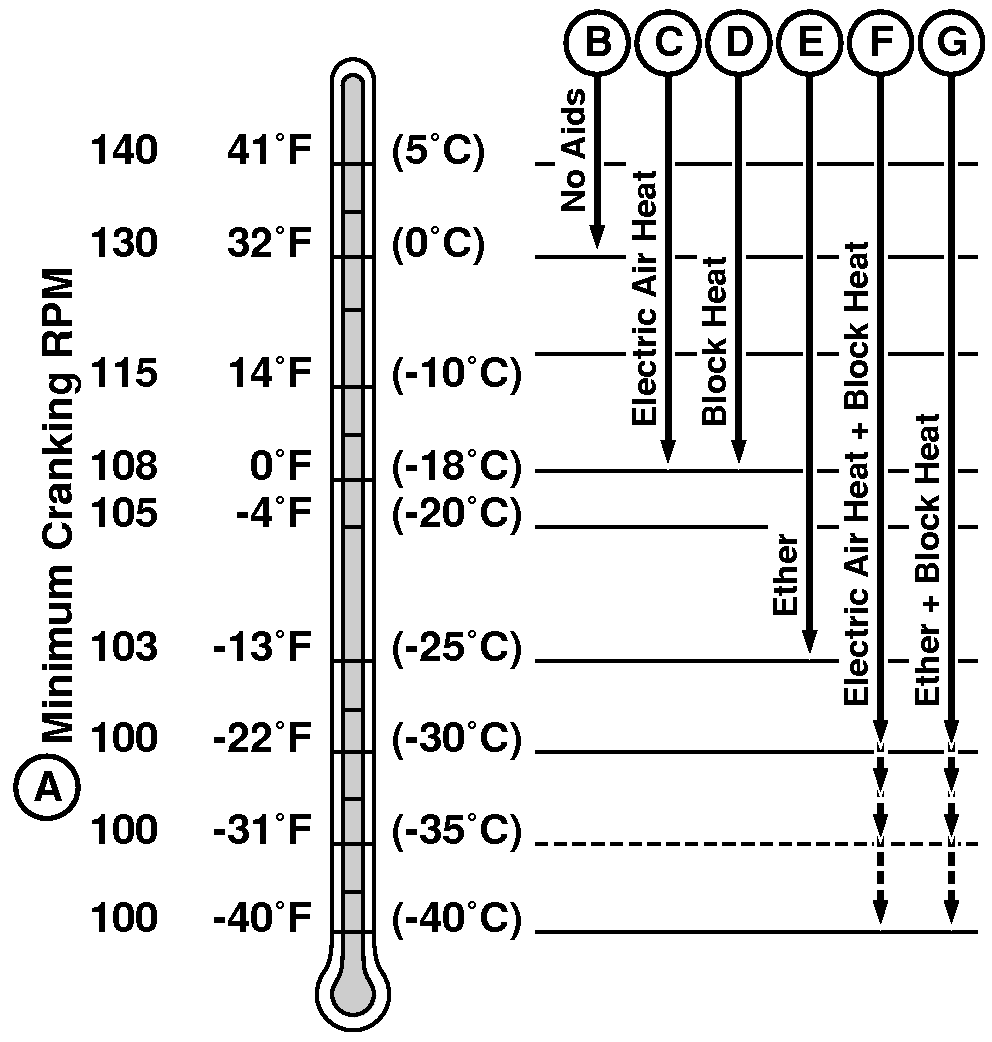
Cold Weather Starting Guidelines
A - Minimum Cranking RPM
B - No Aids
C - Electric Air Heat
D - Block Heat
E - Ether
F - Electric Air Heat and Block Heat
G - Ether and Block Heat
 CAUTION: Ether is highly flammable. DO NOT use ether when starting
an engine equipped with glow plugs or an air intake heater.
CAUTION: Ether is highly flammable. DO NOT use ether when starting
an engine equipped with glow plugs or an air intake heater.
DO NOT use starting fluid near fire, sparks, or flames. DO NOT incinerate or puncture a starting fluid container.
IMPORTANT: Engines with Rear PTO must switch off or unload all pumps, auxiliary drives, and compressors before cold weather starting to reduce drag on engine.
Engines may be equipped with a block heater, coolant heater, or fuel heater as cold weather starting aids.
Starting aids are required below 0°C (32°F). They will enhance starting performance above these temperatures and may be needed to start applications that have high parasitic loads during cranking and/or start acceleration to idle.
Using correct grade oil (per engine and machine operator’s manual) is critical to achieve adequate cold-weather cranking speed. Synthetic oils have improved flow at low temperatures.
Other cold weather starting aids are required at temperatures below -25°C (-13°F) or at altitudes above 1500 m (5000 ft).
1. Follow steps 1—4 as listed under Starting the Engine in Section 20, then proceed as follows according to the instrument (control) panel on your engine.
2. Use cold weather starting aids as needed. Follow supplier instructions for starting aid provided on your engine. A booster battery can be connected if needed (see Using a Booster Battery or Charger in Section 20).
3. Engines with air intake heaters or glow plugs: Turn key ON but do not crank engine until Engine Preheat Indicator goes off.
4. Follow steps 5—7 as listed under Starting the Engine in Section 20.
Additional information on cold-weather operation is available from your authorized servicing dealer.
|
RK80614,000000C-19-20210819 |