Cleaning and Checking Battery
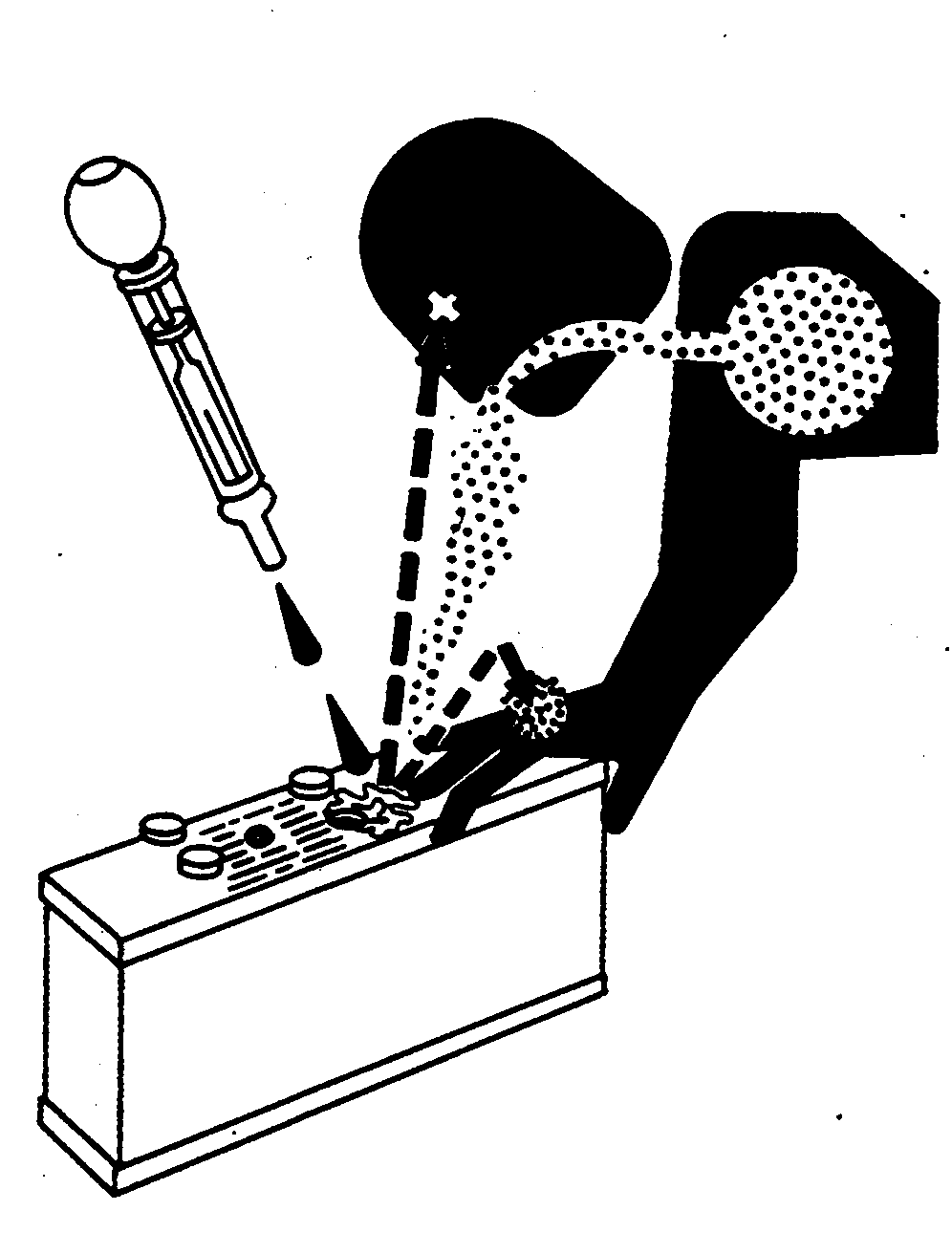
 CAUTION:
TS203-UN-23AUG88
- Filling batteries in a well-ventilated area.
- Wearing eye protection and rubber gloves.
- Avoiding breathing fumes when electrolyte is added.
- Avoiding spilling or dripping electrolyte.
- Using proper jump start procedure.
Avoid the hazard by:
- Flush your skin with water.
- Apply baking soda or lime to help neutralize the acid.
- Flush your eyes with water for 15—30 minutes. Get medical attention immediately.
If you spill acid on yourself:
- Do not induce vomiting.
- Drink large amounts of water or milk, but do not exceed 2 L (2 quarts).
- Get medical attention immediately.
If acid is swallowed:
-
CAUTION: Battery gas can explode. Keep sparks and flames away
from batteries. Use a flashlight to check battery electrolyte level.
Never check battery charge by placing a metal object across the posts. Use a voltmeter or hydrometer.
Always remove grounded (—) battery clamp first and replace it last.
WARNING: Battery posts, terminals, and related accessories contain lead and lead compounds, chemicals known to the State of California to cause cancer and reproductive harm. Wash hands after handling.

TS204-UN-15APR13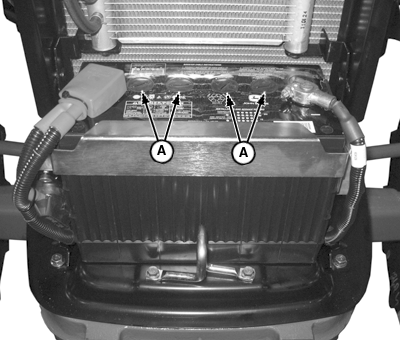
LV14228-UN-03MAY11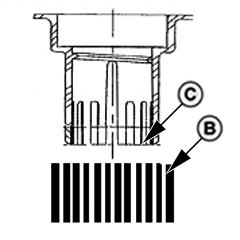
PULV000655-UN-05MAY08A - Cell
B - Plates
C - Electrolyte Level
Raise hood and side-screen panels to access battery. -
Check level of electrolyte in each cell (A) at least every 250 hours. Ensure that every cell has fluid level HIGHER than top of plates. Only use CLEAN, SOFT water to fill up electrolyte level.
IMPORTANT: DO NOT add water in freezing weather unless tractor will be run at least 30 minutes to ensure thorough mixing.
-
Use a battery hydrometer to check specific gravity of electrolyte in each cell. Charge battery if reading is below 1.215. Replace battery if difference between cells is more than 0.050 or if battery will not charge above 1.225.
-
Always correct specific gravity reading for electrolyte temperature variation. Add 0.007 to the reading obtained in step one for every 10° above 27°C (add 0.004 to the reading for every 10°F above 80°F). Subtract at same rate if electrolyte temperature is below 27°C (80°F). Corrected specific gravity of a fully charged battery is from 1.265—1.280.
-
A battery is considered fully charged when three consecutive hydrometer readings, taken at hourly intervals, show no rise in specific gravity.
Wipe battery with a damp cloth. Clean and tighten connections if needed. Check fluid level in each cell. Fill to bottom of filler neck with clean mineral-free water.
Coat terminals with a small amount of grease.
|
JZ81662,00007CE-19-20120308 |