Recommended Engine Speeds and Operating Procedures
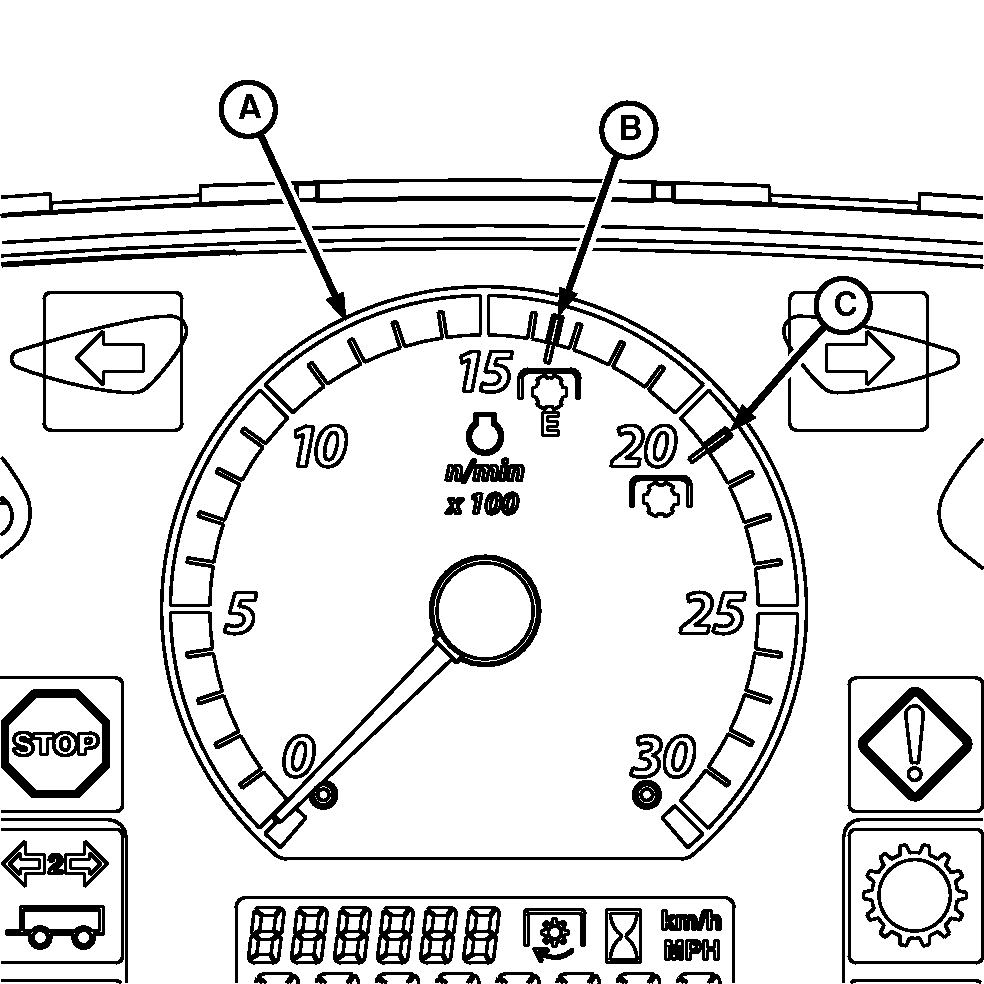
LV14742-UN-30AUG11
A - Tachometer
B - 1645 RPM Mark (540E)
C - 2100 RPM Mark (540)
Warm Up Engine
Do not place tractor under full load until it is properly warmed up.
-
Idle engine at 1200—1500 rpm for several minutes.
-
Run engine at about 1900 rpm and under light load until engine reaches normal operating condition.
NOTE: If engine is hard to start during cold weather, operate cold weather start aid, if equipped. (Refer to “Cold Weather Start Aid” in this section.)
NOTE: If hydraulic functions operate slowly, warm the transmission-hydraulic system oil. (Refer to “Warm Transmission-Hydraulic System Oil” in Hydraulic System Controls and Operations section.)
Avoid Idling Engine
Allowing engine to idle at low rpm uses fuel inefficiently, and can cause a buildup of carbon in the engine.
If tractor must be left with the engine running more than 3 or 4 minutes, minimum engine speed should be 1200 rpm.
Observe Engine Work and Idle Speeds
-
Low idle speed:
- 900 ± 25 rpm.
-
High idle speed, at light or no load:
- 2400 ± 25 rpm.
-
Engine nominal full load speed is 1600—2400 rpm.
-
NOTE: With PTO shift lever in 540E position, engine high idle speed is limited to 1815 rpm.
Engine speed at PTO operation:
- For economy 540E PTO operations (light PTO implement load), run engine at 1645 rpm (B).
- For standard 540 PTO operations (PTO load demands full engine power), run engine at 2100 rpm (C).
Restart Stalled Engine
If engine stops running due to overload, immediately restart engine. A running engine causes oil and coolant to circulate, which prevents abnormal heat buildup. If engine stalls but does not stop running due to overload, run at low idle for 1 or 2 minutes in order to dissipate heat buildup.
|
JZ81662,0000F42-19-20140207 |