Measure Wheel Slip—Manually
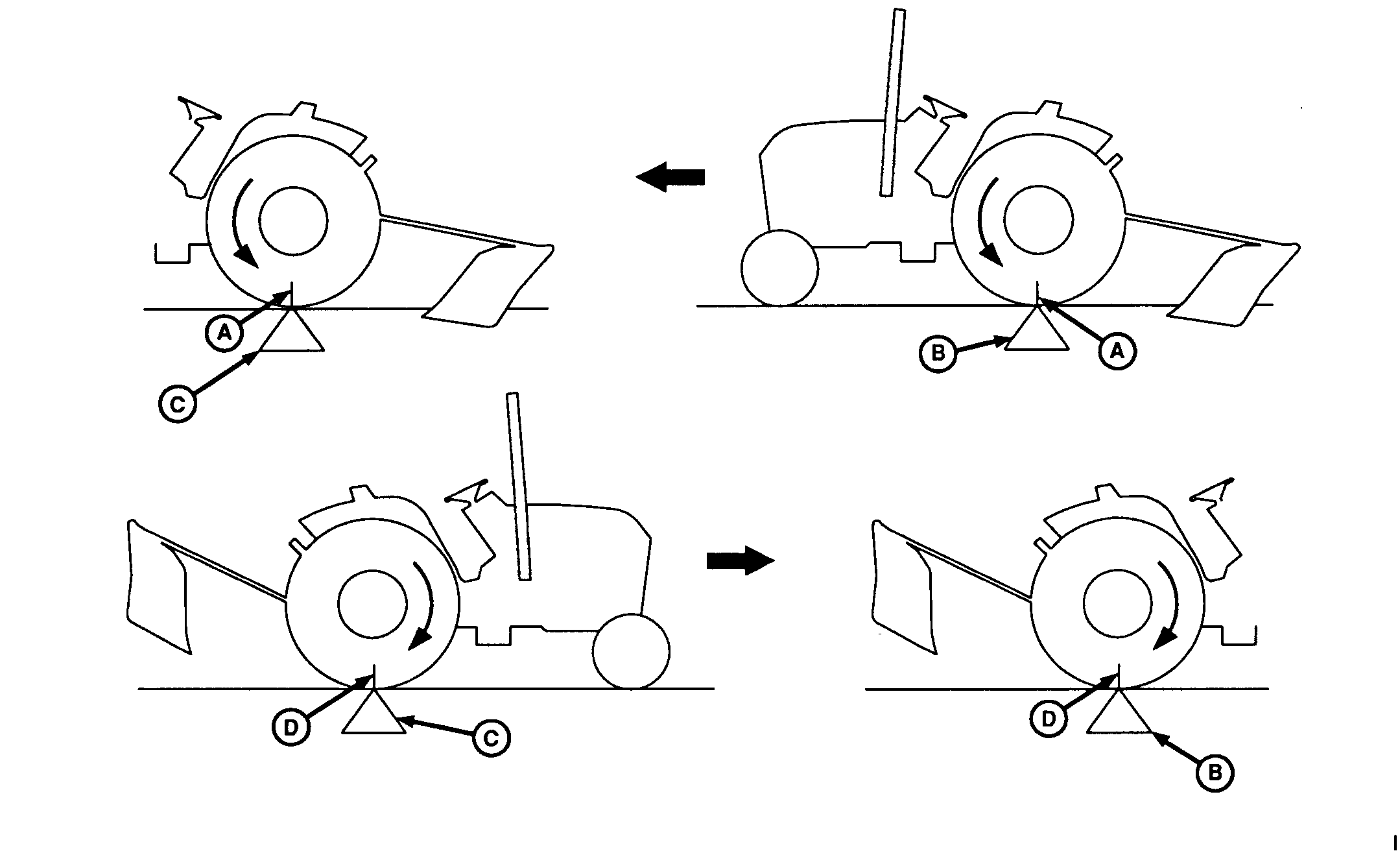
LV733-UN-25JUN94
A - Tire Mark
B - Starting Point
C - Marking after ten Revolutions
D - Marking in Opposite Direction
-
Draw a tire mark (A) on one rear tire (a chalk mark is recommended).
-
With tractor working, mark a starting point (B) on the ground at the place where tire mark (A) meets the ground.
-
Mark the ground again where tire mark (A) completes ten revolutions (C).
-
With implement raised, return in the opposite direction. At the second mark on the ground remark tire.
-
While driving the tractor along the same path (implement raised), count the tire revolutions required to reach starting point (B).
-
Use count of return tire revolution and Wheel Slippage.
NOTE: Ideal wheel slippage. 10—15 % for two-wheel drive tractors or 8—12 % for four-wheel drive tractors.
-
Adjust ballast or load to give correct slippage.
NOTE: Available horsepower is greatly reduced when the wheel slip drops below 10 %.
WHEEL SLIPPAGE CHART
Non-Loaded Wheel Revolutions (Step 5)
Estimated % Slip
Recommended Action
10
0
Remove Ballast
9-1/2
5
Remove Ballast
9
10
Proper Ballast
8-1/2
15
Proper Ballast
8
20
Add Ballast
7-1/2
25
Add Ballast
7
30
Add Ballast
|
SD74272,0000328-19-20200318 |