Operating Mechanical Front-Wheel Drive (MFWD)
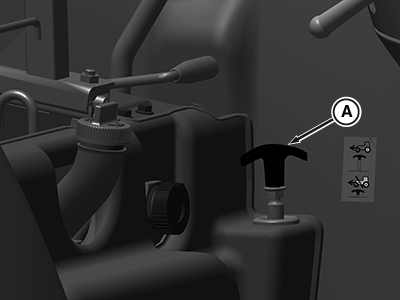
APY07605-UN-02MAY18
A - MFWD Lever
Use front-wheel drive as required for better traction.
 CAUTION: Front-wheel drive greatly increases traction. When
using this option, extra caution is needed on slopes. Compared to
2WD, front-wheel drive maintains traction on steeper slopes, increasing
the possibility of a tip-over.
CAUTION: Front-wheel drive greatly increases traction. When
using this option, extra caution is needed on slopes. Compared to
2WD, front-wheel drive maintains traction on steeper slopes, increasing
the possibility of a tip-over.
When driving on icy, wet or gravel surfaces, reduce speed and be sure that tractor is properly ballasted to avoid skidding and to prevent loss of steering control. Front-wheel drive provides better control under these road conditions.
IMPORTANT: To extend front tire life, engage front-wheel drive only when needed in the field. Front tires turn slightly faster than rear tires with MFWD engaged and wear quickly if driven in MFWD mode on hard surface for an extended period. Unless necessary, DO NOT engage MFWD when driving on hard surfaces.
DO NOT install tire chains on front wheels, chains can strike and damage the tractor.
While towing an implement and pushing MFWD lever to disengage, lever can resist disengagement of MFWD. When this condition occurs the load must first be relieved from the power train. See step 3.
Front-wheel drive can be engaged and disengaged while in motion.
-
To engage, pull up on MFWD lever (A).
-
To disengage, push lever back down.
-
If the lever does not go down easily, it means that the load must first be relieved from the power train. Operator can push down on lever while doing one of the following in order to relieve load:
- Reduce speed and drive tractor straight ahead for few feet.
- Stop tractor, then operate in reverse direction for a short distance, if changing from a forward direction.
|
DP97633,0000023-19-20180502 |