Check and Adjust Cooling Fan V-Belt
-
NOTE: The V-belt slips when it is not tensioned properly. It prevents the alternator from generating sufficient power. Also, the engine overheats due to the slippage of engine coolant pump pulley.
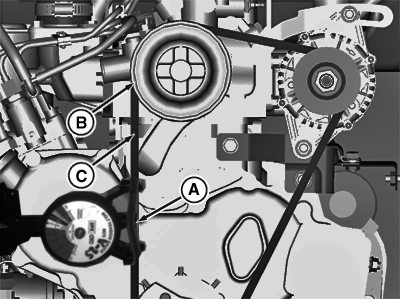
Check the tension in V-belt (C) by using belt tension checking gauge (A).
-
PY31314-UN-08AUG16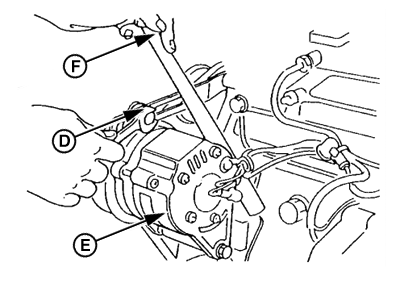
PY22080-UN-09FEB15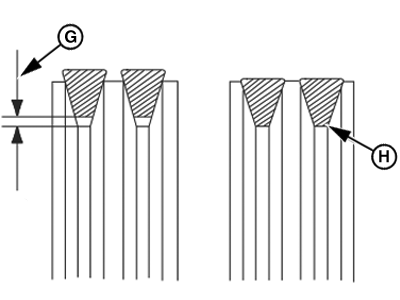
PY22081-UN-09FEB15A - Belt Tension Checking Gauge
B - Fan Belt Mounting Pulley
C - V-Belt
D - Adjusting Bolt
E - Alternator
F - Pry Bar
G - Position G
H - Position H
Tension in belt must be as per specification.NOTE: A Used V-Belt refers to a V-belt which has been used on a running engine for five minutes or more.
-
If necessary, adjust the V-belt tension. Loosen the adjusting bolt (D) and related bolts and nuts, then move the alternator with a pry bar (F) for tightening the V-belt to the desired tension. Then tighten the adjusting bolts (D) and nuts respectively.
-
Tighten the V-belt (C) to the proper tension. There must be clearance between the V-belt and the bottom of the pulley groove position (G). If there is no clearance between the V-belt and the bottom of the pulley groove position (H), replace the V-belt.
-
Check the V-belt for cracks, oil, or wear. If any of these conditions exist, replace the V-belt.
-
Install the new V-belt. Check the tension using belt tension checking gauge (A) as per specification.
-
After adjusting, run the engine for 5 minutes or more. Check the tension again using the belt tension checking gauge (A) as per specification V-Belt Tension for a used V-belt.
Item Measurement Specification V-Belt Tension Tension 401 – 535 N (90 —120.2 lb)
|
DP97633,00000E1-19-20180801 |