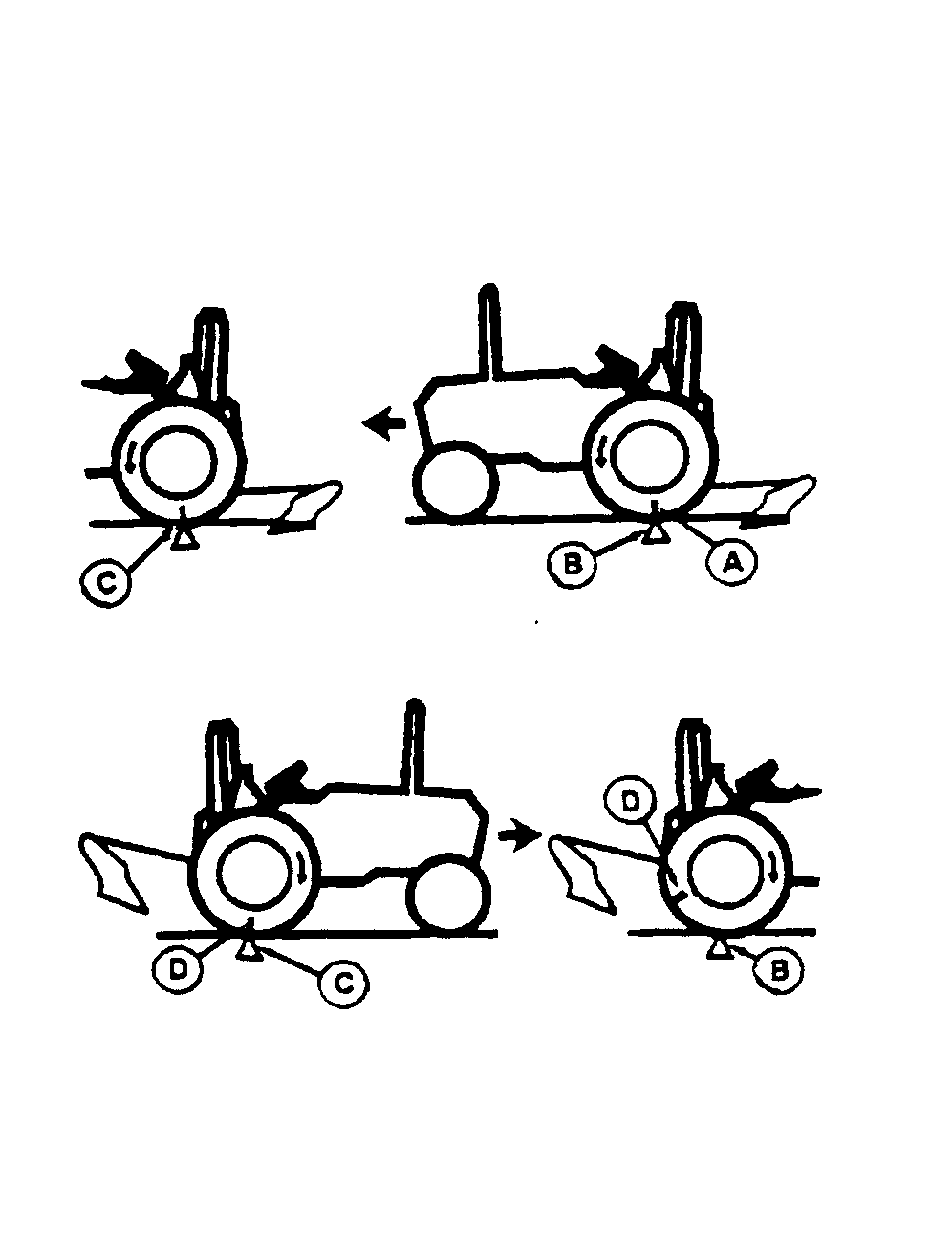
Measuring Wheel Slip-Manually1. Place a mark (A) on a rear tire which is easily observed (a chalk mark is recommended).2. With tractor working and implement lowered, mark a starting point (B) on the ground at the place where tire mark (A) meets the ground. 3. Mark the ground again where tire mark (A) completes 10 full revolutions (C). 4. With implement raised, return in the opposite direction. At the second mark on the ground (C), mark tire a second time (D). 5. While driving the tractor along the same path (implement raised), count the tire revolutions required to reach starting point (B). 6. Use the non-loaded wheel revolutions count in "Wheel Slippage Chart" to determine slippage. NOTE: Ideal wheel slippage is 10-15 % for 2WD tractors, 8-12 % for tractors with MFWD. 7. Adjust ballast or load to give correct slippage. NOTE: Available horsepower is greatly reduced when wheel slip drops below minimum percentage.
|
|
||||||||||||||||||||||||||||
OUO6070,0000059 -19-26JAN08-1/1 |