Rear Wheel Slip Measuring Methods
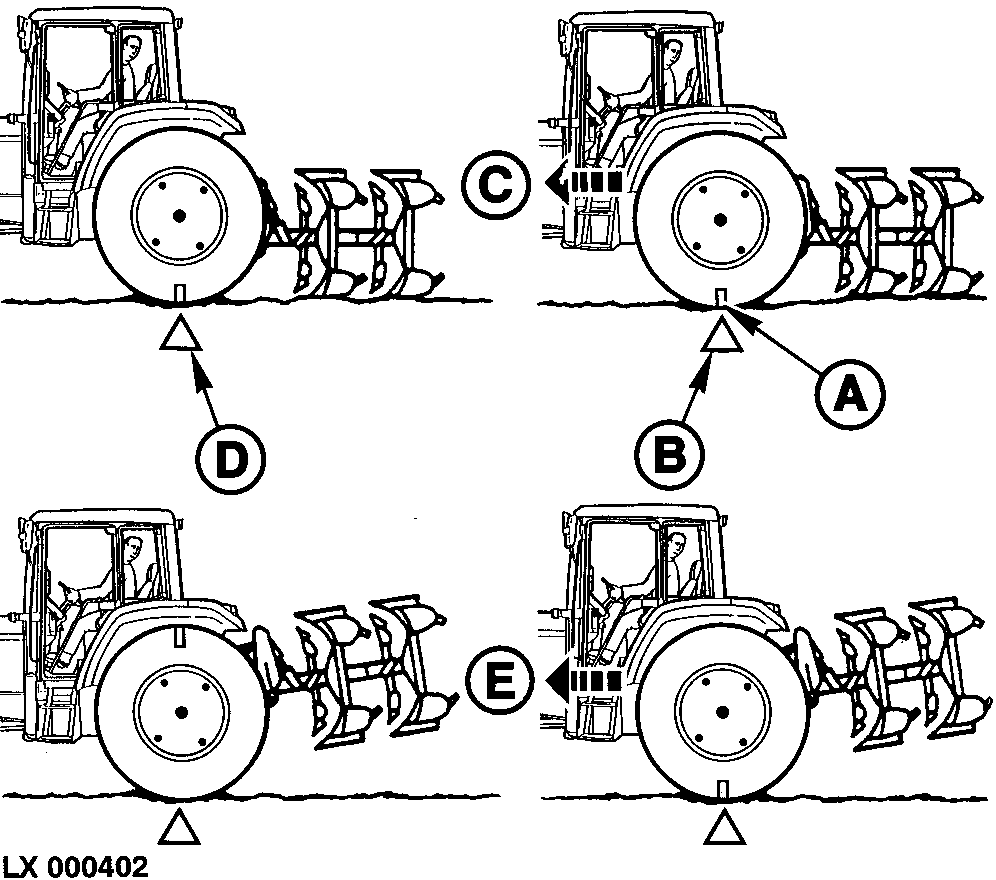
LX000402-UN-15AUG94
- Step 1: Mark rear tire (A).
- Step 2: Mark ground next to rear tire (using a stake) to indicate starting point (B).
- Step 3: Drive tractor in straight line with implement in field position until rear wheel has completed 10 full rotations (C).
- Step 4: Mark ground (with a stake) at point where rear wheel completed 10 full rotations (D).
-
Step 5: Return tractor to starting
point and cover same route marked out on ground with the implement
raised (in transport position). Count the number of rotations completed
by rear wheel between the two markers (E).
The ratio of the number of rotations of the rear wheel with load and without load is the slip rate.
The formula below is used to draw up the following chart:
(step 3 rotations - step 5 rotations) X 100
Slip rate (%) =
Step 3 rotations
Step 3 rotations
Step 5 rotations
Slip rate (%)
10
10.0
0
10
9.5
5
10
9.2
8
10
9.0
10
10
8.8
12
10
8.5
15
10
8.0
20
10
7.5
25
10
7.0
30
- Step 6: Add more weight when slip is excessive. For rates below minimum, weight must be removed.
|
OU83340,000056F-19-20050727 |