Recommended Engine Speeds and Operational Procedures
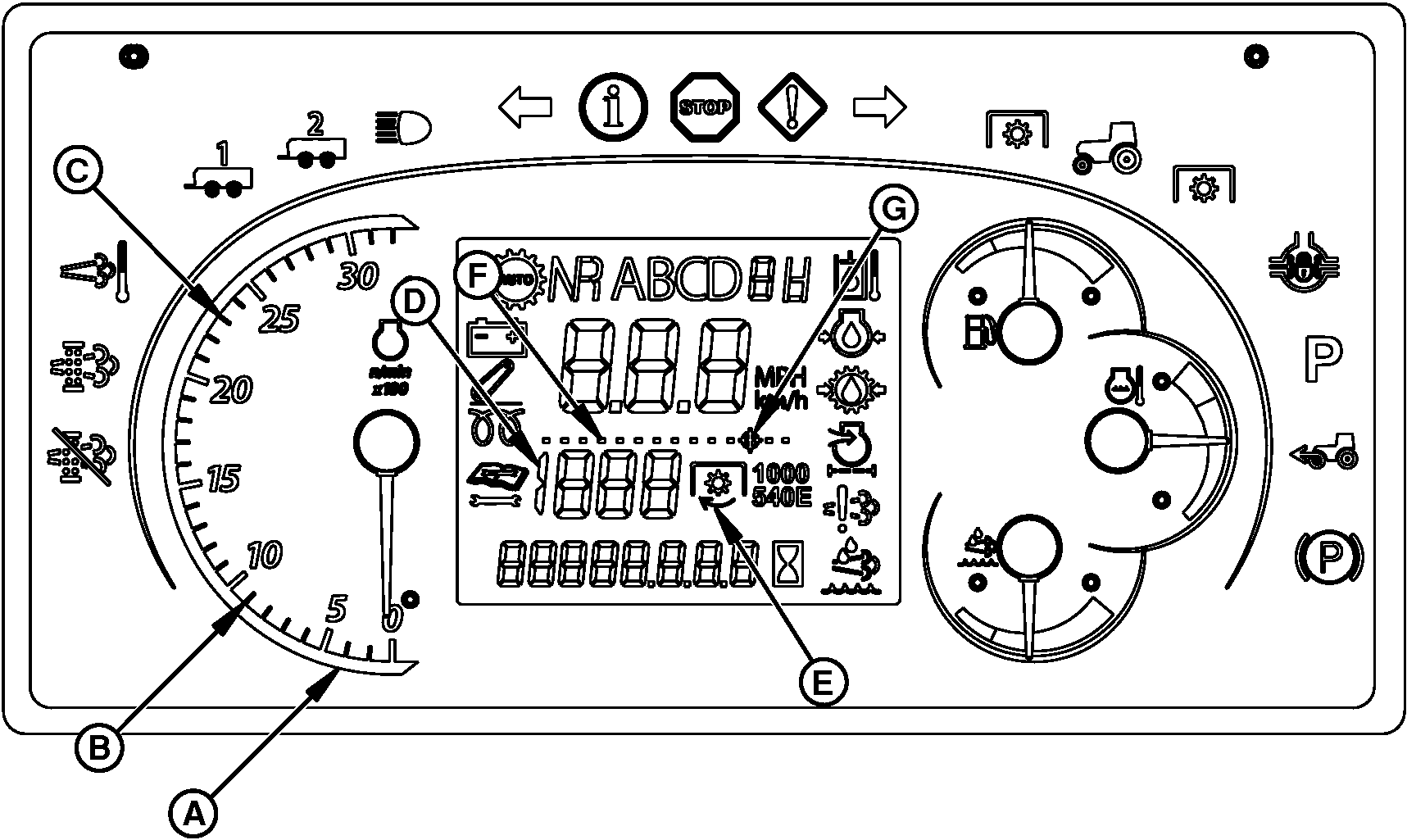
PY13345-UN-07MAY15
A - Tachometer
B - Low Idle Speed
C - High Idle Speed
D - PTO Speed
E - PTO Status
F - Bar Graph
G - Target Indicator
Warm Up Engine
Do not place tractor under full load until it is properly warmed up.
-
Run engine with tachometer (A) reading 1200—1500 rpm for several minutes.
-
Run engine at about 1900 rpm and under light load until engine reaches normal operating condition.
NOTE: If engine is hard to start during cold weather, operate cold weather start aid, if equipped. (Refer to Cold Weather Start in this section.)
NOTE: If hydraulic functions operate slowly, warm the transmission-hydraulic system oil. (Refer to Warm Transmission-Hydraulic System Oil in Hydraulics Operation section.)
Avoid Idling Engine
Allowing engine to idle at low rpm uses fuel inefficiently, and can cause a buildup of carbon in the engine.
If tractor must be left with the engine running more than 3 or 4 minutes, minimum engine speed should be 1200 rpm.
Observe Engine Work and Idle Speeds
-
Low idle speed (B):
- 900 ± 25 rpm.
-
High idle speed, at light or no load (C):
- 2300 ± 25 rpm.
-
Engine nominal full load speed is 1600—2300 rpm.
PTO Speeds
PTO speed (D) and PTO status (E) will be indicated along with bar graph progress when PTO is engaged.
PTO mode value (F) is displayed according to PTO speed selected (540 or 1000).
PTO speed progress is shown on bar graph (F). When target speed is reached, target indicator (G) illuminates.
Restart Stalled Engine
If engine stops running due to overload, immediately restart engine. A running engine causes oil and coolant to circulate, which prevents abnormal heat buildup. If engine stalls but does not stop running due to overload, run at low idle for 1 or 2 minutes in order to dissipate heat buildup.
|
CP00834,0001F1C-19-20160517 |