Tow Machine
RXA0151008-UN-15JAN16
RXA0151010-UN-15JAN16
RXA0151014-UN-15JAN16
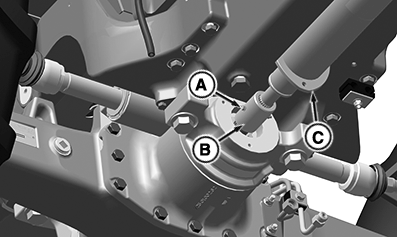
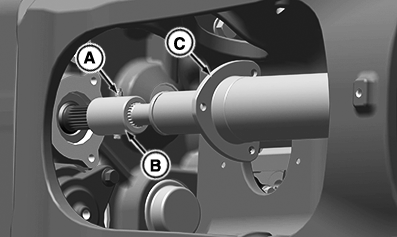
A - Coupler Nut and Bolt
B - Coupler
C - Drive Shaft Shield
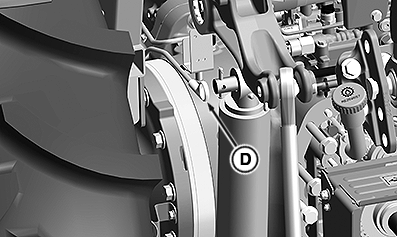
D - Dipstick
 CAUTION: Remove driveshaft if towing machine with front wheels
on a carrier. Loss of electrical power or transmission-hydraulic system
pressure engages the MFWD and pulls machine off the carrier.
CAUTION: Remove driveshaft if towing machine with front wheels
on a carrier. Loss of electrical power or transmission-hydraulic system
pressure engages the MFWD and pulls machine off the carrier.
IMPORTANT: NEVER attempt to start machine by towing, engine does not start by towing and damage occurs.
IMPORTANT: Do not attempt to tow the machine without releasing the park brake, see “Release Park Brake for Towing” in this section.
-
Remove driveshaft
-
Remove cap screws and slide driveshaft shield (C) away from each end of the shaft.
-
Remove coupler nut and bolt (A).
-
While supporting driveshaft, slide coupler (B) toward shield (C) to remove
-
Remove driveshaft, shields, and couplers.
-
-
-
If possible, run engine above 1250 rpm for lubrication, power steering, and power brakes. Have an operator steer and brake machine.
-
If not possible to run engine, add 46 L (12.2 gal) of transmission-hydraulic oil to transmission. Drain oil after transporting.
-
-
Disengage differential lock, tap brake pedals.
-
Disengage PTO.
-
Place left-hand reverser in Neutral position.
-
Do not tow machine faster than 8 km/h (5 mph). Do not exceed 3 km/h (2 mph) for the first 10 minutes at temperatures below freezing.
-
If towing machine with front wheels on carrier, oil level must be above the full oil level mark on dipstick. Add 1 L (0.26 gal) for each 90 mm (3-1/2 in) front wheels are raised off the ground.
After Towing:
-
Apply multipurpose grease to couplers and shaft splines, and reinstall driveshaft assembly.
-
Drain excess transmission-hydraulic oil to return level back to full.
-
Check oil level with dipstick (D) after draining and after operating for five minutes.
|
BH38674,0000437-19-20161017 |