Monthly Storage Procedure
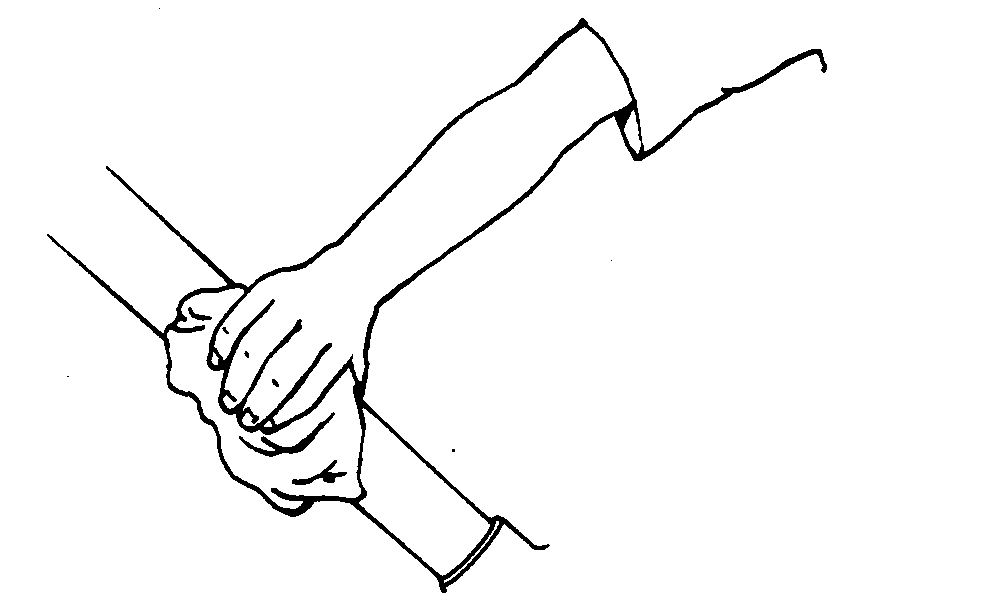
2. Remove LPS 3 Rust Inhibitor from cylinder rods with a cleaning solvent. |
|
 CAUTION:
Engine exhaust fumes can cause sickness or death. Start engine ONLY in a well-ventilated area.
CAUTION:
Engine exhaust fumes can cause sickness or death. Start engine ONLY in a well-ventilated area.
CED,OUO1002,528 -19-05MAR98-1/2 |
|
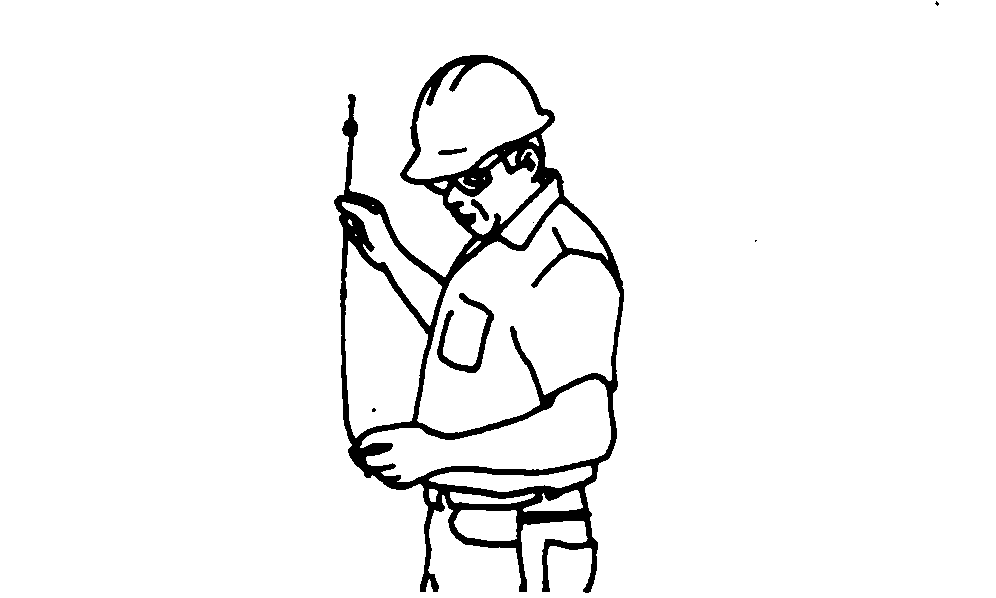
IMPORTANT: Prevent possible engine damage. During cold temperatures, check fluidity of engine oil on dipstick. If the oil appears waxy and/or jelly-like rather than liquid, DO NOT attempt to start engine. Use external heat source to warm the crankcase until oil appears fluid. 3. Check all fluid levels. If low, check for leaks and add oil as required. 4. Check belts. 5. Check condition of all hoses and connections. 6. Check electrolyte level. Charge and install battery. 7. Fill fuel tank. 8. Pre-lubricate turbocharger bearings (if equipped): a. Remove engine shut-off fuse. b. Crank engine for 10 seconds. c. Install engine shut-off fuse. d. Start engine. Run several minutes at 1/3 speed until engine is at normal operating temperature. 9. Bleed fuel system. If engine fails to start or runs poorly after starting, change fuel filter(s). Bleed fuel system again. 10. Operate all controls, levers, seat adjustments, etc. 11. Cycle all hydraulic functions several times. Check condition of all hoses and connections. 12. Check condition of tires. Check tire pressure. |
|
CED,OUO1002,528 -19-05MAR98-2/2 |