Bleeding Brakes
If an accident occurs, see a doctor immediately. Any fluid injected into the skin must be surgically removed within a few hours or gangrene may result. Doctors unfamiliar with this type of injury may call the Deere & Company Medical Department in Moline, Illinois, or other knowledgeable medical source. NOTE: Two people are required to bleed brake system oil; one to operate brake valve, and the other to open and close bleed screws. 1. Install frame locking pin. Engage park brake. |
|
 CAUTION:
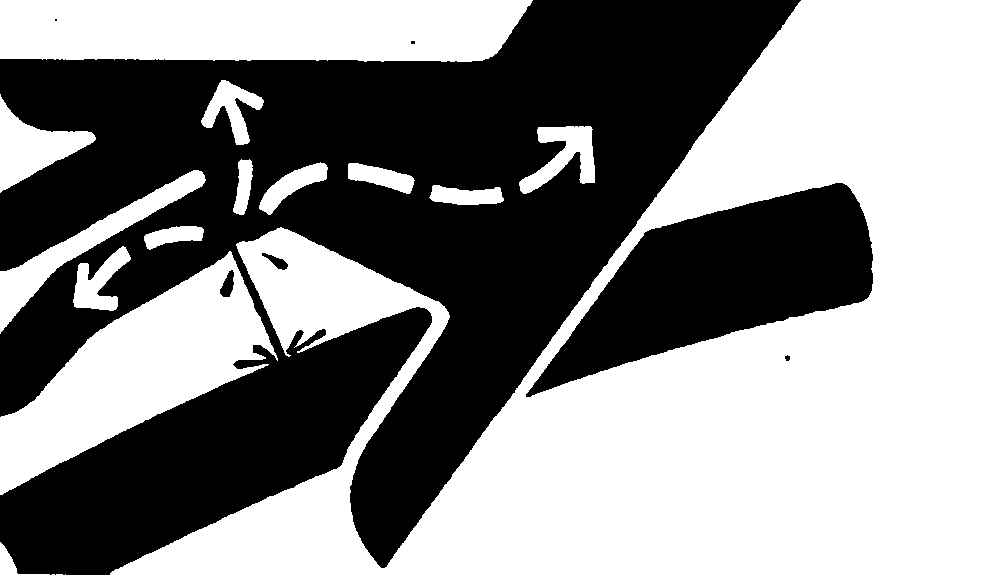
Escaping fluid under pressure can penetrate the skin causing serious injury. Avoid the hazard by relieving pressure before disconnecting hydraulic or other lines. Tighten all connections before applying pressure. Search for leaks with a piece of cardboard. Protect hands and body from high pressure fluids.
CAUTION:
Escaping fluid under pressure can penetrate the skin causing serious injury. Avoid the hazard by relieving pressure before disconnecting hydraulic or other lines. Tighten all connections before applying pressure. Search for leaks with a piece of cardboard. Protect hands and body from high pressure fluids.
CED,OUOEBTW,256 -19-23FEB00-1/2 |
|
2.
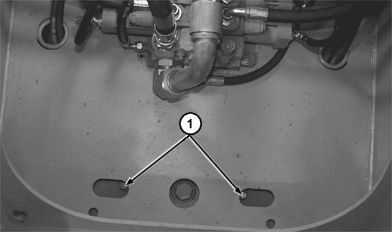
Put a clear plastic tube on bleed screw (1), and route tube to hydraulic tank or to a container.
3. Start engine and run at slow idle. 4. Push and hold brake pedal down until brake bleeding procedure is complete (no air bubbles in clear plastic tube). NOTE: If bubbles continue for more than 3 minutes, stop bleeding procedure. Check for and correct problem and then continue. 5. Open one bleed screw on differential and axle assembly until hydraulic oil starts to flow. Close bleed screw when oil is free of air. Release brake pedal. 6. Repeat steps 1-6 for each bleed screw. 7. Check operation of brakes. 8. Check hydraulic oil level in axles. |
|
CED,OUOEBTW,256 -19-23FEB00-2/2 |