Diagnostic Light Check
The electronic control module provides a diagnostic light to help the operator identify operational and electrical problems by flashing a diagnostic code.
Diagnostic “Real Time” Codes
-
Park machine safely. (See Park Safely in SAFETY section.)
-
NOTE: The operator can be seated on the machine or standing next to the machine.
Turn the key to the START position and release key to RUN mode.
TCAL43858-UN-21MAR13 -
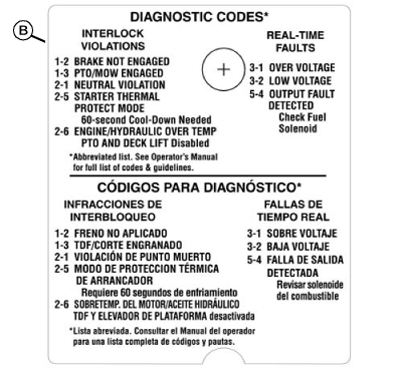
TCAL43859-UN-21MAR13Diagnostic code label is located on right side console beside operator’s seat.
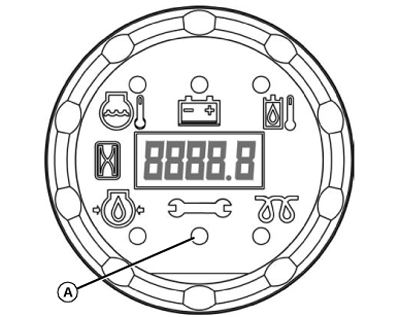
If starter does not engage, use the diagnostic light (A) and diagnostic codes (B) to diagnose the problem.- BRAKE NOT ENGAGED (1-2) diagnostic code: one flash, a short pause and two additional flashes. This code sequence indicates that the park brake switch has not been activated during an attempted engine start or while the engine is idled with the operator out of the seat. Lock park brake to start engine or leave operator seat with the engine at idle.
-
NEUTRAL VIOLATION (2-1) diagnostic
code: two flashes, a short pause and one additional flash. This code
sequence indicates motion control levers are not in the NEUTRAL position
during an attempted start. Place both motion control levers in the
neutral position before attempting to start.
This code will also flash if the park brake is applied with the motion control levers out of the neutral position. The engine will stop.
- CRANK TIME EXCEEDED (2-4) diagnostic code: two flashes, a short pause and four additional flashes. This code sequence indicates the starter has been engaged for 20 seconds and then disengaged by the control module. Turn the switch to the OFF position and begin another start sequence.
- STARTER THERMAL PROTECT MODE (2-5) diagnostic code: two flashes, a short pause and five additional flashes. This code sequence indicates that the control module has started a 60-second cool-down period to prevent the starter from overheating. Turn key switch to OFF position and let the starter cool down for at least 60 seconds before making another attempt to start engine.
- ENGINE/HYDRAULIC OVER TEMP (2-6) diagnostic code: two flashes, a short pause and six additional flashes. This code sequence indicates that the engine coolant or hydraulic oil has exceeded the high temperature limit. Turn key switch to OFF position and let the machine cool down before further operation.
-
Once the unit has started and/or while operating the machine, the following codes may occur:
NOTE: For safety, the PTO will not engage with the park brake locked and/or operator out of seat.
-
PTO/MOW ENGAGED (1-3) diagnostic code:
one flash, a short pause and three additional flashes. This code sequence
Indicates that there was an attempted start with the PTO turned on.
Turn PTO switch OFF before attempting to start.
This code will also flash if the machine and PTO are running with the brake released and the operator leaves the seat. The engine and PTO will stop Turn PTO switch OFF.
- OVER VOLTAGE (3-1) diagnostic code: three flashes, a short pause and one additional flash. This code sequence indicates that the electronic control unit has detected a voltage higher than normal in the electrical system. If the problem is severe, the control unit may disable the PTO output to the PTO clutch. Check electrical wiring for loose connections, specifically the battery positive and negative, starter, and frame ground on engine block.
- LOW VOLTAGE (3-2) diagnostic code: three flashes, a short pause and two additional flashes. This code sequence indicates that the electrical system voltage has dropped below9 volts and the charging system is not functioning. This code will not display as the engine is being started, as it is normal for system voltage to drop below 9 volts during cranking.
-
PTO/MOW ENGAGED (1-3) diagnostic code:
one flash, a short pause and three additional flashes. This code sequence
Indicates that there was an attempted start with the PTO turned on.
Turn PTO switch OFF before attempting to start.
-
Refer to the troubleshooting section for additional diagnostic codes. If further diagnostic assistance is needed, refer to the Technical Manual or consult your John Deere distributor.
Diagnostic Test Mode
This is a troubleshooting mode that can be used to check the integrity of the switches, sensors, wiring, and hardware of the control module. The diagnostic information is generated in the control module and displayed through the the diagnostic indicator on the display module. Please refer to the troubleshooting section of this manual for more information.
|
OUO2005,00002F6-19-20140106 |