Bleeding Air From Hydraulic System
Due to the effects air has on hydrostatic drives, it is critical that all air is removed or purged from the system whenever the system has been opened for maintenance or repairs.
NOTE: When any of the hydraulic parts are disconnected or removed or when the oil is changed, air must be bled from the system.
Symptoms That Air Is Trapped in the System
- Noisy Operation
- Lack of Power or Drive After Short-Term Operation
- High Temperature and Excessive Expansion of Oil
 CAUTION: Escaping fluid under pressure can penetrate the skin
causing serious injury. Avoid the hazard by relieving pressure before
disconnecting hydraulic or other lines. Tighten all connections before
applying pressure. Search for leaks with a piece of cardboard. Protect
hands and body from high pressure fluids.
CAUTION: Escaping fluid under pressure can penetrate the skin
causing serious injury. Avoid the hazard by relieving pressure before
disconnecting hydraulic or other lines. Tighten all connections before
applying pressure. Search for leaks with a piece of cardboard. Protect
hands and body from high pressure fluids.
Certain procedures require the machine engine to be operated and the machine to be raised off the ground.
Prevent possible injury to the servicing technician and/or bystanders, insure the machine is properly secured.
Use caution when filling and draining hydraulic oil. During periods of machine operation the hydraulic oil reservoir can get hot. Allow engine and oil reservoir to cool before servicing.
IMPORTANT: Contamination of hydraulic fluid could cause transmission damage or failure. Do not open oil reservoir cap unless absolutely necessary.
If air enters into the system, loss of power, excessive heat, and damage to the hydraulic pumps may occur.
-
Park machine safely. (See Parking Safely in the Safety section.)
-
Ensure hydraulic reservoir fluid is at the proper level before proceeding.
-
Open the bypass valve (A) on each hydraulic oil pump approximately 1/2 turn and start the engine.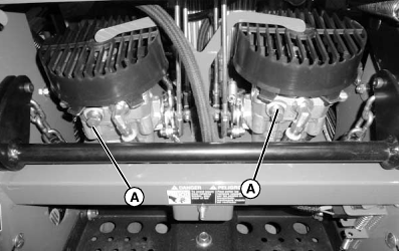
TCAL43662-UN-26MAR13 -
NOTE: As air is purged from the system, the fluid level in the hydraulic reservoir will drop.
Slowly release the park brake, and carefully operate the control levers back and forth 5-6 times.
-
Shut the engine off and close the bypass valves (A).
-
Start the engine again, and slowly operate the control levers back and forth 5-6 times.
-
It may be necessary to repeat this until all the air has been purged from the system.
-
After purging is complete, check the fluid level in the reservoir and add fluid if necessary.
-
When the machine moves at normal speed in forward and reverse and the fluid remains at a constant level, purging is complete.
-
Turn pump free-wheel valves (A) on both pumps 1/2 turn clockwise (closed position). Tighten valves to specification.
Item Measurement Specification Valve Torque 11 N·m (100 lb.-in.)
|
BB87125,0001473-19-20130918 |