Grinding Reel and Bedknife
Reel and Bedknife Relationship
Reel mowers are precision machines requiring daily maintenance to maintain the well-groomed appearance of turfgrass. The scissor-like shearing action, that only a reel mower is capable of achieving, is only possible if the reel and bedknife are sharp and the reel-to-bedknife clearance is maintained.
Close examination of the reel-to-bedknife relationship reveals two square edges passing one another with approximately 0.025 - 0.051 mm (0.001 - 0.002 in.) clearance. There are several reasons why this clearance is necessary.
- When the reel is allowed to contact the bedknife, the square (sharp) edges of the reel and bedknife will roll over, becoming dull.
- Contact between the reel and bedknife generates heat. Heat generated through this contact will distort the shape of the bedknife. Distortion causes the bedknife to draw closer to the reel, resulting in more rollover of the cutting surfaces and more heat generated in the bedknife.
- Drag produced by an improperly adjusted cutting unit may result in an unacceptable clip ratio, undue strain on drive mechanisms and premature wear of the cutting unit.
Reasons for Grinding
- To restore the cylindrical shape of a reel that has become cone-shaped due to improper adjustment of the reel-to-bedknife clearance or worn reel bearings.
- To restore the edge when the grass is not being cut across the entire length of the bedknife, evidenced by streaks of grass left after the mower has passed. Usually the result of nicked blades caused by hitting foreign objects in the grass.
- To restore the edge when the lack of frequent backlapping allowed the edge to be rounded beyond the capability of the backlapping procedure to restore the edge.
- To restore the edge when the reel-to-bedknife clearance has been improperly adjusted (reel contacting bedknife).
Cutting action begins as the bedknife positions the grass to be cut at the cutting edge. The reel then pulls the grass toward the bedknife where it is sheared by the cutting edges as they pass one another.
In order for the grass to be cut at the proper height, it must contact the bedknife at the cutting edge. This is accomplished by grinding a 15° relief angle on the front face of the bedknife. Without a relief angle, the blade of grass will contact the lower edge of the bedknife and be bent over at too much of an angle prior to being cut. In the case of mowing greens, where very small cuts are being taken, the reel may not capture the grass at all, and no grass will be cut.
Although some spin grinding machine manufacturers say backlapping is not necessary, John Deere recommends backlapping after spin grinding to remove burrs and rough edges left from the spin grinding procedure. Backlapping produces a honed edge that will cut the grass evenly and leave the tops of the grass with clean, straight edges.
It is important to note, dull cutting edges will tear rather than shear the grass drawn into the bedknife. This will shock the grass plant and retard its growth.
Grinding the Bedknife
NOTE: Bedknife and support assembly must be ground as a complete unit.
TCAL41565-UN-22JAN13
-
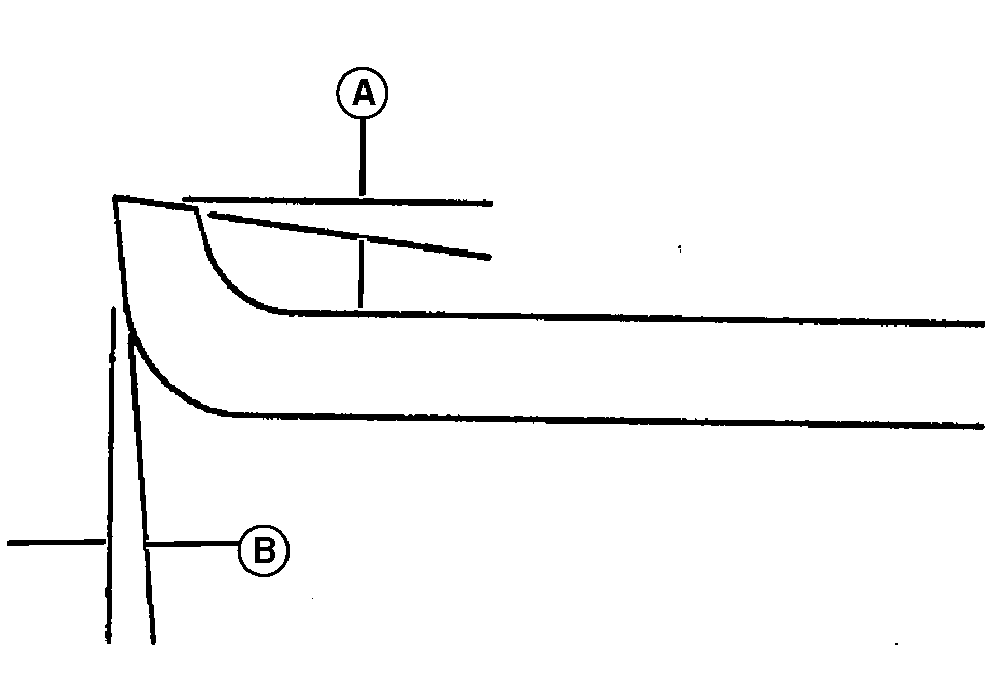
When grinding the bedknife, it is important to have a 6.5° relief angle on the top surface (A) and on the front surface (B):
-
56 cm (22 in.) QA5 except ET17767 - a 15° relief angle on the front surface (B).
-
56 cm (22 in.) ET17767 high cut - a 5° relief angle on the front surface (B).
-
-
Put entire bedknife support and bedknife in a suitable grinder and grind until material is consistently removed from the entire length of the top and front surfaces of the bedknife.
Grinding the Reel
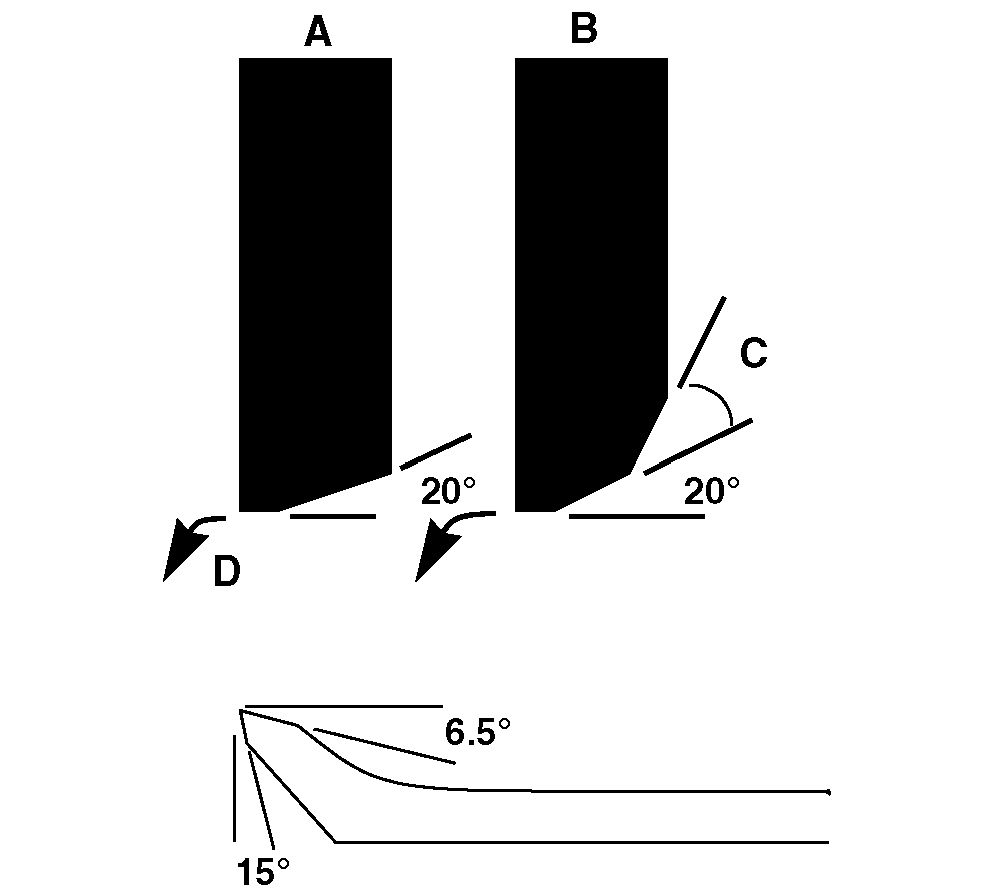
CORRECT way to grind the reel:
TCAL41566-UN-22JAN13
A - Relief Grind
B - Double Relief Grind
C - Secondary Relief
D - Cutting Edge
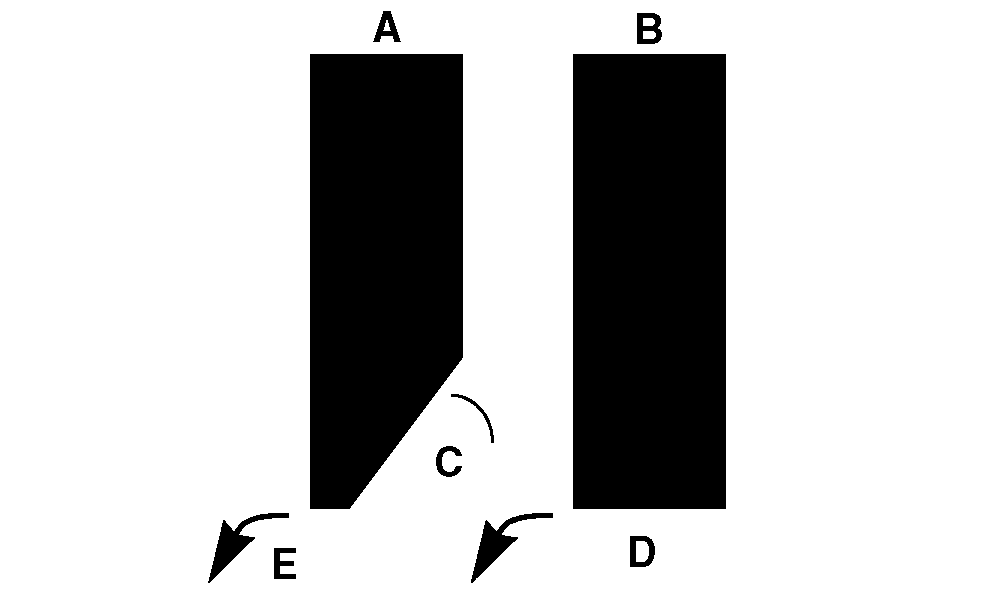
INCORRECT way to grind the reel:
TCAL41567-UN-22JAN13
A - Relief Grind
B - Flat Ground
C - Excessive Relief
D - No Relief
E - Cutting Edge
John Deere recommends relief grinding the reels after spin grinding for these reasons:
- Reduced blade contact area results in less friction, requiring less horsepower to drive the reel and increases fuel efficiency.
- Ensures longer wear life.
- Less time is required to backlap.
- Reduces pulling and tearing of the grass as the unit gets dull by use.
- Provides an area for backlapping compound to be trapped to more effectively backlap reels.
- Relief grinding removes metal from the trailing edge of the blade, forming an angle (relief angle) to reduce the contact area of the cutting edges.
- Because of the relief grind it is possible, with backlapping, to true a reel (make it round) if a blade is 0.025-0.051 mm (0.001-0.002 in.) too high.
|
OUO1082,00064B8-19-20150709 |