Understanding Diesel Particulate Filter (DPF) Regeneration
Your machine is equipped with an emission-compliant engine, which cleans and filters the engine exhaust.
Regeneration
Regeneration is the process of increased exhaust temperatures to oxidize the accumulated particulate matter, or soot, from the walls of the DPF. There are five types of regeneration that can occur. Passive Regeneration, Enhanced Passive Regeneration, Active Regeneration, Parked Regeneration, and DPF Recovery.
Passive Regeneration
Passive regeneration occurs naturally in the DPF when the operating conditions produce sufficient exhaust gas temperatures for the oxidation of soot to occur. The engine ECU takes no action during passive regeneration. There is no fuel dosing or closing of the air throttle to increase exhaust gas temperatures. No indicators are present on the operators interface during the passive regeneration.
Enhanced Passive Regeneration
When the soot level in the DPF reaches a predetermined level and the vehicle operating conditions are not resulting in sufficient exhaust gas temperatures to promote sufficient passive regeneration, the engine ECU activates the enhanced passive regeneration strategy. During enhanced passive regeneration, the engine ECU closes the air throttle and changes injection timing to increase the exhaust gas temperature to a level that promotes passive regeneration. The engine is allowed to be operated normally and no fuel is dosed during the enhanced passive regeneration. No indicators are present on the operators interface during the enhanced passive regeneration.
Active Regeneration
When the soot level in the DPF reaches a predetermined level or soot is accumulating at a rate greater than can be managed by the enhanced passive regeneration, an active regeneration will be initiated. During an active regeneration, the ECU initiates the in-cylinder fuel dosing strategy, modifies fuel injection timing, and closes the air throttle to increase exhaust gas temperatures to promote rapid oxidation and removal of the soot in the DPF. The exhaust gas temperatures during the active regeneration are higher than the temperatures in the enhanced passive regeneration. During this regeneration, the engine is allowed to be operated normally.
Inhibiting Active Regeneration
IMPORTANT: Avoid damage! Under normal machine operation, the system is in auto regeneration mode and requires minimal operator interaction.
If your vehicle must be used in a situation not suited for higher temperatures created during active regeneration, temporarily disable the system.
TCT012431-UN-19MAR15
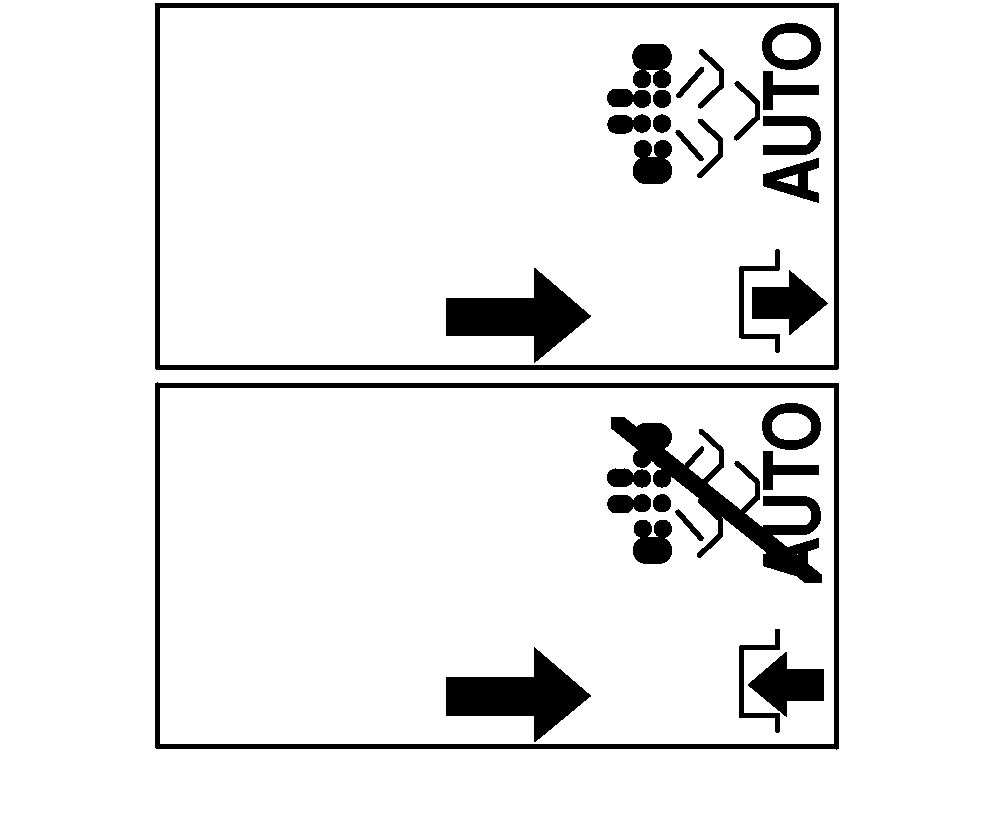
To disable the auto regeneration function temporarily, depress button 3 on the top menu Active Regeneration status screen. The auto regeneration symbol appears with a line through the symbol indicating auto regeneration is disabled. To avoid soot buildup in the exhaust filter, be sure to return to auto regeneration mode as soon as possible. See Accessing Diesel Particulate Filter Displays.
NOTE: Auto regeneration is enabled whenever the key switch is cycled off.
TCT012084-UN-26NOV14
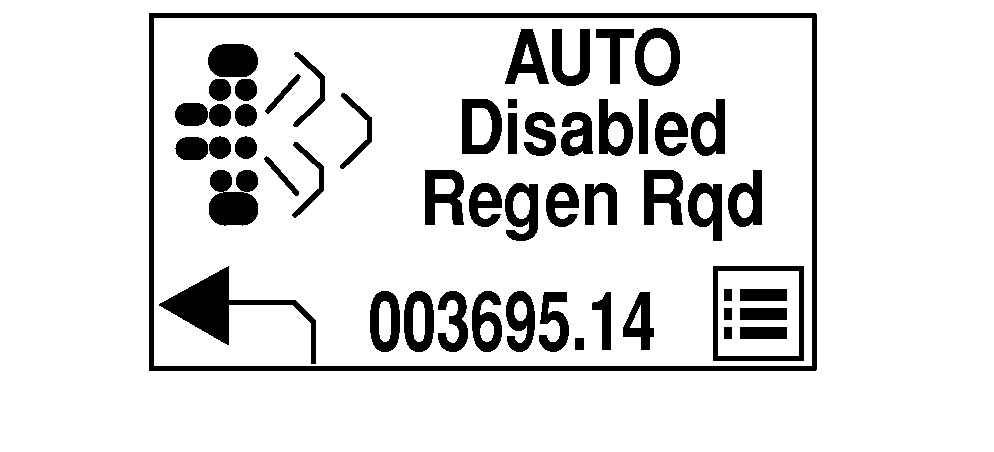
While active regeneration is inhibited, if the system determines that soot buildup in the exhaust filter requires cleaning, the AUTO Disabled Regen Rqd DTC 003695.14 appears on the PDU. To enable the automatic Active Regeneration cycle through the PDU screens to the active regeneration enable-disable screen. See Accessing Diesel Particulate Filter Displays.
Do not disable active regeneration unless it is necessary. If active regeneration is disabled frequently, the system eventually activates a parked regeneration. This means that the engine performance is reduced, machine function is limited, and does not return to normal until a parked regeneration is performed.
Parked Regeneration
When the soot level reaches a predetermined level, the ECU mandates a parked regeneration be performed. When a parked regeneration is needed, the ECU derates the engine to encourage the parked regeneration be performed. During a parked regeneration, the ECU increased the engine speed to 2200 rpm, initiates the in-cylinder fuel dosing strategy, modifies fuel injection timing, and closes the air throttle to increase exhaust gas temperatures to promote rapid oxidation and removal of the soot in the DPF. The vehicle must remain parked until the parked regeneration has ended.
Recovery Regeneration
If the soot in the DPF reaches a severe level, a recovery regeneration is required to reduce the soot level. Running the vehicle with the regenerations inhibited or not performing a parked regeneration when needed can cause the recovery regeneration to be needed. During a recovery regeneration, the vehicle must be parked, the ECU closes the air throttle, and changes injection timing to increase the exhaust gas temperature to a level that promotes passive regeneration. No fuel is dosed during the portion of the recovery. After sufficient time has passed and the soot level is at a low level, a parked regeneration is performed before the recovery regeneration is complete. The vehicle must remain parked until the recovery regeneration has ended.
|
MX00654,000007E-19-20151020 |