Avoid Tipping
Identify Slopes for Safe Operation
- Establish your own special procedures and rules for operating on slopes. These procedure must include a survey of all mowing sites to determine which slopes are safe for machine operation. Always use common sense and good judgement when performing this survey.
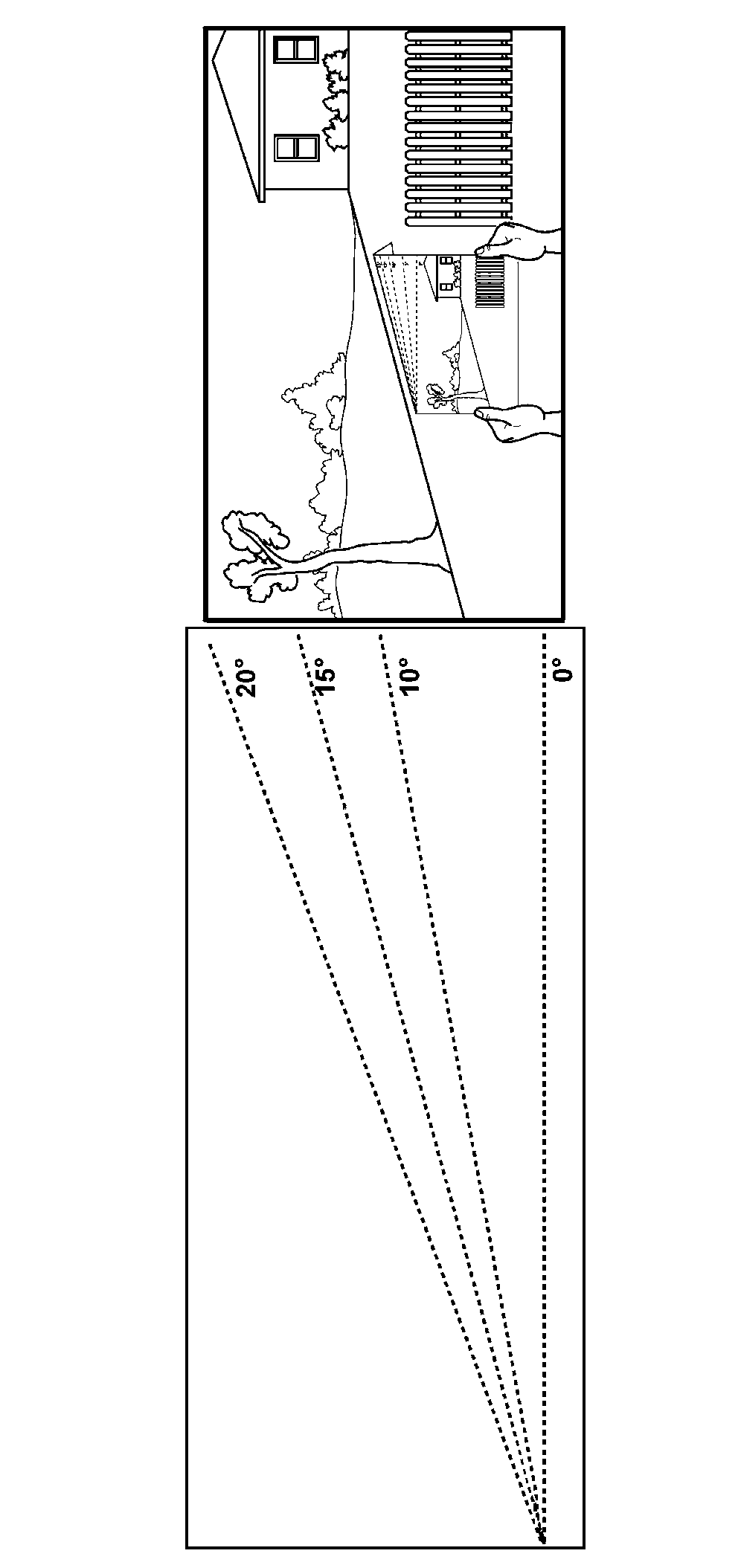
- Lay a straight piece of sturdy lumber 1.2 m (4 ft) long on the slope and measure the angle of the slope with an angle indicator or protractor level.
- Never mow or operate machine on slope angles greater than 20°.
- Exceeding the maximum recommended slope angle of 20° increases the risk of rollover accidents that can result in serious injury or death.
- Always consider potential turf conditions and slope angles when determining the risk of loss-of-control and tip-over accidents.
- On slope angles of 10° or less the risk of rollover is low, but as the slope angle increases to the John Deere recommended maximum of 20° the risk increases to a moderate level.
- The recommended slope angles are for a machine in its basic configuration. The basic configuration is mower deck only, no cab, MCS or other attachments. The addition of a cab, MCS or other attachments will increase the risk of a rollover and decrease the recommended operating slope.
Operate Safely on Slopes
- Slopes are a major factor related to loss-of-control and tip-over accidents, which can result in severe injury or death. Operation on all slopes requires extra caution.
- Use lower speeds while mowing and operating on slopes.
- If you feel uneasy on a hillside, do not mow it.
- Mow across slopes, not up and down.
- Watch for holes, ruts, bumps, rocks, or other hidden objects. Uneven terrain could overturn the machine. Tall grass can hide obstacles.
- Choose a low ground speed so you will not have to stop while on a slope.
- Rollover can occur before the tires lose traction.
- Use caution if mowing when grass is wet or slippery. Tires may lose traction. Tires may lose traction or slip on slopes even though the brakes are functioning properly.
- Avoid starting, stopping or turning on a slope. If the tires lose traction, disengage the PTO and proceed slowly down the slope.
- Keep all movement on slopes slow and gradual. Do not make sudden changes in speed or direction, which could cause the machine to roll over.
-
Keep mower deck lowered to ground while operating on slopes.
Raising mower deck while operating on slopes can cause machine to
become unstable.
TCAL43869-UN-21MAR13
Operate Safely Near Edges
TCAL43870-UN-21MAR13
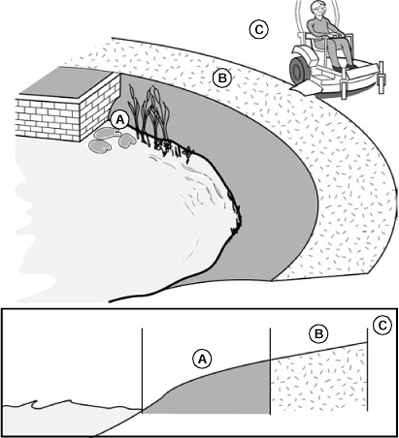
Example side view of slope and hazards, showing areas (A), (B), and (C)
- Do not mow or operate machine in areas adjacent to hazards that may cause the machine to roll over. The machine could suddenly lose traction, slide, and/or roll over if a wheel goes over the edge or if the edge breaks away.
-
Hazards (A) include but are not limited to:
- Drop-offs, ditches, embankments, or bodies of water and
- Areas of unsafe slope, soft ground, edges along bodies of water, or area with holes, ruts, bumps, or other hidden objects.
- Maintain a buffer area (B) at least as wide as the machine between hazards (A) and the mowing area (C). Do not mow or operate the machine in the hazard area or buffer area.
- Use a walk-behind mower or string trimmer in and around areas (A) and (B).
- Only mow or operate the machine in the mowing area (C). Do not exceed the recommended slope operating angle. Refer to the "Operate Safely on Slopes" section.
|
OUMX068,0000A90-19-20141114 |