Towing Loads
 Avoid injury! Excessive towed load can cause loss of
traction and loss of control on slopes. Stopping distance increases
with speed and weight of towed load.
Avoid injury! Excessive towed load can cause loss of
traction and loss of control on slopes. Stopping distance increases
with speed and weight of towed load.
Do not tow a load that exceeds the maximum allowable towing load for this vehicle, as specified in this operator’s manual.
Secure towed loads before transporting.
- To provide adequate braking ability and traction, the weight of the towing vehicle (base vehicle + vehicle payload) should be at least 1.5 times the weight of the towed load (trailer + trailer payload).
- When operating over rough, hilly, or steep terrain and reducing cargo load by half, any towed load should also be reduced accordingly.
- Do not tow a load that exceeds towing capacity listed in SPECIFICATIONS.
- Do not exceed trailer tongue weight listed in SPECIFICATIONS.
- Tow load at a speed slow enough to maintain control.
- Towing heavy loads in high gear will reduce CVT belt life.
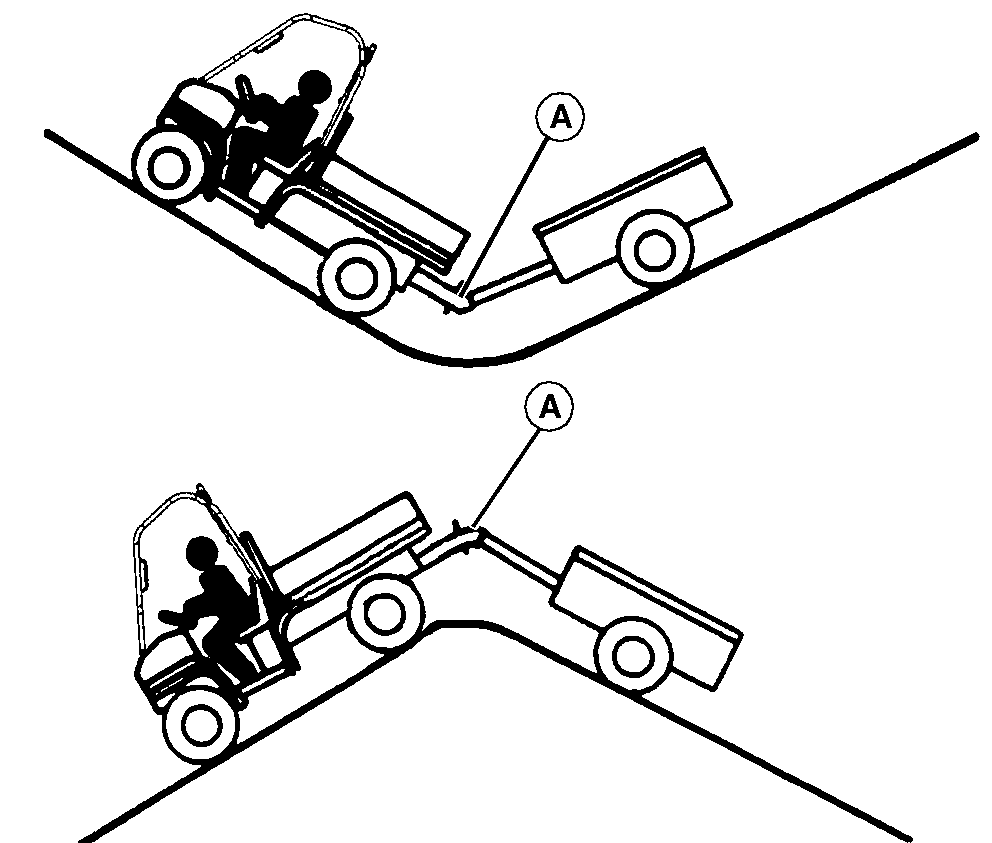
Avoid damage! When operating on terrain with extreme angles, use a ball type hitch (A).
MXAL44186-UN-10APR13
- Always use approved hitch and hitch point provided for the utility vehicle. Do NOT modify the hitch or hitch point in any way.
Capacity Label
MXT007935-UN-18JUL13
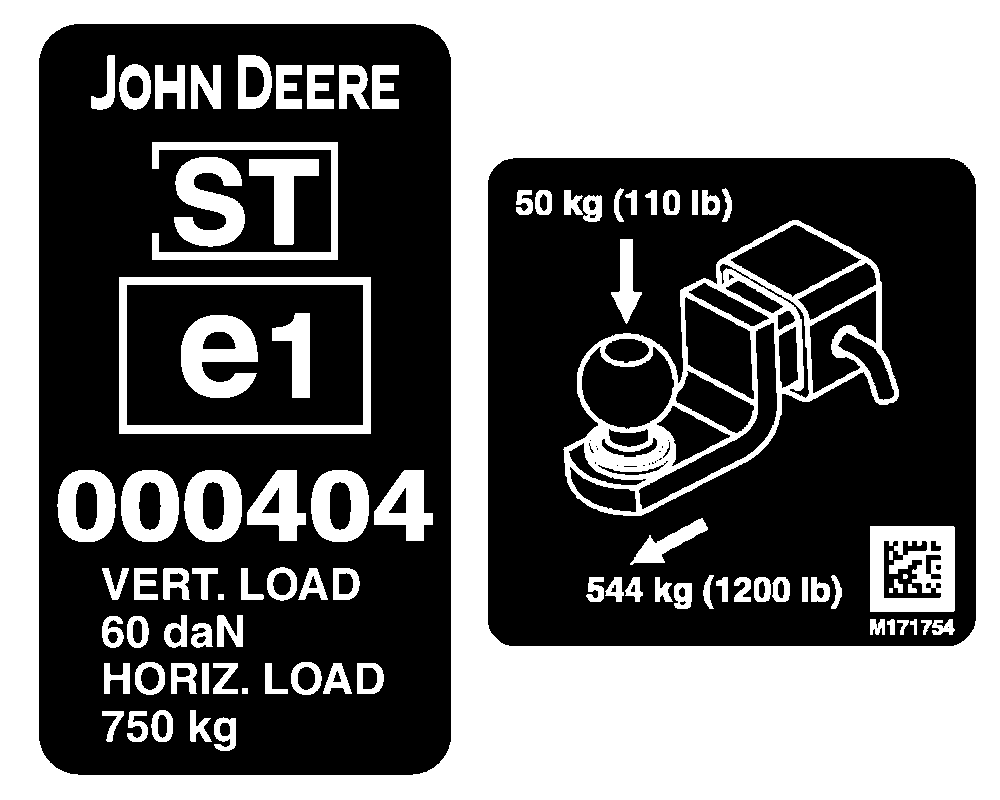
Labels shown are for reference only. Confirm capacities on labels on your machine.
Your machine may have a hitch capacity label installed near the hitch area. The label indicates vertical and horizontal load capacities.
The vertical load capacity is the maximum down force which can be applied for safe operation. The horizontal load capacity is the total weight of what is being towed which must not be exceeded for safe operation.
|
MX10673,000008C-19-20170912 |