Checking and Adjusting Latch Plate and Locking Lever
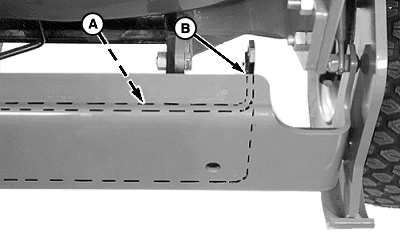
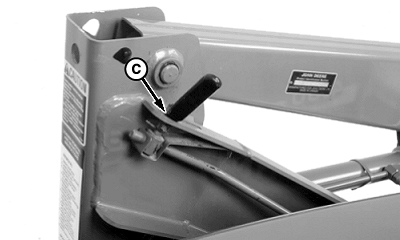
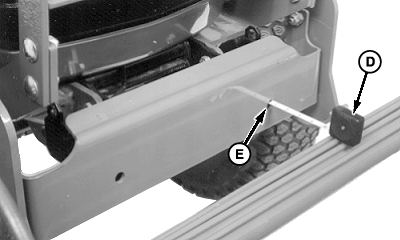
NOTE: Latch lever on 870, 855 and 955 Tractors is on right-hand mast. 4000 Series tractor shown. Latch plate retainer is removed for photographic purposes. 1. Lower loader to ground and apply enough downward force to relieve weight of tractor from front tires. 2. Rotate latch plate over weight bracket (A), it should rotate freely. 3. Latch lever must be in hole (C) and free to move up and down. 4. Using tape measure (D) through hole (E), measure distance from front surface of weight bracket-to-front surface of latch. It should be no more than specifications. Specification
|
|
OUO1078,00000A4 -19-11JAN01-1/2 |
|
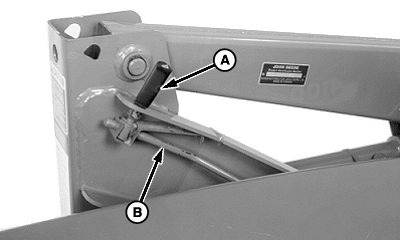
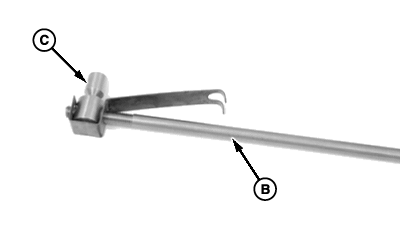
IMPORTANT: Lever MUST NOT be tight in hole. For correct operation, pin must be loose allowing spring to keep lever in locked position. 5. If lever is tight in hole or is still in slot with latch plate closed, latch rod requires adjustment. a. Remove cap screw to disconnect lever (A) from rod (B). b. Rotate pin (C) (in or out) on rod until pin fits freely in hole and dimension at latch and weight bracket is within specifications. Specification
c. Apply thread lock and sealer (high strength) to threads of cap screw. d. Attach lever to rod in reverse order as disassembled. |
|
OUO1078,00000A4 -19-11JAN01-2/2 |