Vacuum Recirculation System (VRS)
|
The 800 series trailed sprayers can be fitted with the vacuum recirculation system (VRS). This continuous recirculation system ensures continuous agitation of the spraying liquid in the spray lines, also when not spraying. Therefore the risk of chemical sedimentation in the spray lines is heavily reduced (less risk of blocked nozzles). The VRS system also ensures that after filling the sprayer with chemical, the spray lines are immediately charged and the right concentration of |
chemical is available at all nozzles. When reaching the field, spraying can immediately start. With VRS it is no longer necessary to purge the rinse water from spray lines on the headland before chemical reaches all nozzles in the right concentration. Finally it is possible to rinse the whole sprayer without the need to spray through the nozzles. Clean water from the rinse tank can be drawn directly into the spray lines. |
WZ00085,00002A1 -19-18MAY06-1/14 |
|
|
|
System composition
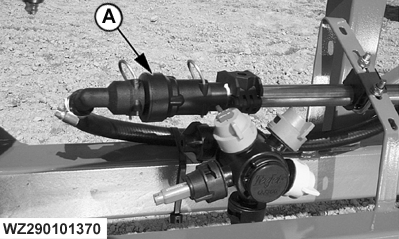
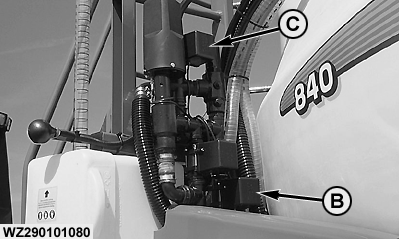
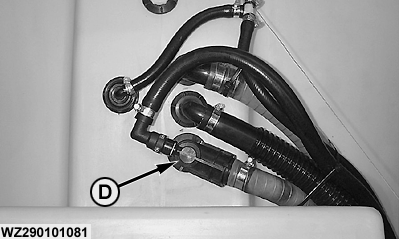
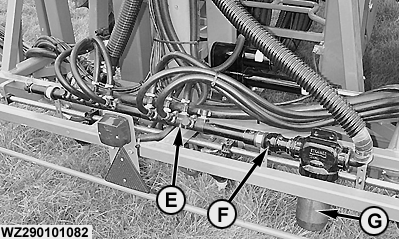
Separate functional diagrams of the sprayers with vacuum recirculation system (with one or two pumps) are contained in "Functional Diagram" in section "Operation of the Machine". At the end of each spray line section, the end plugs are replaced by hose connectors to which a hose is fitted and is connected to the solution tank. In addition the VRS comprises:
|
|
WZ00085,00002A1 -19-18MAY06-2/14 |
|
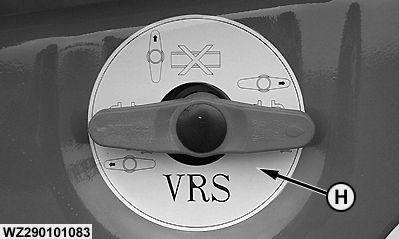
Manual Suction Valve VRS
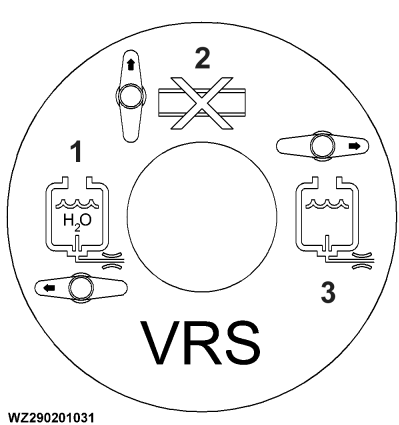
The manually operated VRS 3-way valve (H) determines from where the liquid is drawn through the recirculation and spray lines back into the solution tank. The arrow on the handle indicates from where the liquid is drawn through the spray lines by the injector. The following positions of the VRS 3-way valve are possible: 1.
Recirculation (liquid aspiration) from rinse tank (rinsing)
For the filling process of the machine, the VRS suction valve should be in position 2 "Recirculation (liquid aspiration) closed". Now fill the tank with water (at least 50% of the required spraying volume) and add the required chemicals. The agitation should be activated and the mixture should be mixed to a homogeneous solution. Place the VRS suction valve into position 3 "Recirculation (liquid aspiration) from solution tank (re-circulation)". |
|
WZ00085,00002A1 -19-18MAY06-3/14 |
|
|
|
|
|
WZ00085,00002A1 -19-18MAY06-4/14 |
|
Recirculation with VRS
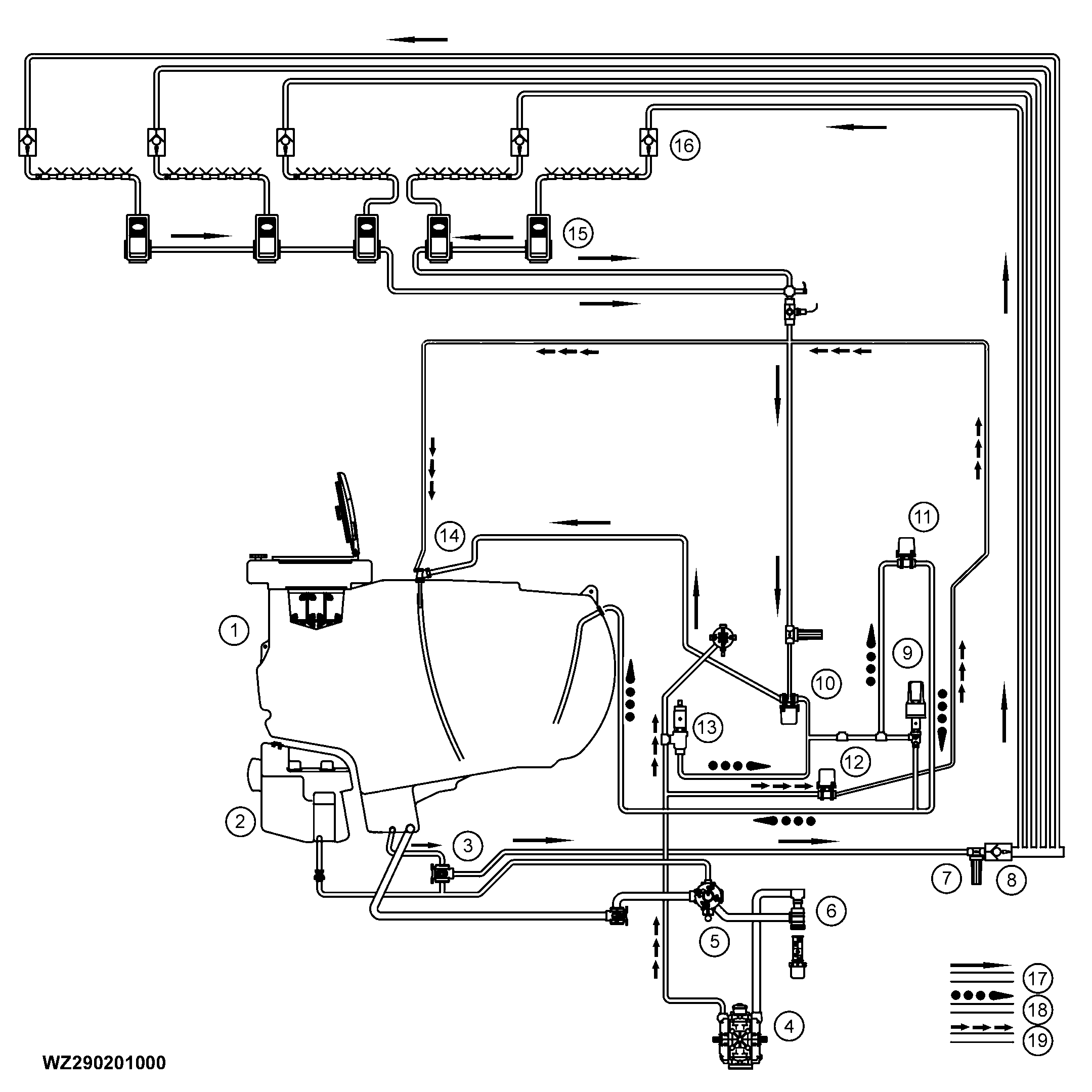
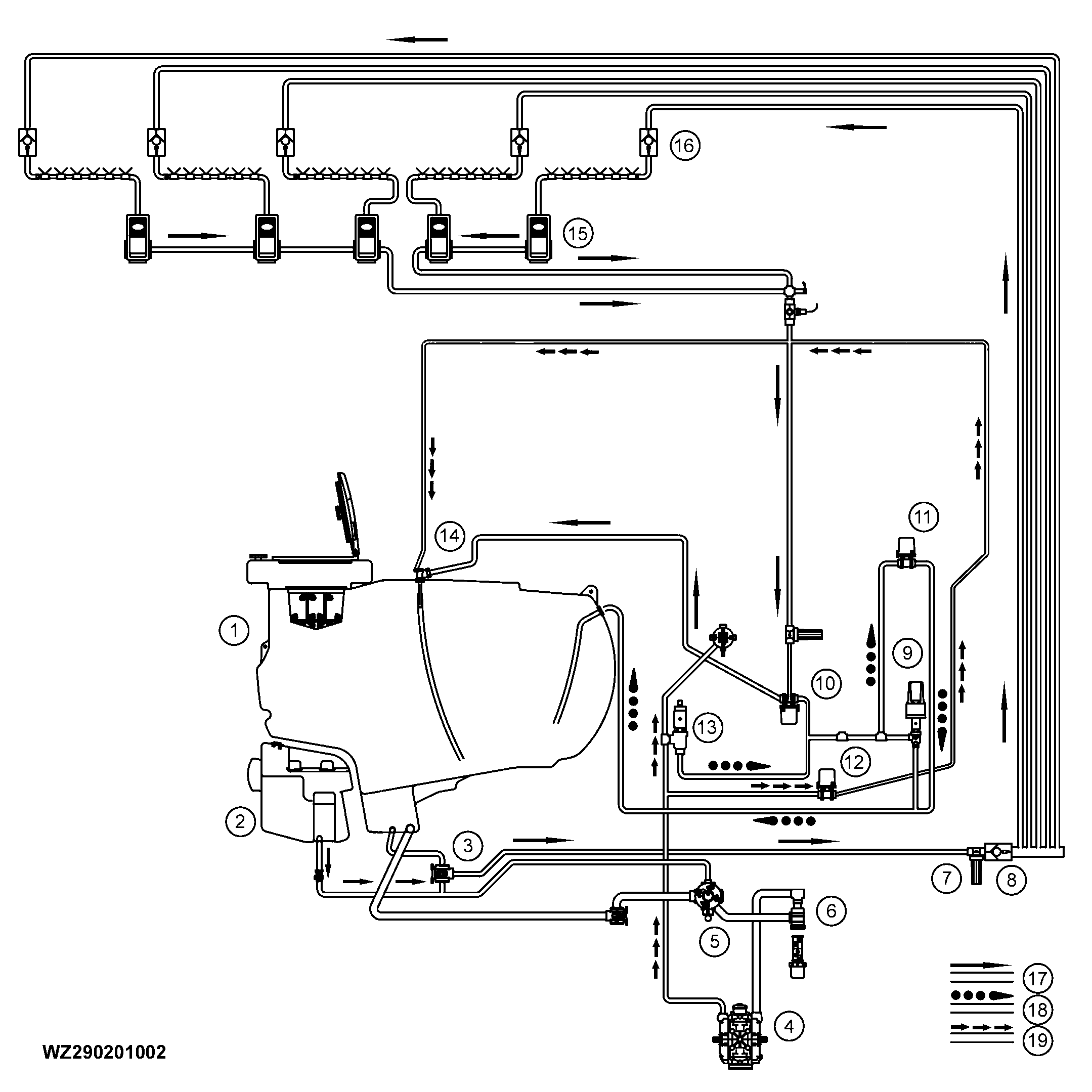
The vacuum recirculation system automatically works when the pump (4) is running and the main shut-off valve (11) is closed. The delivery of the spraying pump (water when filling, spray liquid when agitating, clean water when rinsing) is directed to an injector (14) on top of the tank at an increased pressure (pressure of primary pressure regulator). When the main shut-off valve is closed, the electrically operated 2-way valve (12) is opened to supply the injector with liquid and the electric 3-way valve for the recirculation line (10) is turned to allow recirculation. The injector (venturi device) creates a depression (vacuum) so the liquid is drawn from the tank (1) through the spray lines and back into the solution tank (1). The liquid is circulated past the nozzle through the spray lines, section valves and pipework in the opposite direction, without spraying from the nozzles. During filling, agitating and spraying, the VRS suction valve (3) needs to be set to position "suction from solution tank". As soon as the pump (4) is running and the main shut-off valve (11) is closed, the spray liquid will start recirculating. |
At the recirculation manifold at the centre frame of the spray boom a recirculation filter is fitted. The recirculation filter (7) filters the unfiltered spray liquid which is drawn from the solution tank past the nozzles. A 50 mesh filter (red) is fitted as standard. This filter has a mesh width of 280 micron (0.28 mm) and is suitable for flat fan nozzles of the 02 type (or comparable sizes) and larger. A finer 80 mesh filter (blue) can be fitted for smaller nozzles. This filter has a mesh width of 180 micron (0.18 mm). The filter must be cleaned regularly (in any case after each use). This can be done simply by unscrewing the filter cup with a 24 mm wrench and removing the filter element. Regular cleaning of the filter will prevent silting up, which can reduce the recirculation capacity. The central non-return valve (8) is an extra safety feature. During malfunctions or pollution of one of the non-return valves of the spray line sections (16), this central non-return valve prevents undesired circulation of spray liquid from the spray lines to the tank during spraying. |
WZ00085,00002A1 -19-18MAY06-5/14 |
|
|
|
|
|
WZ00085,00002A1 -19-18MAY06-6/14 |
|
Spraying with VRS
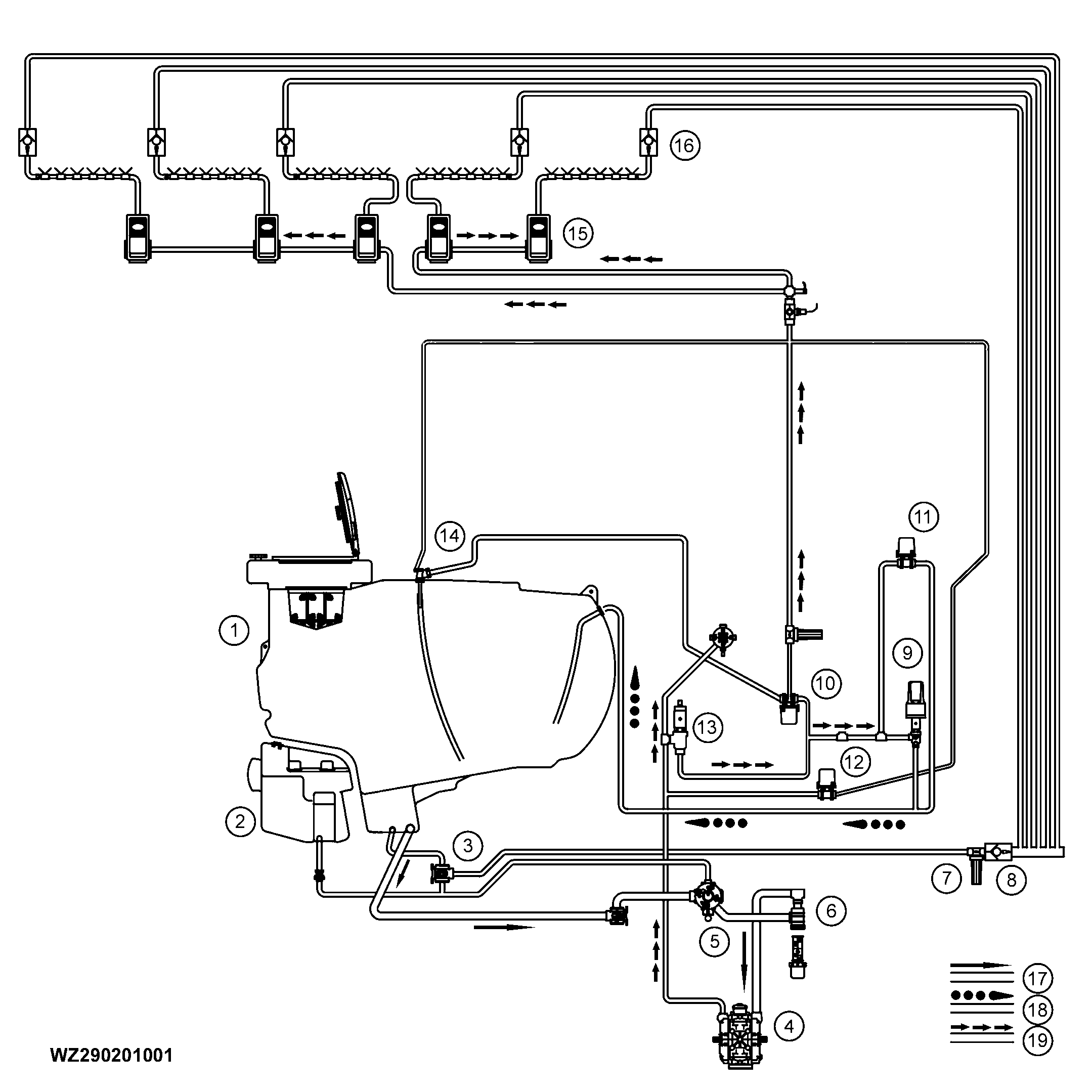
As soon as the main shut-off valve (11) is opened, the recirculation system is automatically switched off. The electric 2-way valve (12) to the injector (14) will be closed and the electric 3-way valve for the recirculation system (10) is changed over. With the main shut-off valve (11) and boom section valves (15) open, the |
delivery liquid from the pump can now flow to the spray lines and nozzles. Since there are non-return valves (16) at the end of each spray line section, undesired liquid flow from the spray lines back to the tank is now prevented during spraying. Therefore no problems with flow-based control systems for automatic application rate control occur. |
WZ00085,00002A1 -19-18MAY06-7/14 |
|
|
|
|
|
WZ00085,00002A1 -19-18MAY06-8/14 |
|
Rinsing the sprayer with VRS
The 800 series trailed sprayers can be fitted with the vacuum recirculation system (VRS). This continuous recirculation system ensures continuous agitation of the spraying liquid in the spray lines, also when not spraying. Therefore the risk of chemical sedimentation in the spray lines is heavily reduced (less risk of blocked nozzles). The VRS system further provides that after filling the sprayer with chemical, the spray lines are immediately charged and the right concentration of chemical is available at all nozzles. When reaching the field, spraying can immediately start. With VRS it is not necessary anymore to purge out the rinse water from spray lines on the headland before chemical reaches all nozzles in the right concentration. Finally it is possible to rinse the whole sprayer without the need to spray through the nozzles. Clean water from the rinse tank can be drawn directly into the spray lines. NOTE: Recirculation can be reduced by using agrochemical (mixtures) solutions having a |
density and a viscosity which are significantly higher than water. Due to this higher viscosity and density the flow in the lines is reduced. With VRS it is possible to rinse the spray lines (with empty solution tank) without having to spray. The undiluted remaining liquid from the pressure and spray lines can be flushed back into the solution tank, where it can be diluted with clean water. Rinse water from the rinse tank (2) can be drawn directly into the spray lines if the 3-way recirculation suction valve (3) is set to "suction from rinse tank". With the main shut-off valve (11) closed and the pump (4) running, clean water will then be drawn from the rinse tank (2) through the spray lines past the nozzles into the solution tank (1). After rinsing the spray lines with VRS, the main shut-off valve (11) and boom section valves (15) should be opened for a short time to also clean the nozzle holders and nozzles. |
 CAUTION:
The rinse tank must always be filled with clean water.
CAUTION:
The rinse tank must always be filled with clean water.
WZ00085,00002A1 -19-18MAY06-9/14 |
|
Dilution of residual liquids and cleaning with VRS (with empty tank)
The following procedure for dilution of the residual spray liquid and cleaning of the complete sprayer provides important information about:
IMPORTANT:
Pay attention to the following points:
The following points need to be followed up in order to allow a thorough cleaning of the sprayer: |
|
WZ00085,00002A1 -19-18MAY06-10/14 |
Follow steps 1-23 to completely clean the sprayer.
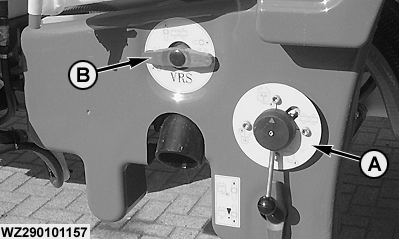
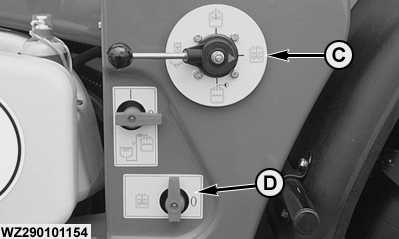
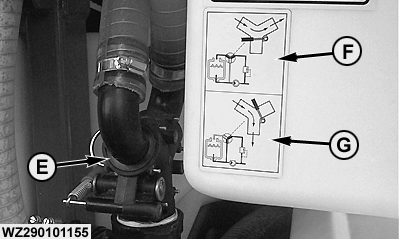
Dilution of residual spray liquids: Close all section valves and open the master valve via the control box (saves rinse water, not spilled by VRS injector). Set circulation valve (E) to return to tank (F). Set pressure selection valve (C) to tank rinsing nozzles. Set suction valve of sprayer pump (A) to suction from rinse tank (switch on PTO at low speed). Set pressure selection valve (C) and agitation valve (D) 1 during 10 seconds to agitation (and afterwards set it back to tank rinsing nozzles). |
|
WZ00085,00002A1 -19-18MAY06-11/14 |
|
Set circulation valve (E) to circulation (G) (return to suction side of pump). Set pressure selection valve (C) to closed position (chemical inductor) to switch off tank rinsing nozzles when 100 liters of rinse water have been used to clean the tank (can be read at level indicator of solution tank). Set suction valve of sprayer pump (A) to suction from solution tank. Close the master valve and open all boom section valves via the control box (spray boom will now be pre-rinsed with diluted spray liquid through the VRS system) to circulate the diluted spray liquid for some minutes through the boom at an increased PTO speed (540 rpm). Dilution and cleaning of VRS system: Set VRS suction valve (B) to suction from rinse tank. Close all boom section valves except one, and then open and close the individual boom section valves one after the other. Close each boom section valve if per section about 15-20 liters of rinse water (outer sections should be rinsed longer than inner sections) have been circulated from the rinse tank to the solution tank (cleaning section by section). Finally close the VRS suction valve if all sections have been rinsed. Spraying out diluted residual spray liquid: Reduce the PTO speed (but still high enough to open the check valves of the nozzles to spray). Spray the solution tank with diluted residual spray liquid empty by opening the master valve and all section valves via the control box. Operate all boom section valves and optional edge nozzles a couple of times in order to clean the valves as well. Tank cleaning: |
|
WZ00085,00002A1 -19-18MAY06-12/14 |
|
Close all boom section valves and open the master valve via the control box (saves water, not spilled by VRS injector). Set the pressure selection valve (C) to tank rinsing nozzles and set the suction valve of the sprayer pump (A) to suction from rinse tank. Set the circulation valve (E) temporarily to return to tank (F) to allow the pump to suck liquid and then back to circulation (G) (return to suction side of the pump). Suck about 50 liters from the rinse tank to clean the tank. Set the pressure selection valve (C) to a closed position (chemical inductor) to switch off the tank rinsing nozzles and set the suction valve (A) of the sprayer pump back to suction from the solution tank. Spray the tank empty again and close all section valves via the control box afterwards. Rinse and clean machine: Set suction valve of sprayer pump (A) to suction from rinse tank. Set the circulation valve (E) temporarily to return to tank (F) to allow the pump to suck liquid and then back to circulation (G) (return to suction side of the pump). Spray the rinse tank completely empty. Finally, set all valves back to spraying position: Agitation switched on, tank rinsing nozzles closed (C) and VRS suction valve (B) set to suction from tank and circulation valve (E) to return to tank (F). The Vacuum Recirculation System does not require special maintenance, except a thorough and regular cleaning and rinsing of the sprayer with clean water. |
|
WZ00085,00002A1 -19-18MAY06-13/14 |
|
If for maintenance purposes diaphragms of the nozzle holders have to be removed, the boom section valves of the applicable section should be closed first. Otherwise the spray line could be drained. |
|
WZ00085,00002A1 -19-18MAY06-14/14 |