
47 and 59-Inch for 55 Series Tractors, 670 and 770 Tractors
Introduction
Safety
Preparing Vehicle
Installing
Removing
Operating
Service Safely
Service
Troubleshooting
Storing Machine
Assembly
Specifications
John Deere Service Literature
John Deere Quality Statement
Copyright© Deere & Company

Removing
Park Vehicle Safely
· Stop vehicle on a level surface, not on a slope.
· Before you leave the operator's seat, wait for engine and all moving parts to STOP.
Avoid High Pressure Fluids
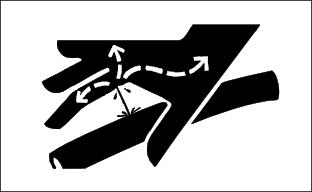
· Hydraulic hoses can fail due to physical damage, kinks, age, and exposure. Check hoses regularly. Replace damaged hoses.
· Escaping fluid under pressure can penetrate the skin causing serious injury. Avoid the hazard by relieving pressure before disconnecting hydraulic or other lines. Tighten all connections before applying pressure.
· Search for leaks with a piece of cardboard. Protect hands and body from high pressure fluids.
· If an accident occurs, see a doctor immediately. Any fluid injected into the skin must be surgically removed within a few hours or gangrene may result. Doctors unfamiliar with this type of injury should reference a knowledgeable medical source. Such information is available from Deere & Company Medical Department in Moline, Illinois, U.S.A.
Removing Snowblower.
 c CAUTION: Avoid injury! To avoid injury from escaping hydraulic oil under pressure, relieve pressure in system.
|
1. Park snowblower at storage area.
3. Lower snowblower to ground.
5. Move hydraulic levers back and forth to relieve hydraulic pressure.
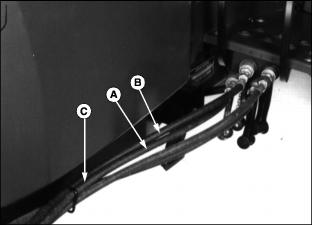
6. Pull coupler sleeves back to disconnect hydraulic chute rotation hoses (A) and (B).
7. Install dust plugs in couplers and dust caps on hoses.
8. Remove hydraulic hoses from hose guide (C).
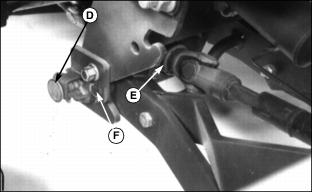
9. Put spring pins (D) in locked position. (Not engaged into mounting bracket.)
10. Pull locking collar (E) to disconnect drive shaft (F).
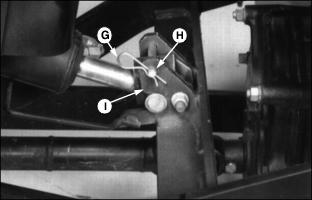
11. Remove spring pin (G) and drilled pin (H).
12. Raise lift bracket latch (I).
13. Back tractor away from snowblower.
|
c CAUTION: Avoid injury!
When the snowblower is removed, you MUST also remove any weights that were added to the tractor. |
15. Remove any weights that were installed when preparing the tractor. (See Preparing the Vehicle section.)