
Introduction
Safety Signs
Controls
Operating Machine
Replacement Parts
Service Machine Safely
Handling Waste Product and Chemicals
Servicing Utility Vehicle Safely
Handle Fuel Safely-Avoid Fires
Service Interval Chart
Service Engine
Service Transmission
Service Electrical
Service Miscellaneous
Troubleshooting
Storing Machine
Assembly
Specifications
Warranty
John Deere Service Literature
QUALITY DOESN'T END WHEN YOU INVEST IN A DEERE
Copyright© Deere & Company

Service Machine Safely
Practice Safe Maintenance
· Understand service procedure before doing work. Keep area clean and dry.

· Never lubricate, service, or adjust vehicle while it is moving. Keep safety devices in place and in working condition. Keep hardware tight.
· To prevent them from getting caught, keep hands, feet, clothing, jewelry, and long hair away from any moving parts.
· Before servicing vehicle, disengage all power and stop the engine. Engage park brake and remove the key. Let vehicle cool.
· Securely support any vehicle elements that must be raised for service work.
· Never run engine unless park brake is locked.
· Keep all parts in good condition and properly installed. Fix damage immediately. Replace worn or broken parts. Remove any buildup of grease, oil, or debris.
· Disconnect battery ground cable (-) before making adjustments on electrical systems or welding on vehicle.
· Unauthorized modifications to the vehicle may impair its function and safety.
Wear Appropriate Clothing
· Wear close fitting clothing and safety equipment appropriate for the job.
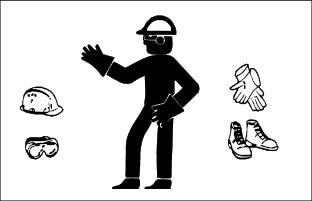
· Loud noise can cause impairment or loss of hearing, wear a suitable protective device such as earplugs.
· Do not wear radio or music headphones while servicing the vehicle. Safe service requires your full attention.
Handling Waste Product and Chemicals
· Waste products, such as, used oil, fuel, coolant, brake fluid, and batteries, can harm the environment and people.

· DO NOT use beverage containers for waste fluids - someone may drink from them.
· See your local Recycling Center or John Deere dealer to learn how to recycle or get rid of waste products.
· A Material Safety Data Sheet (MSDS) provides specific details on chemical products: physical and health hazards, safety procedures, and emergency response techniques. The seller of the chemical products used with your machine is responsible for providing the MSDS for that product.
Servicing Utility Vehicle Safely

NOTE: There are two 12 volt batteries connected in parallel.
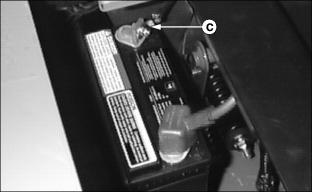
4. Locate batteries at the rear of unit. Disconnect battery ground cable (C) that is connected to engine at the battery.
Service Cooling System Safely
Prevent Vehicle Runaway
Avoid possible injury or death from vehicle runaway:
· Do not start engine by shorting across starter terminals. Machine will start in gear if normal circuitry is by-passed.
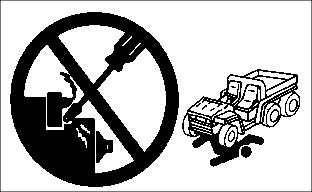
· NEVER start engine while standing on ground. Start engine only from operator's seat with park brake engaged.
Do Not Modify Machine
Do not make any unauthorized modifications to the machine in anyway.
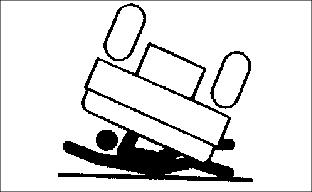
Modifications can result in making the machine unstable, increasing the possibility of rollover causing severe bodily injury or death.
Inspect Utility Vehicle
Inspect mechanical condition of your vehicle before each use to minimize chance of injury or being stranded. Remember, you can ride farther in an hour then you can walk in a day.
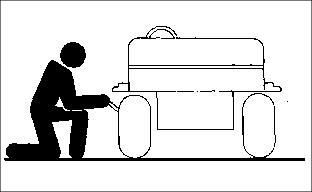
Be sure to check condition of tires and wheels, wheel hardware torque, and maintain proper tire pressure.
Inflate Tires Properly
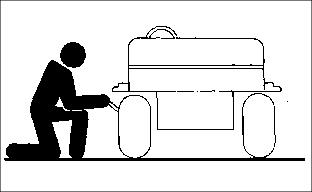
Keep heavy-duty tires inflated to 34-41 kPa (5-6 psi) and Extended Mobility Technology (EMT) tires inflated to 27-34 kPa (4-5 psi).
Heavy-Duty All Purpose tire inflation pressure can be as low as 27 kPa (4 psi) and EMT tires as low as 14 kPa (2 psi) to provide a better ride.
Improper tire inflation can affect stability and control of vehicle.
DO NOT mix sizes and/or tread types. Use of John Deere approved original or optional equipment is recommended.
Handle Fuel Safely-Avoid Fires
Handle fuel with care: it is highly flammable. Do not refuel the machine while smoking or when near an open flame or sparks.
Always stop engine before refueling machine. Fill fuel tank outdoors.
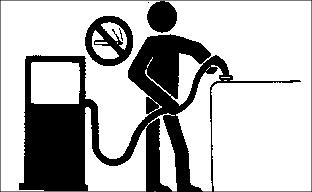
Prevent fires by keeping machine clean of accumulated trash, grease, and debris. Always clean up spilled fuel.
Wear Protective Clothing
Wear close fitting clothing and safety equipment appropriate to the job.
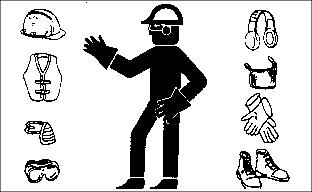
Prolong exposure to loud noise can cause impairment or loss of hearing.
Wear a suitable hearing protective device such as earmuffs or earplugs to protect against objectionable or uncomfortable loud noises.