
Sabre Yard and Garden Tractors
Introduction
Product Identification
Safety
Operating
Replacement Parts
Service Interval Chart
Service Lubrication
Service Engine
Service Transmission
Service Mower
Service Electrical
Service Miscellaneous
Care for Plastic and Painted Surfaces
Troubleshooting
Storing Machine
Assembly
Specifications
Warranty
Sabre by John Deere Quality Statement
Service Record
Copyright© Deere & Company

Service Miscellaneous
Checking Tire Pressure
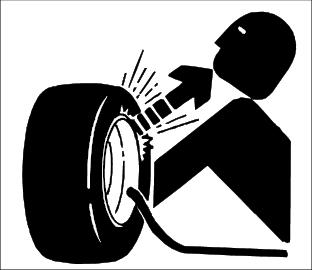

2. Check tire pressure with an accurate gauge.
3. Add or remove air, if necessary:
Fuel
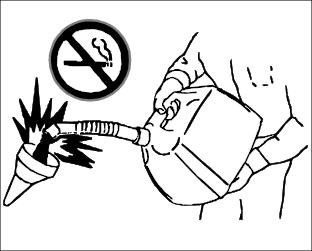
IMPORTANT: Avoid damage! Avoid spilling fuel. Fuel can damage plastic and painted surfaces. DO NOT mix oil with gasoline. Unleaded gasoline with an octane rating of 87 or higher is recommended. |
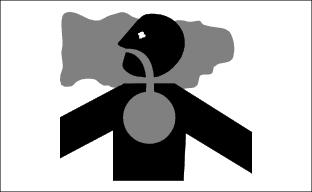
Using Clean Fuels
Dirt in the fuel system is a major cause of performance problems. Be sure to clean any grass or trash from the top of the tank before removing lid. Use of a PLASTIC funnel with a plastic mesh strainer when filling the tank will prevent most foreign material from entering the tank.
Octane Rating
Regular grade 87 octane unleaded fuel is recommended for use in your tractor. Higher octane fuels will seldom make your tractor perform better. If your tractor develops a starting or performance problem immediately after use of new fuel, change supplier or fuel brand. If the problem still exists after switching fuel, see your John Deere dealer for service.
Fuel Blends
Fuels are blended to give peak performance during cold weather and warm weather. For cold weather, gasoline is specially blended to provide better starting capabilities. However, avoid prolonged storage of cold-weather blended fuel because it will evaporate more quickly. You may experience longer cranking times in cold weather with "old" fuel. Buy smaller amounts of cold-weather blended fuel in winter.
Fuels used during the summer are not required to provide improved starting properties so they are blended differently. As a result, you may experience hard starting or other performance problems during cold weather if you use fuel remaining from summer uses.
Oxygenated or Reformulated Fuels
Many areas are now required to add "oxygenates" (either alcohol or ether) which blend oxygen into the fuel to help reduce exhaust emissions. If you use oxygenated fuel be sure it is unleaded and meets the minimum octane rating requirement. DO NOT use fuel that contains methanol to avoid producing excess emissions.
Although fuels blended with alcohol or ether allow your engine to run cleaner, they may contribute to fuel system damage and performance problems by causing gum and varnish deposits, especially if fuel is stored for several weeks or more.
Using clean, fresh fuel will help to prevent damage to the fuel system and will help maintain peak engine performance. If engine performance problems occur, use fuel from another supplier before suspecting machine problems. Suppliers blend fuels differently and changing suppliers will generally solve any performance problems.
Using Fresh Fuel and Stabilizers
The best thing you can do to ensure peak performance of your engine is to use "fresh" fuel. Your tractor's engine will perform well with most good-quality fresh fuels regardless of additives. Any fuel will begin to deteriorate and evaporate over time and begin to form gum and varnish deposits in the fuel system. Help to avoid this by buying only enough fuel to last approximately 30 days or add fuel stabilizer immediately.
Adding a fuel stabilizer to the fuel system is recommended any time the tractor will not be operated for more than 60 days. Varnish deposits may build up in the carburetor in as little as a few weeks by using stale, oxygenated fuel.
No stabilizer will work with "stale" fuel, any fuel that is more than 30 days old. (See Preparing Your Engine For Storage in this section for information on adding stabilizer to the fuel.)
Filling Fuel Tank
Fuel tank capacity: 11 L (3.0 gal)
1. STOP engine. If engine is hot let it cool several minutes before you add fuel.
2. Remove grass clippings and other trash from tank area.
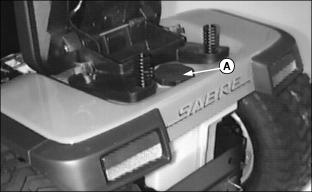
3. Lift seat and remove fuel tank cap (A).
4. Fill tank with fresh fuel only to bottom of filler neck.
5. Install fuel tank cap and lower seat.
Care for Plastic and Painted Surfaces
PLASTIC SURFACES
The plastic parts on your tractor are made of a blend of polycarbonate and polyester materials. These parts are extremely strong and durable. Unlike painted metal, the plastic parts will never dent or rust. If the plastic parts get scratched, the color will remain the same since the color goes through the entire part.
Correct Cleaning Care:
NOTE: Follow cleaning procedure every time plastic surfaces are cleaned. DO NOT wipe dry plastic surface with hand or towel.
1. Before washing, rinse hood and entire machine with clean water to remove dirt and dust that may scratch the surface.
2. Wash plastic surface with clean water and a mild liquid automotive washing soap. Use a SOFT, CLEAN cloth (bath towel or automotive mitt) when washing.
3. Dry thoroughly with a SOFT, CLEAN cloth (diaper or bath towel).
4. Wax the surface with a liquid automotive wax. Use products that specifically say "contains no abrasives".
5. Remove applied wax by hand using a clean, soft cloth.
Avoid Damage:
· "Dry wiping" or wiping the plastic surface when it is dry is a major source of minor surface scratches.
· DO NOT wipe hood or other plastic parts unless wetted first.
· DO NOT apply wax unless plastic surface has been thoroughly cleaned first.
· DO NOT use abrasive materials, such as polishing compounds, to clean or to wax plastic surface.
· DO NOT wax plastic surfaces without drying first. Hard-to-remove water spots will be left.
· DO NOT use solvents or commercial cleaners.
· DO NOT use power buffers to remove wax.
· DO NOT spray insect repellent near machine. Insect repellent spray may damage plastic or painted surfaces.
· Be careful not to spill fuel on any plastic or painted surfaces. Wipe up fuel immediately.
Repair:
· Your John Deere dealer has the professional materials needed to properly remove surface scratches from any plastic surfaces.
· DO NOT attempt to paint over marks or scratches in plastic parts.
· DO NOT use polishing compounds to attempt to remove scratches.
PAINTED METAL SURFACES
Correct Cleaning Care:
Follow automotive practices to care for your tractor painted metal surfaces. Use a high-quality automotive wax regularly to maintain the factory look of your tractor's painted surfaces.
Repair:
Minor Scratches (surface scratch):
1. Clean area thoroughly to be repaired.
2. Use automotive polishing compound to remove surface scratches.
· DO NOT use rubbing compound to avoid removing paint.
3. Apply wax to entire surface.
Deep Scratches (bare metal or primer showing):
1. Clean area to be repaired with rubbing alcohol or mineral spirits.
2. Use paint stick with factory-matched colors available from your John Deere dealer to fill scratches. Follow directions for use and for drying.
· Apply sparingly to scratch without getting on surrounding painted surface. Fill in scratch to level of surrounding painted area.
· Allow to dry 48 hours in warm weather and up to 30 days in colder temperatures.
3. Use automotive polishing compound to smooth out surface. Do not use power buffer.