
Introduction
Product Identification
Safety
Operating
Replacement Parts
Service Intervals
Service
Service Transaxle
Service Electrical
Service Miscellaneous
Troubleshooting
Storage
Preparing Batteries for Storage
Assembly
Specifications
Declaration of Conformity
Declaration of Conformity
Declaration of Conformity
Service Statement
Copyright© Deere & Company

Storage
Storing Safety

Battery Storage
· A battery is a perishable item that requires periodic maintenance. With a reasonable amount of care, the life of a battery can be significantly extended.
· When an electric vehicle is not going to be in service for an extended period of time (one month or more), the batteries still require periodic maintenance. Battery testing should be considered an integral part of periodic maintenance during storage.
· If batteries are left unattended while in storage they can self-discharge to the point that they become unusable. The higher the outside air temperature the more frequent the battery charge intervals need to be.
· If dirt and corrosion are allowed to build up on the vehicle batteries, the discharge rate can be accelerated. Improper care of batteries while the vehicle is in use or storage is misuse and will damage the battery shortening its useful service life.
Preparing Batteries for Storage
1. Visually inspect all vehicle batteries for:
· Discolored or melted terminal boots.
· Dirt or corrosion on or around the battery terminals.
· Damage to battery case or terminals.
2. Tighten battery terminal connections.
3. Clean batteries and battery compartment. Replace damaged or defective batteries.
4. Check battery electrolyte levels.
Storing the Vehicle
1. Turn key switch to the OFF "0" position.
2. Move the shift lever to the NEUTRAL "N" position.
3. Engage the park brake/emergency stop.
4. Raise and tilt operator seat forward.
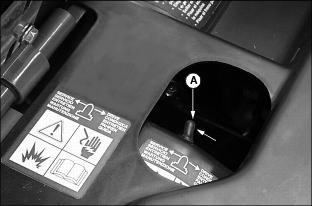
· Move the service/drive switch (A) to the SERVICE position.
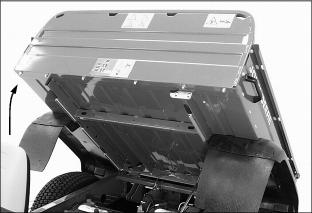
5. Lift and secure cargo box in the raised position.
6. Check the specific gravity of the electrolyte in each vehicle battery.
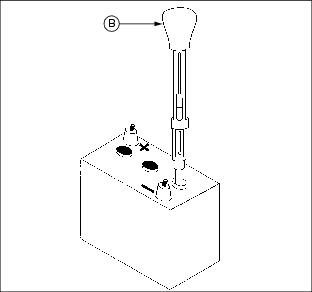
· Check the specific gravity of the electrolyte periodically with a hydrometer (B). If the specific gravity is being checked, recharge the battery when it reaches 1.220. The times it takes the battery to reach 1.220 specific gravity depends on its condition and the temperature of the environment in which it is stored. The colder the storage area, the slower the battery will self-discharge.
· While in storage the specific gravity of each vehicle battery should be checked and the batteries charged every 30 days.
7. Check battery electrolyte levels.
8. Clean batteries and battery compartment. Replace damaged or defective batteries.
12. Paint scratched and chipped areas to prevent rust.
13. Store vehicle in an unheated, dry area.
Removing Vehicle From Storage
1. Check vehicle tire pressure.
2. Check the specific gravity of the electrolyte in each vehicle battery.
3. Fully charge vehicle battery set.
4. Check battery electrolyte levels.
5. Clean batteries and battery compartment. Replace damaged or defective batteries.
7. Have all other systems checked for damage and proper operation.
8. Raise and tilt operator seat forward.
· Move the service/drive switch to the DRIVE position.
· When the key switch is turned to the ON "1" position, controls are energized and the vehicle is ready for normal operation.